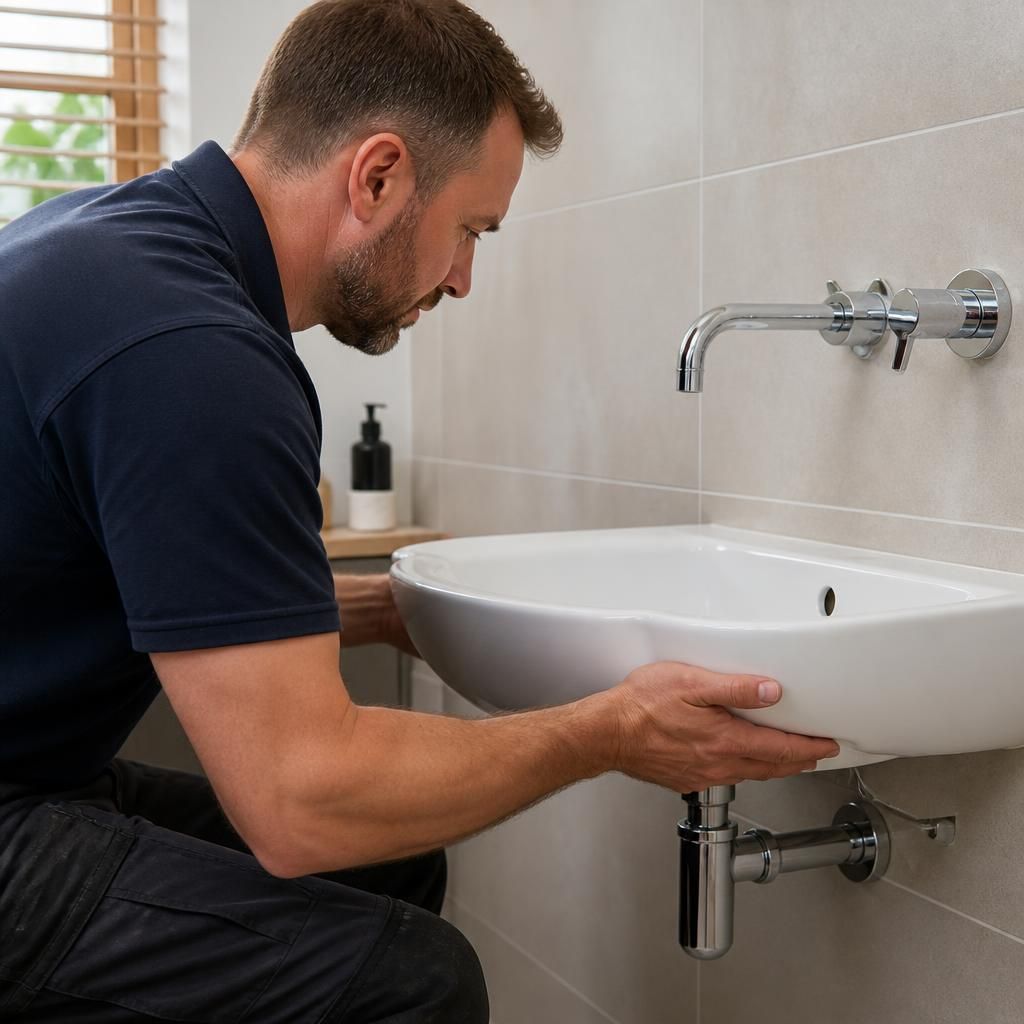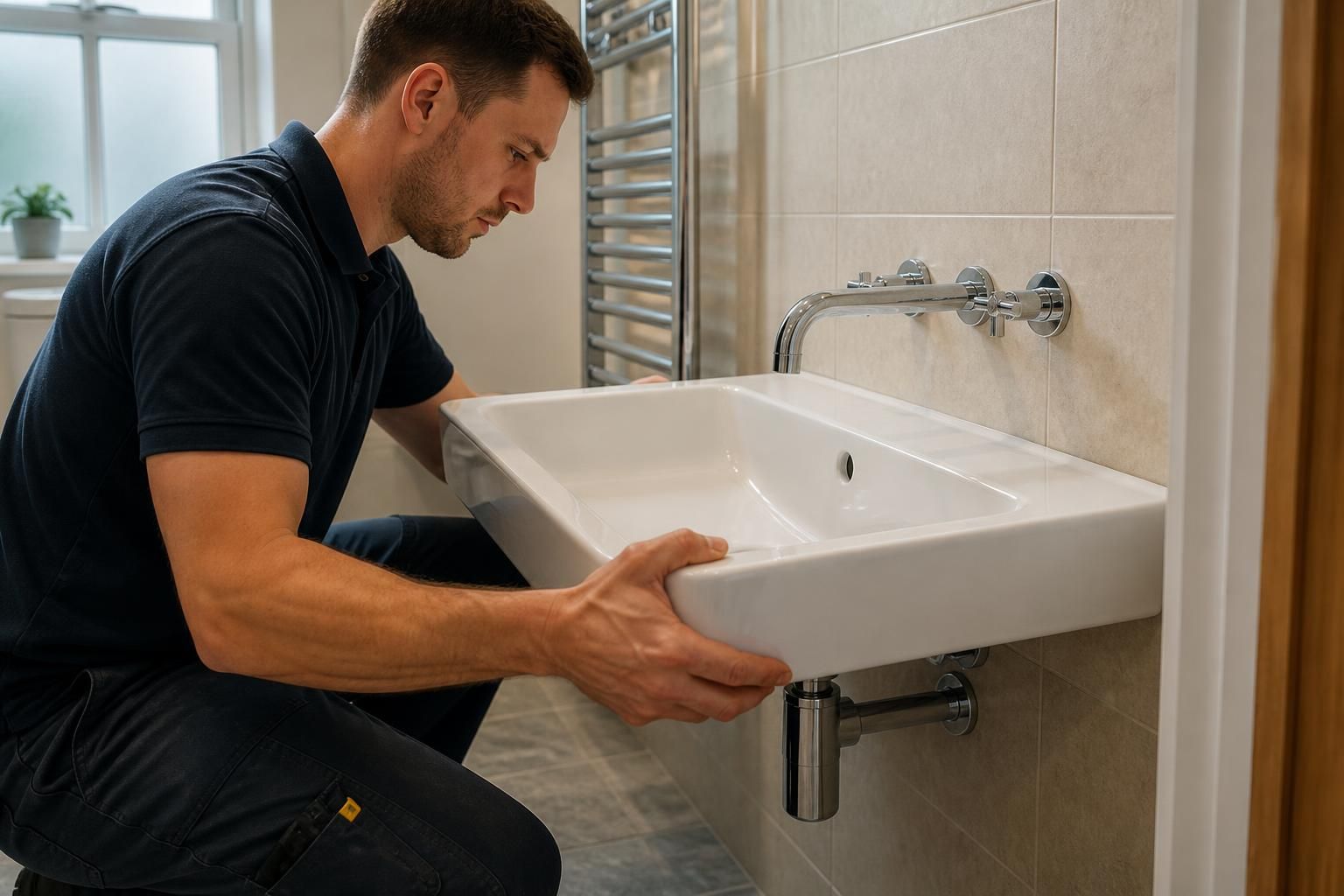
Bathroom sink installation is generally possible in a rented property when the proposed work is suitable for the room and the tenancy arrangements have been dealt with beforehand. The main distinction is between replacing an existing basin in the same position and making a material alteration, such as moving the basin, changing the waste route or modifying the wall.
A like-for-like replacement is usually the least disruptive option. A plumber can assess whether the new basin matches the existing water supply connections, trap and waste outlet. Even when the basin appears similar, the tap-hole position, fixing points and waste fitting may differ, so the new unit should be checked against the existing pipework before it is ordered.
- Existing water connections: The hot and cold supplies need to align with the tap or mixer, with suitable isolation valves that allow future maintenance.
- Waste and drainage: The trap and waste pipe must have the correct fall and a secure connection to prevent leaks or unpleasant odours.
- Wall and floor condition: The fixing surface must be strong enough for the basin and any pedestal, vanity unit or support brackets.
- Sealing: Sanitary-grade sealant is normally used around suitable joints and edges to limit water penetration, although it should not be used to conceal a poor or unstable connection.
- Access: Pipework should remain accessible for servicing rather than being permanently enclosed without a suitable access panel.
A new position can involve more extensive work. Moving the basin may require new supply pipes, a longer or redirected waste connection, additional wall fixings and repairs to tiled or decorated surfaces. If the proposed basin is wall-hung, the wall construction and fixing method are particularly important because the finished installation must support the basin and the loads placed on it during normal use.
The tenancy agreement and the landlord’s instructions should be used to establish who selects the design, arranges the plumber, pays for the work and deals with any reinstatement when the tenancy ends. It is sensible to keep a written record of the agreed basin model, location, finish and scope of work. The agreement should also clarify whether the new fixture remains with the property and whether the original basin must be stored or refitted later.
Before installation, the plumber should inspect for concealed pipework, existing leaks, damaged flooring, loose tiles and signs of damp. These issues can affect the final method and may need to be resolved before a new basin is fitted. Measurements should include the basin width and projection, clearance around the toilet or shower, door movement and access to taps and isolation valves. A suitable height and position are also important for comfortable use by the household.
After fitting, the water connections and waste should be tested under normal operating conditions. The installer should check that taps run correctly, the basin drains without backing up, the trap remains dry and there is no seepage around joints. Any disturbed tiles, sealant or decoration should be recorded so that the landlord and tenant understand what has been altered.
For a rented property, a written quotation should separate the basin, taps, waste components, labour and any remedial work. This makes it easier to distinguish the cost of the installation from optional upgrades or repairs uncovered during the inspection. A local plumber such as Ideal Plumbing Services can assess the existing arrangement and explain whether a straightforward replacement or a more involved alteration is appropriate for the property.