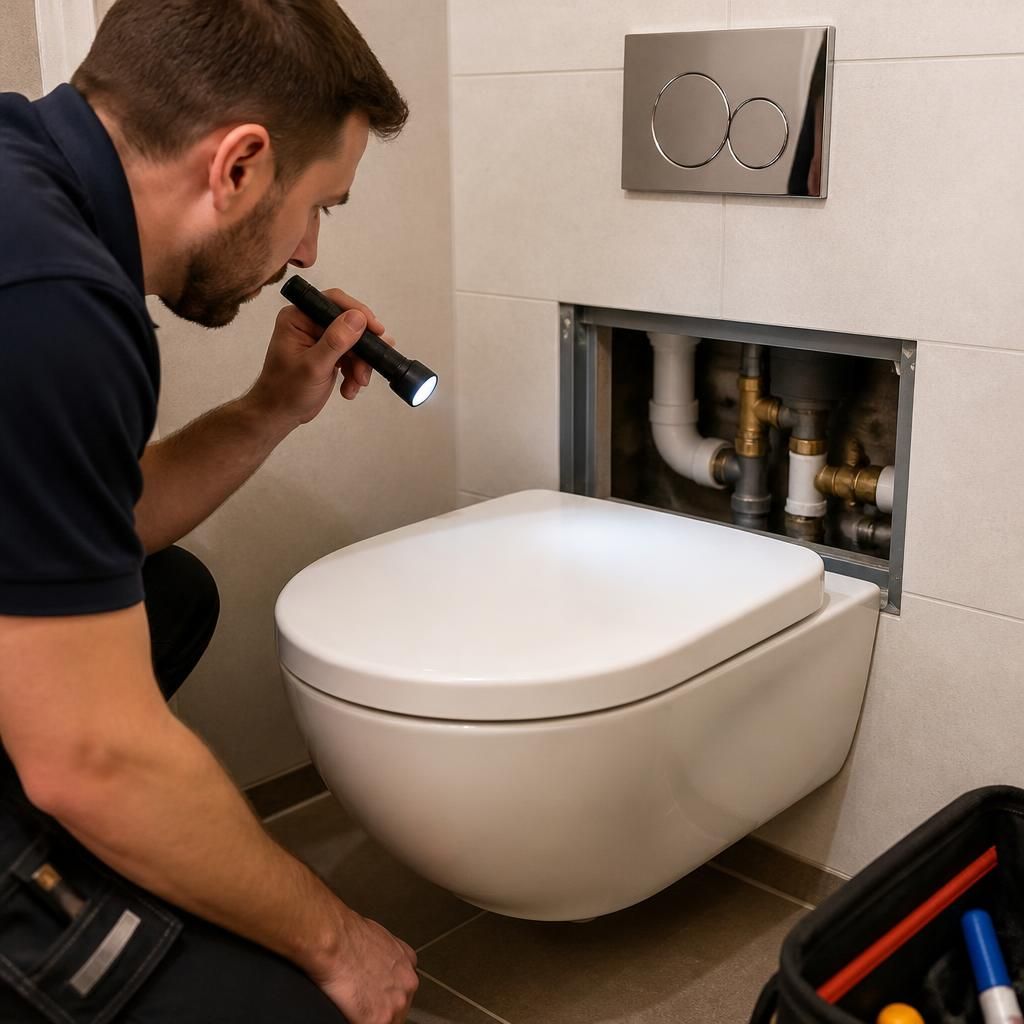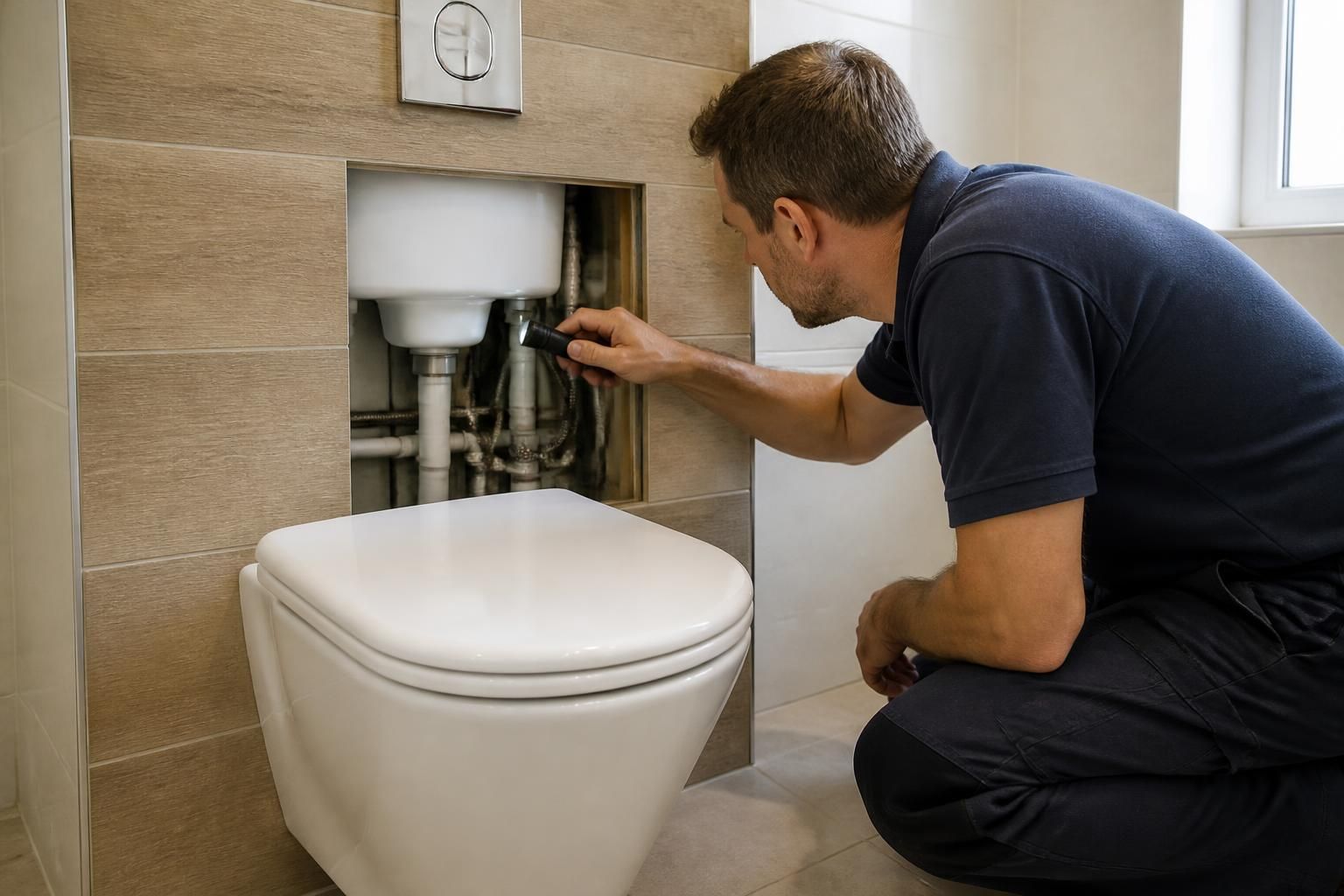
The amount of access needed for toilet leak detection depends on where water is appearing and whether the suspected components are exposed. Many faults can be investigated from the front, top or side of the toilet without taking it out. More extensive access may be needed for a concealed cistern, a covered waste connection, or a leak beneath the flooring.
Access needed for common toilet leaks
- Supply pipe and isolation valve: The plumber needs room to see and handle the connection where the water supply enters the cistern. Restricted space can make it difficult to check the valve, flexible connector and threaded joints safely.
- Inlet valve and cistern fittings: Access to the cistern lid allows the inlet valve, overflow route and internal connections to be checked. A cistern that is boxed in may require an access panel to be removed.
- Flush valve and handle: The flush mechanism can be inspected from above, although close-fitting units may need additional clearance around the lid or button.
- Pan connector and waste joint: These parts are often behind or beneath the pan. The toilet may need to be moved if the joint cannot be viewed or tested in its installed position.
- Base seal or flooring: If water is collecting around the foot of the pan, the surrounding finish may need careful inspection. This helps distinguish a failed seal from water running down from the cistern or a supply connection.
Different toilet designs require different access
A close-coupled toilet normally provides access through the cistern lid and the space around the pan. A back-to-wall toilet can conceal the cistern and pipework behind a furniture panel or false wall, so the inspection may depend on removable panels or a service opening. Wall-hung toilets can have their cistern and flush components behind a flush plate, while the pan connection may be concealed within the supporting frame.
Access can also be affected by flooring, boxing-in, fitted furniture and sealant around the base. These features do not automatically mean that they must be removed. A plumber should first establish whether the leak can be traced through the available openings and whether components can be tested without causing damage.
What the inspection may involve
- Checking when the water appears, such as during filling, flushing or when the toilet is not being used.
- Examining joints, valves and fittings for active drips, staining, corrosion or movement.
- Operating the flush and refill mechanisms while observing the cistern, pan and waste connections.
- Checking moisture around nearby surfaces where water may have travelled from a concealed joint.
- Tracing the route of the water before deciding whether further dismantling is justified.
Water can travel along pipework, flooring or the outside of the pan, so the point where a damp patch appears is not always the source of the leak. This is why removing sealant or lifting flooring before the fittings have been assessed can make the investigation less reliable and may create unnecessary repair work.
When more extensive access may be necessary
Additional access is more likely where the toilet has a concealed cistern, the pan connector is enclosed, the leak is beneath the pan, or moisture is reaching the room below. In these situations, the plumber may need to remove a panel, inspect from an adjacent service area or, where appropriate, move the toilet to examine hidden connections. Any removal should be based on the suspected fault and carried out with care to avoid damaging the pan, tiles, flooring or surrounding fittings.
Before arranging an inspection, clear items from around the toilet and make sure the cistern lid, flush plate or nearby access panel can be reached. Tell the plumber where water has been noticed, whether it occurs after flushing or filling, and whether the toilet has already been resealed or repaired. This information can help determine the least disruptive way to investigate the fault.
Ideal Plumbing Services can assess toilet leaks and explain what level of access is appropriate before repair work proceeds. The aim is to identify the source accurately and avoid removing the toilet or disturbing surrounding finishes unless the concealed connection cannot be checked in place.