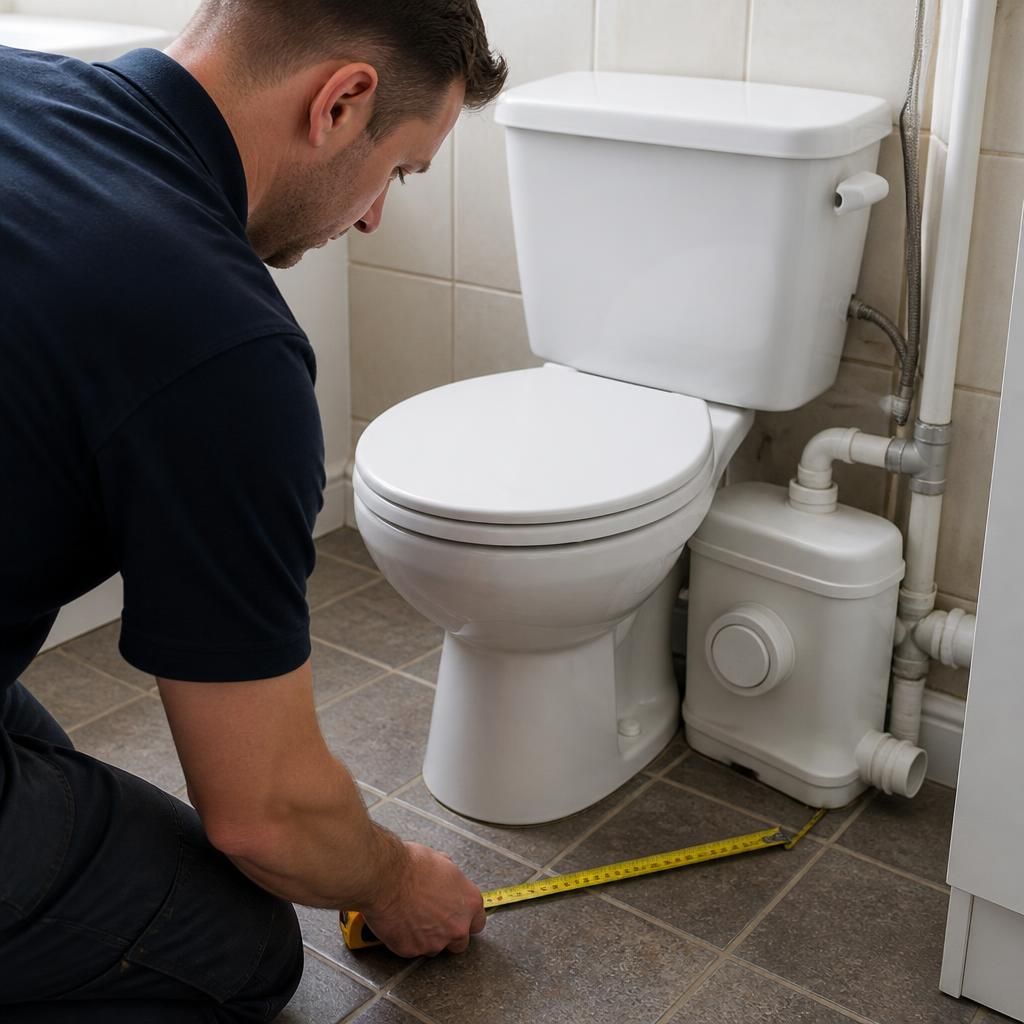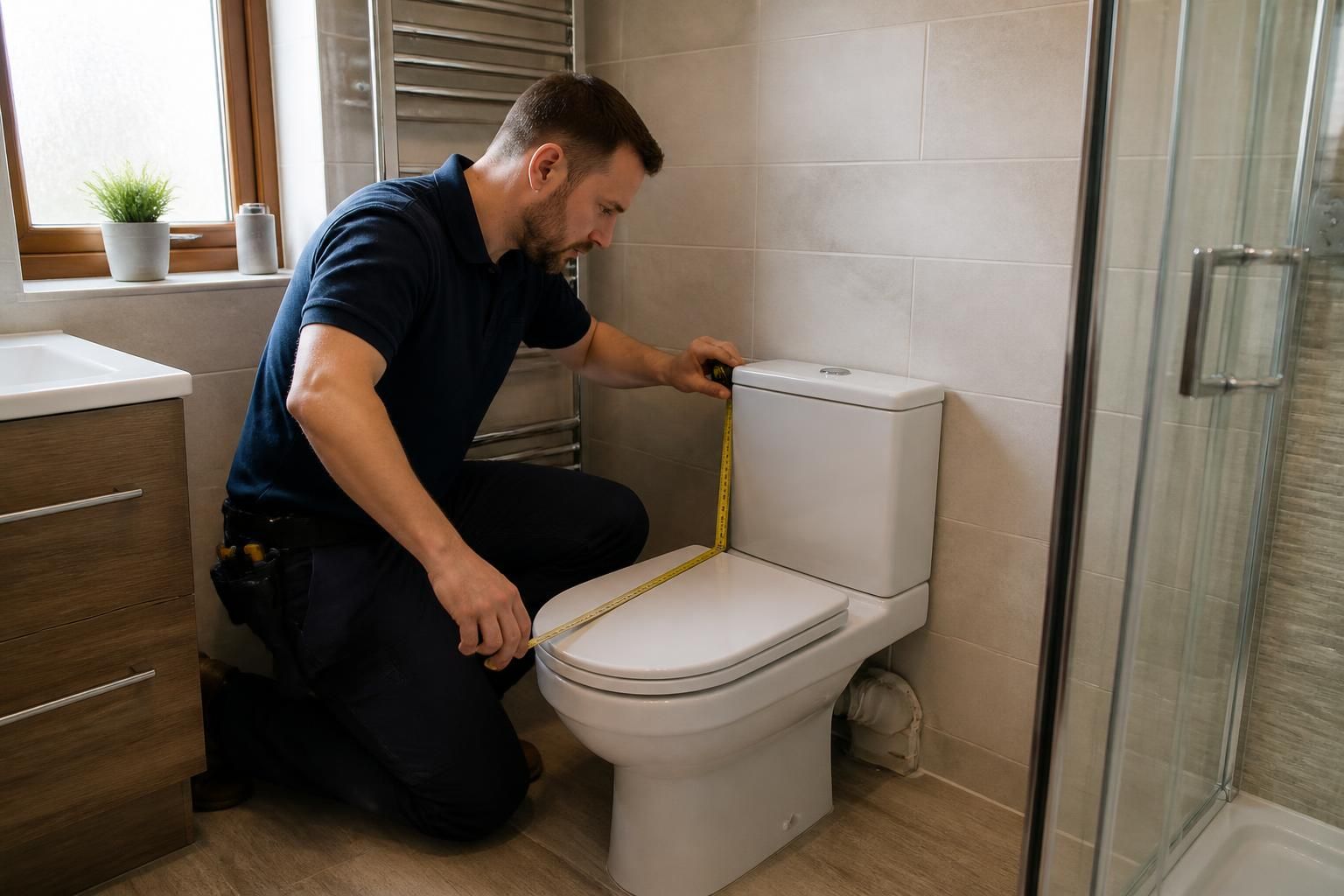
Before arranging a toilet replacement, confirm that replacement is the right solution, identify the existing toilet’s configuration, check the condition of the connected plumbing and decide which features are required. These checks help prevent ordering an unsuitable pan or cistern and clarify whether any associated work is needed.
Confirm why replacement is needed
- Consider whether the problem is structural, such as a cracked pan or cistern, persistent movement or serious deterioration.
- Separate faults that require a new toilet from faults that may be resolved by replacing a flush valve, inlet valve, seat, connector or isolation valve.
- Record any recurring smells, poor flushing, visible staining or dampness, as these may indicate an issue beyond the toilet itself.
Identify the existing toilet configuration
Check whether the toilet is close-coupled, back-to-wall, wall-hung or connected to a concealed cistern. A replacement may need to match the existing arrangement, particularly where the cistern is enclosed in furniture or behind a panel. For a wall-hung toilet, the supporting frame and fixing points should be assessed rather than treating the pan as a standalone item.
Also check the flush button or handle position, the type of seat fixing and whether the current toilet has a soft-close or quick-release seat. These details affect compatibility and help you specify the replacement accurately.
Inspect the connected plumbing
- Check that the isolation valve can shut off the water supply and is not seized, damaged or leaking.
- Look at the flexible connector, inlet connection and visible pipework for corrosion, staining or signs of previous leaks.
- Note whether the toilet rocks or moves, since this can indicate damaged fixings, an uneven base or deterioration around the flooring.
- Consider the condition of the soil connection and surrounding seal if there has been leakage, odour or repeated blockages.
A replacement is an appropriate time to identify these issues, although extra work should be agreed before installation rather than assumed to be included.
Decide which practical features matter
Choose the required bowl shape, seat height, flush operation and seat design before arranging the work. A comfort-height toilet may be easier to use for some people, while a compact design can be useful in a small bathroom, provided it remains suitable for the room. Consider cleaning access, the direction in which the lid opens and whether the cistern or flush mechanism will remain accessible for future maintenance.
Where water use, accessibility or appearance is important, tell the plumber before the replacement is selected. The preferred toilet must still be compatible with the existing installation and suitable for the available connections.
Check the room and installation requirements
Make sure the bathroom can be used safely during the work and that removable items, toiletries and furniture can be cleared from around the toilet. If the toilet is fitted within a suite or furniture run, establish whether panels, boxing or adjacent fittings need to be removed. Confirm who will deal with any old sealant, damaged fixings or minor making-good work if these are found during removal.
For a rented property, the landlord or managing agent should approve the replacement and agree the specification before work is arranged. In a shared building or a property with unusual plumbing, check whether building management rules affect alterations to the sanitary installation.
Ask what the installation includes
Before approving the work, ask for the proposed toilet model or specification and a clear description of the installation. The scope should state whether it includes removing the old toilet, fitting new seals or connectors where required, testing the flush and water connections, taking away the old unit and dealing with any faults found underneath it. It is also sensible to ask what happens if the existing connection does not suit the selected toilet.
A professional plumber can assess compatibility on site and explain whether a straightforward replacement is suitable or whether related plumbing work should be planned at the same time. Ideal Plumbing Services provides toilet replacement and plumbing support for homeowners, landlords and tenants across Birmingham and the West Midlands.