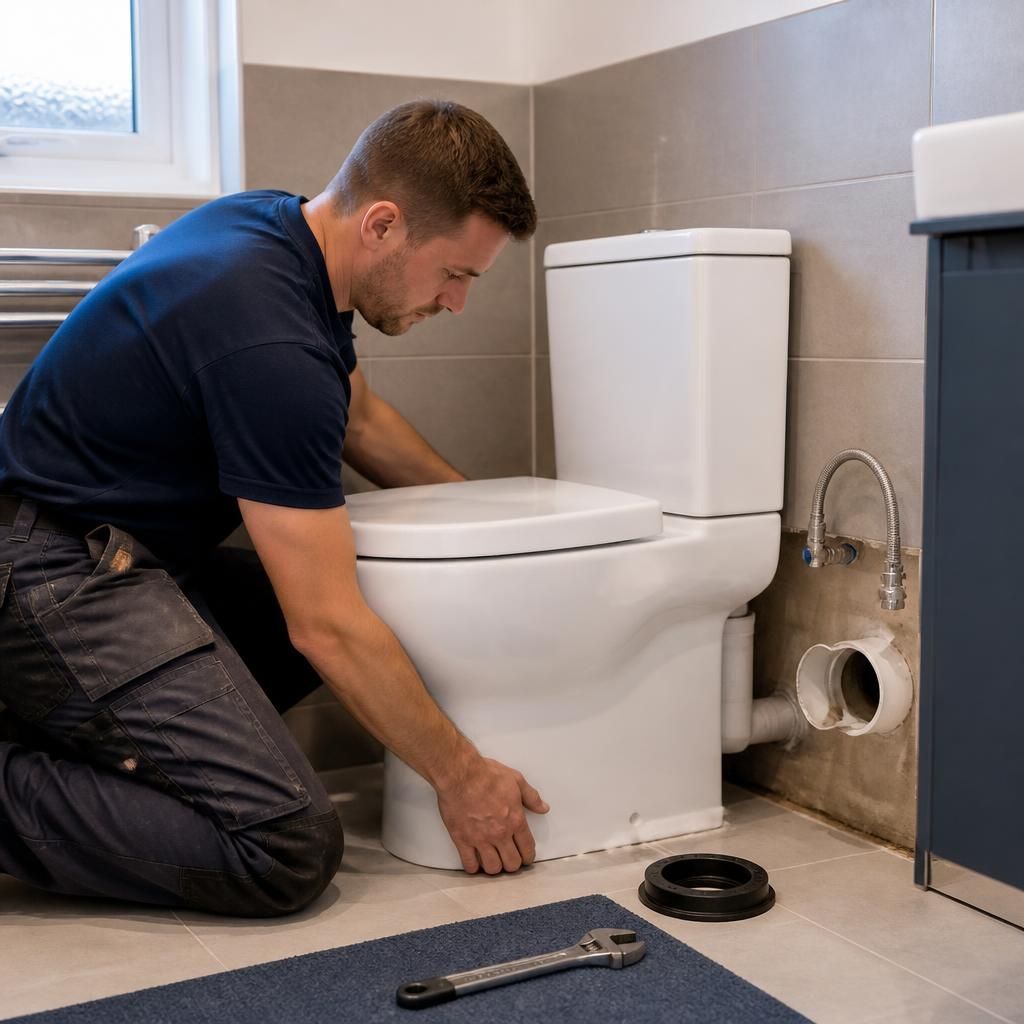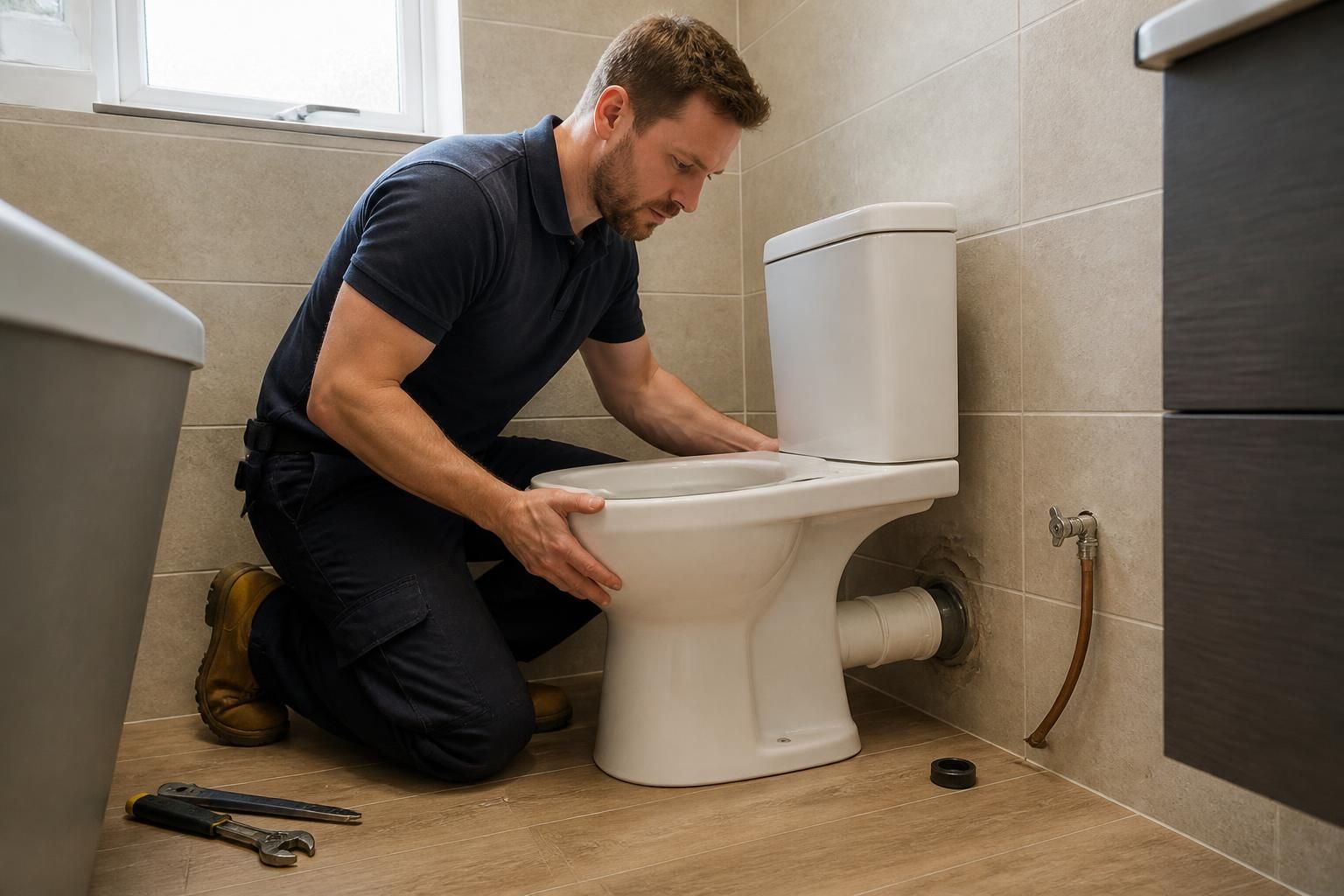
Toilet replacement is generally a contained plumbing job rather than a full bathroom renovation. The work normally involves disconnecting the water supply, removing the existing toilet, checking the connections and floor area, then fitting and testing the replacement. The amount of disruption depends mainly on the toilet design, the condition of the existing fittings and how easily the plumber can reach the waste pipe and isolation valve.
Before work starts, the surrounding area should be cleared of toiletries, bathroom furniture and anything that could obstruct access. A professional plumber will usually protect nearby flooring and surfaces, but removing an old toilet can still disturb sealant, fixings or flooring immediately around its base. If the new toilet has a similar footprint, the previous fixing marks and seal line are more likely to be covered. A different shape may leave areas that need cleaning, making good or redecorating.
The usual replacement process includes:
- Isolating the toilet’s water supply and emptying the cistern and pan.
- Disconnecting the inlet connection and waste connection.
- Removing floor fixings and lifting out the old pan and cistern.
- Inspecting the pan connector, soil pipe, isolation valve, floor and nearby sealant for signs of wear or damage.
- Positioning the new toilet and confirming that it aligns correctly with the waste outlet.
- Securing the toilet, reconnecting the water supply and checking the flush and inlet mechanism.
- Testing for leaks and confirming that the toilet is stable before the work area is cleaned.
Some installations require more work than a straightforward like-for-like replacement. A close-coupled toilet, back-to-wall toilet and wall-hung toilet can each have different access requirements. Concealed cisterns may require access through a service panel or surrounding furniture, while a wall-hung model may involve a supporting frame and additional finishing work. Changes to the toilet position can also require alterations to the waste pipe, flooring or boxing.
Older or poorly maintained fittings can add to the work involved. Seized screws, a brittle pan connector, a leaking isolation valve or a damaged soil pipe may not be visible until the existing toilet has been removed. Damp flooring or deterioration around the base should be investigated rather than covered by the new toilet, as doing so could allow the underlying problem to continue.
There are practical ways to keep the job orderly. Providing clear access, removing fragile items beforehand and identifying the location of the water isolation valve can help the plumber work without moving unnecessary bathroom contents. If the replacement model has already been chosen, its dimensions and outlet position should be checked against the existing installation before fitting begins. This is particularly important where the room is small or the toilet is close to a wall, cabinet or shower enclosure.
After installation, the toilet should be flushed repeatedly and checked around the inlet, cistern, pan connector and base. The plumber should also confirm that the flush operates correctly, the cistern refills without continuing to run and the pan remains secure. Any sealant or finishing material should be allowed to settle according to the product instructions before the area is subjected to normal cleaning.
For homeowners, landlords and tenants in Birmingham and the wider West Midlands, a qualified plumber can assess the existing connections before recommending whether a direct replacement is suitable or whether associated pipework and flooring need attention. Ideal Plumbing Services provides toilet installation and replacement alongside plumbing repairs, helping customers understand the work required before proceeding.