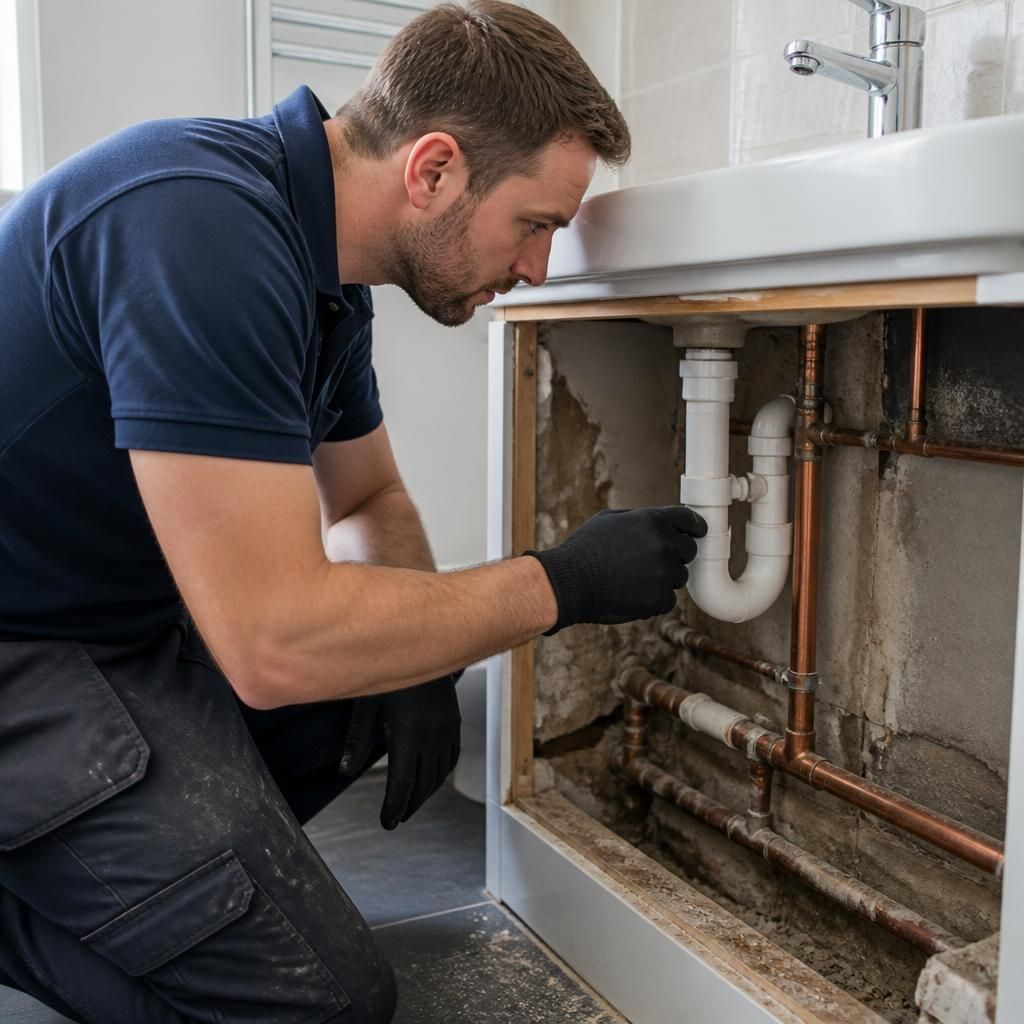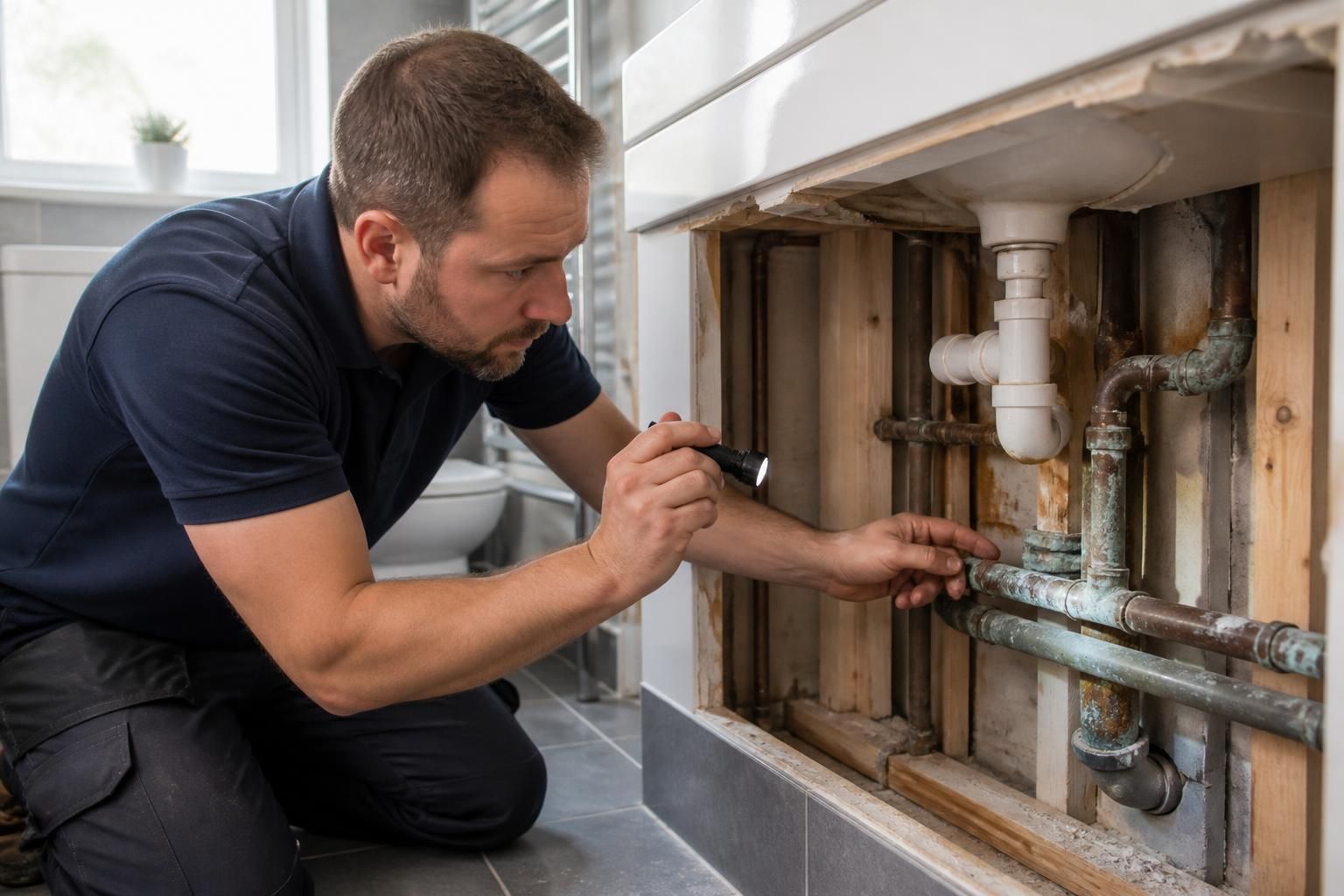
Finding damaged pipework during a bathroom installation means the plumbing must be made sound before the new bathroom is completed. The installation may need to pause while the cause and extent of the damage are established, because covering a leaking, corroded or weakened pipe can lead to concealed leaks, damp and damage to newly fitted fixtures or finishes.
What counts as damaged pipework? The problem may be more than an obvious split or active leak. Common findings include:
- Corrosion that has thinned the pipe wall or affected a joint
- Cracked, distorted or poorly supported pipes
- Loose, leaking or incorrectly fitted connections
- Old materials that are incompatible with the proposed fittings
- Partially blocked waste pipes that cannot drain the new sanitaryware effectively
- Pipework that has been altered repeatedly and no longer follows a suitable route
- Water damage around concealed pipes, boxing, flooring or wall surfaces
A pipe can appear serviceable when visible but still require closer investigation once flooring, boxing or existing fittings are removed. The plumber should establish whether the defect is isolated or part of a wider problem, including checking nearby joints and the condition of connected supply and waste lines.
How the problem is assessed The first step is usually to identify which system is affected. Supply pipework carries water to taps, toilets, showers and appliances, while waste pipework carries used water away. The repair method differs between the two. A supply leak may require the relevant water feed to be isolated, whereas a waste problem may become apparent through poor drainage, leaks at joints or water escaping when the bath, basin or shower is used.
The plumber may inspect exposed sections, trace moisture, check joints and examine the route of the pipework. Where access is limited, additional opening-up may be needed to identify the full extent of the defect. This should be kept as targeted as possible, but avoiding all access can leave part of the problem unexamined.
Repair or replacement? A local repair may be suitable where the surrounding pipe is sound and the defect is limited to a joint or short section. Replacement is generally more appropriate where the pipe is extensively corroded, repeatedly leaking, badly positioned or made from material that is unsuitable for the planned installation. Replacing an accessible section can also be more practical than fitting a temporary repair to pipework that is already near the end of its useful service life.
The proposed solution should take account of how the pipe will be accessed in future. A concealed connection should be suitable for its location and should not be left in a position where a later repair would require unnecessary removal of tiles or fitted units. Pipework also needs adequate support and suitable falls on waste runs so that movement, standing water and recurring joint stress are avoided.
What happens to the bathroom installation? The effect on the programme depends on the location and seriousness of the defect. A small repair may only affect the plumbing stage. More extensive damage can require sections of flooring, plasterboard, boxing or wall covering to be opened, followed by drying and making good before final installation work continues.
Some fixtures may be positioned differently if the existing route is unsuitable. For example, a basin, toilet or shower waste may need a revised connection route to achieve proper drainage and access. Any change should be considered before units are fixed, walls are closed or tiles are laid, since alterations become more disruptive once the bathroom has been finished.
Agreeing additional work and costs A sound installation process separates the original fitting work from remedial plumbing that was not visible at the quotation stage. The plumber should explain:
- What has been found and where it is located
- Whether the issue affects a supply, waste or heating-related pipe
- Whether repair or replacement is recommended and why
- What access and making-good work may be required
- How the change affects the planned fixtures or installation sequence
- The revised cost before chargeable additional work begins
If further damage is uncovered after opening an area, the scope should be reviewed again rather than allowing unplanned work to accumulate. Clear written details are useful for homeowners, landlords and tenants, particularly where responsibility for an existing defect needs to be recorded separately from the new bathroom installation.
Testing before the bathroom is closed up Repaired or replaced pipework should be checked before it is concealed. Supply lines should be inspected for leaks under normal operating conditions, while waste connections should be tested by running water through the relevant fixtures and observing joints and discharge points. The plumber should also check that isolation valves, traps and access points remain usable.
Photographs of concealed routes can be useful once the work has passed inspection. Keeping a record of where pipes run may help with future maintenance and reduce the risk of drilling or fixing into pipework. Any damp materials should be allowed to dry appropriately before finishes are installed, as closing a wet area can contribute to mould, staining or deterioration.
Where damaged pipework is found during a bathroom installation, the safest approach is to treat it as a plumbing repair issue within the wider project, not as a defect to hide beneath the new bathroom. Proper diagnosis, an agreed remedial plan and testing before completion help protect the fixtures, finishes and structure around them. A qualified plumbing service can assess the existing pipework, explain the available options and carry out the necessary repairs as part of the installation work.