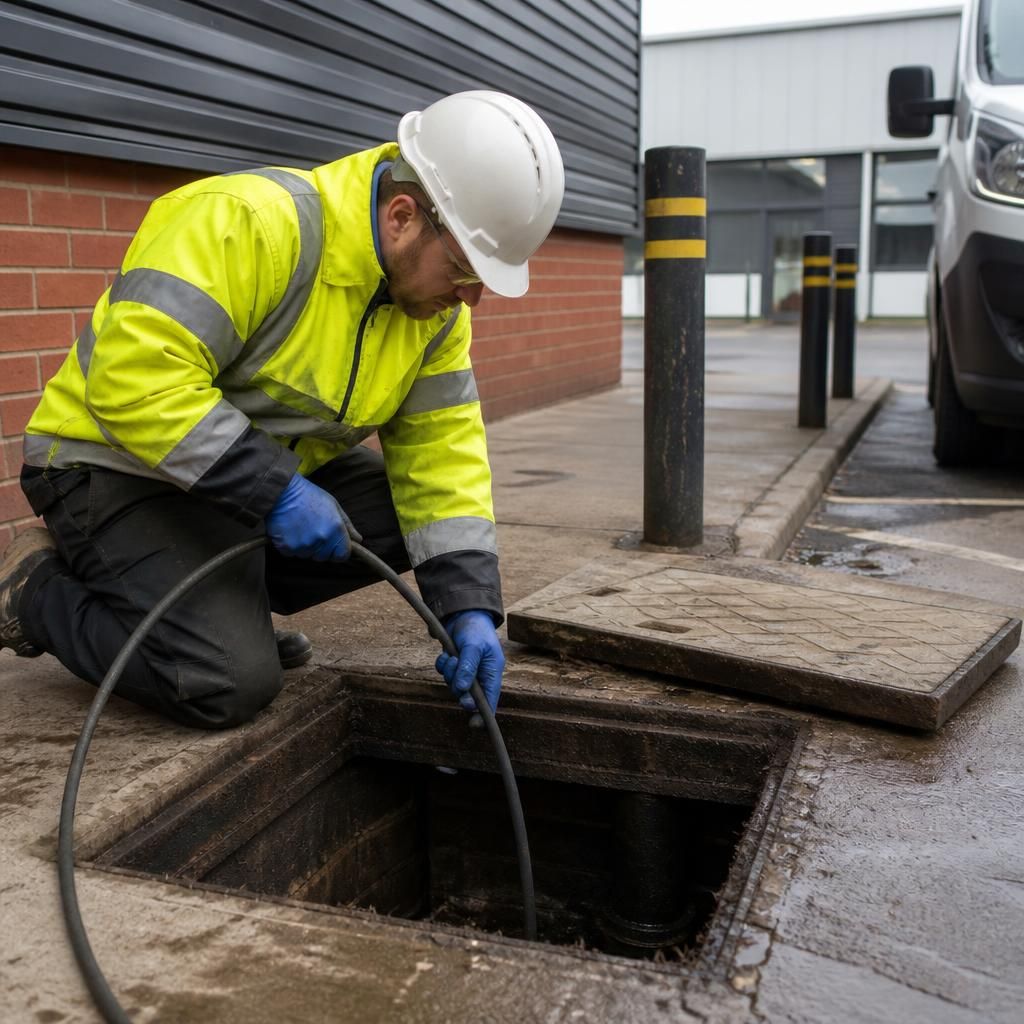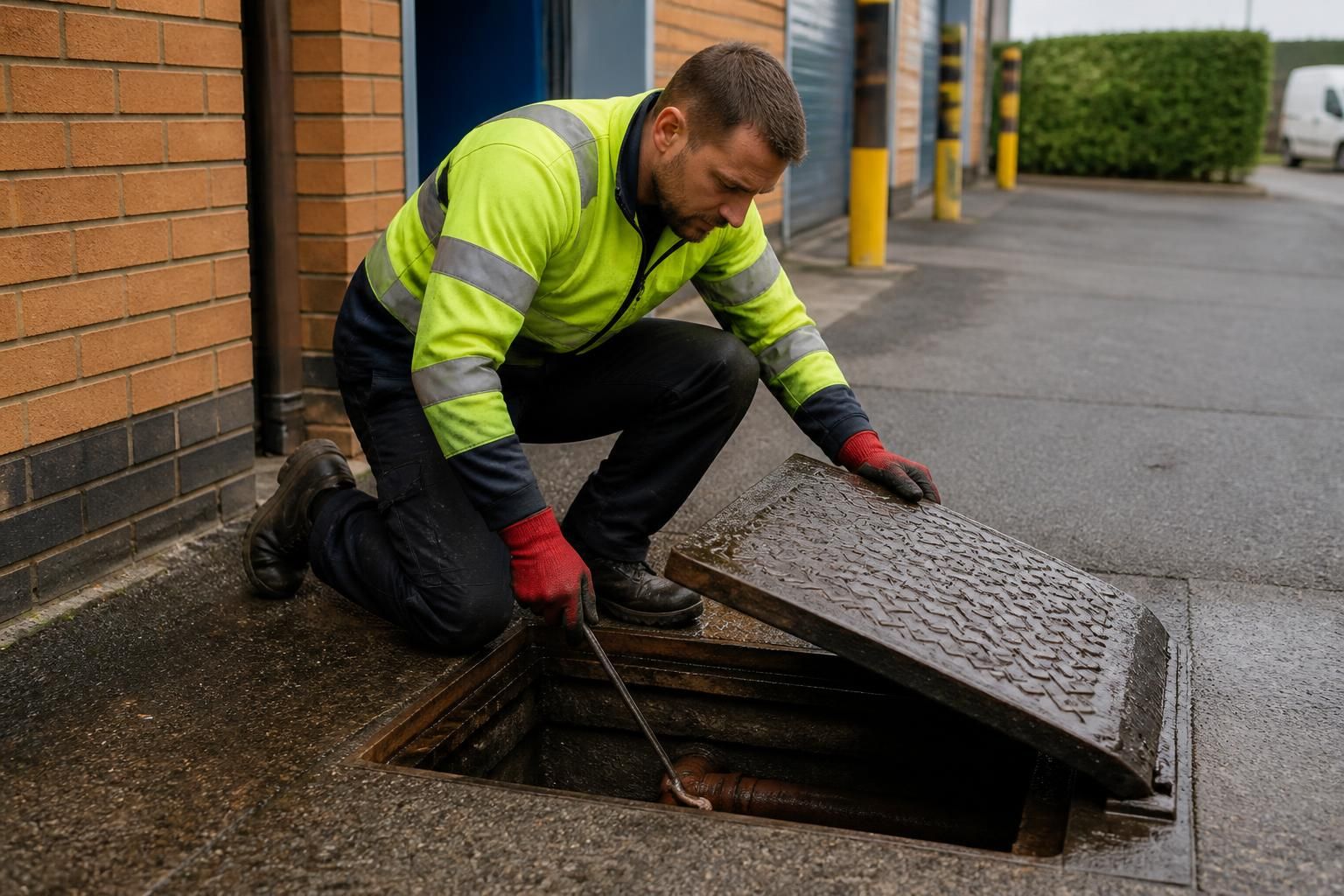
Commercial drain work does not necessarily require a business to stop operating. Disruption is usually controlled by defining the affected area, selecting a suitable repair method and agreeing practical arrangements before work starts. Some jobs may be completed with little effect on normal activity, while blocked, collapsed or inaccessible drainage can require temporary restrictions around access points, toilets, kitchens, plant rooms or external working areas.
The main factors affecting disruption
- Fault type: A blockage, damaged pipe, root ingress or collapsed drain each requires a different approach. Inspection and cleaning may have a smaller operational effect than structural repair or replacement.
- Location: Work in a car park, service yard or landscaped area may affect vehicle movements and deliveries. Work inside a building can affect staff routes, customer access, toilets, kitchens or production areas.
- Access: Drain chambers, inspection points and pipe runs may be located beneath floors, paved areas or stored goods. Clearing access in advance can reduce delays and prevent unnecessary interference with business activity.
- Isolation requirements: Some repairs require part of a drainage system to be taken out of use. This may temporarily affect connected toilets, sinks, floor drains or trade waste systems.
- Repair method: Localised repairs or suitable no-dig methods may reduce the need for excavation. Where excavation is unavoidable, the work area, spoil storage, machinery and reinstatement will need more space and control.
How planning helps limit interruption
A proper site assessment should identify the affected drainage route, access points, nearby services and the activities that cannot be interrupted. The findings can then be used to plan the work sequence. For example, access can be prepared before equipment arrives, furniture or stock can be moved away from the working area, and alternative routes can be agreed for staff, visitors and deliveries.
Where a drainage section must be isolated, the affected facilities should be identified clearly rather than treating the whole premises as unavailable. Temporary arrangements may be possible depending on the building, its layout and the nature of the drainage system. A responsible person on site should know which facilities are affected, what restrictions apply and when the area can be used again.
Managing work in occupied premises
- Separate the work zone from staff, customers and other visitors using appropriate barriers and clear signage.
- Keep access routes, fire exits and essential service areas unobstructed.
- Control dust, wastewater, odours and contaminated materials through suitable containment and cleaning procedures.
- Protect floors, walls, stock, equipment and finished surfaces near the work area.
- Coordinate noisy activities, excavation and vehicle movements with deliveries, customer appointments and other site operations.
- Check the area after the work so that covers, surfaces and access routes are safe to use.
Drain cleaning and inspection can also produce temporary noise, water discharge or odour, particularly where high-pressure equipment or contaminated drainage is involved. These effects should be considered when choosing the work area and sequence. In food, healthcare, education and other sensitive environments, additional hygiene, safeguarding or contamination controls may be required.
When excavation is involved
Excavation generally creates more disruption because it may require barriers, digging equipment, temporary storage of excavated material and restrictions on vehicles or pedestrians. It can also expose other services and require reinstatement after the pipe repair. A planned excavation should therefore include service checks, a safe access arrangement, a defined work boundary and a reinstatement plan.
Excavation is not automatically necessary for every drain fault. CCTV surveying, targeted cleaning and certain trenchless repair techniques may help diagnose or address suitable defects without opening the full surface. The appropriate method depends on the pipe's condition, position, diameter, access, flow requirements and the type of failure. A method that appears less disruptive is not suitable for every drainage system, so the technical assessment should come first.
Information to agree before work begins
The business should explain its operating requirements, restricted areas, delivery patterns, customer access arrangements and any sensitive activities taking place on site. It should also identify who can authorise isolation of drainage services and who will inspect the completed work. The drainage contractor can then assess whether the job should be completed in stages, whether temporary facilities or access arrangements are needed and which areas must remain clear.
In practice, the least disruptive solution is not always the fastest-looking one. Correct diagnosis, suitable equipment and a controlled work sequence can prevent repeated access, avoidable opening-up and further damage. Businesses should request a clear explanation of the proposed method, affected areas, isolation requirements, reinstatement responsibilities and any precautions needed before agreeing to the work.