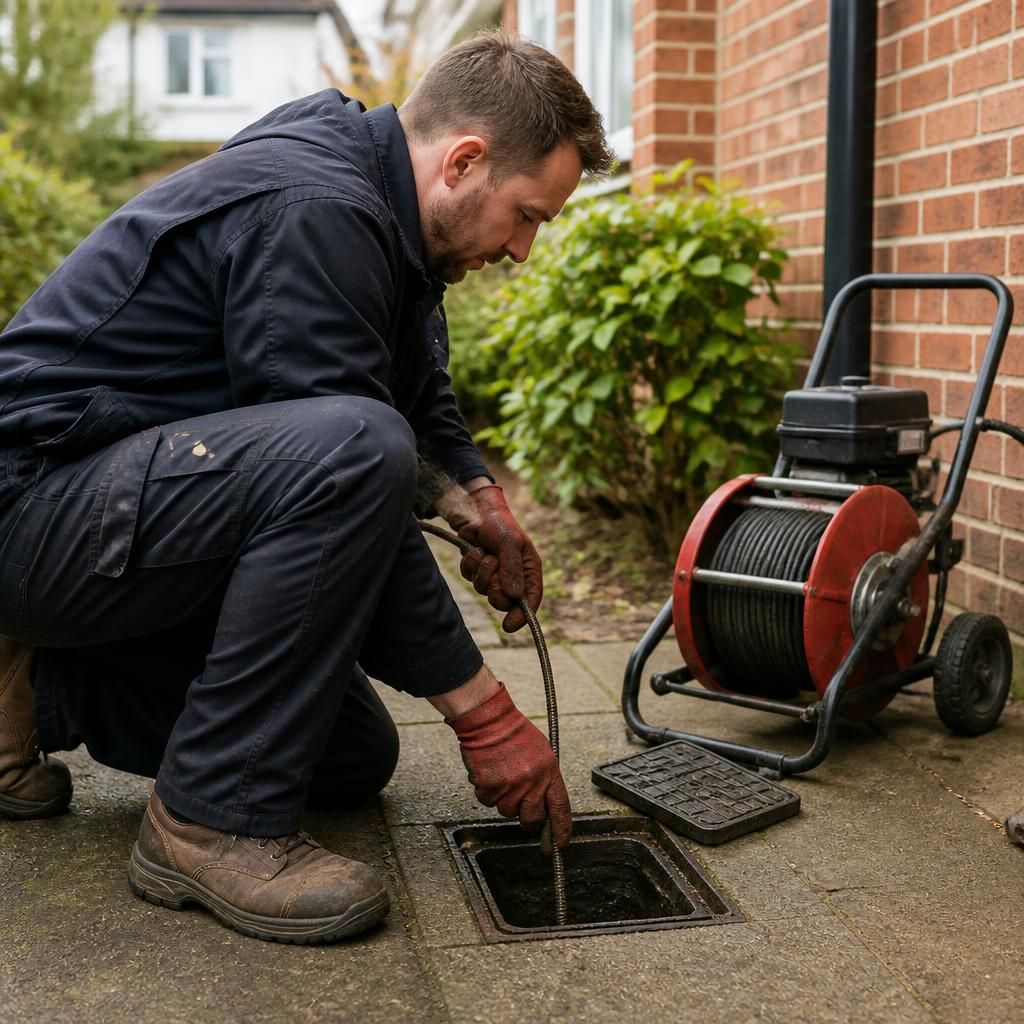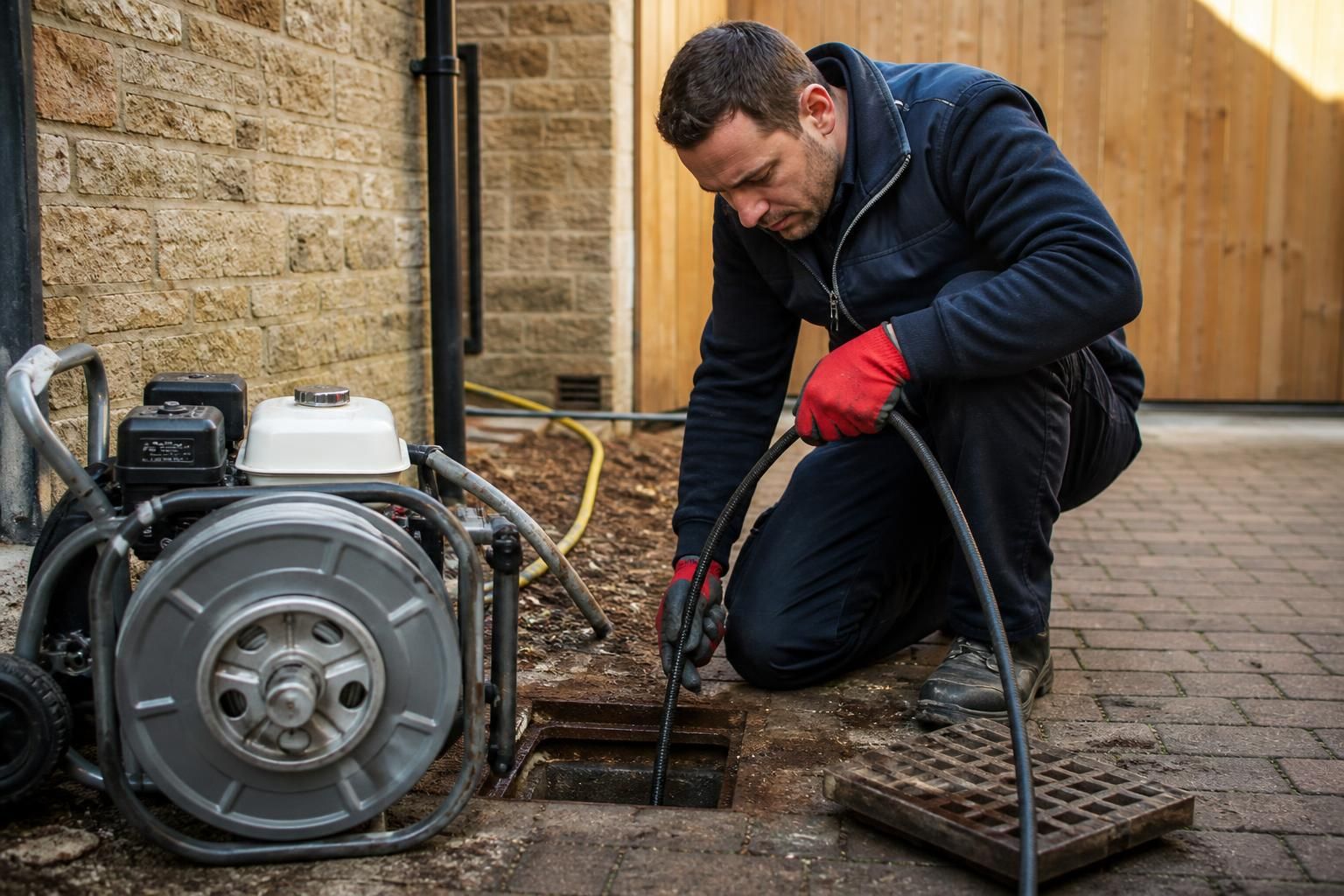
The cost of drain cleaning is usually made up of the engineer’s labour, the cleaning method used and any specialist equipment required. A straightforward blockage may need only basic cleaning, while a difficult or recurring obstruction can require mechanical equipment, high-pressure water jetting or a CCTV inspection before the correct work is confirmed.
What is normally included in the cost?
- Initial assessment: The drain’s location, symptoms and accessibility are checked to identify where the obstruction is and whether cleaning is appropriate.
- Labour: Charges may reflect the time needed to reach the affected pipe, remove the blockage and test the flow afterwards.
- Cleaning equipment: Simple hand tools may be suitable for some blockages. More established or extensive obstructions can require powered equipment or water jetting.
- Access: An easily accessible external drain is generally less involved to work on than a blockage beneath flooring, behind fixtures or in a difficult-to-reach section of pipework.
- Additional investigation: If the blockage keeps returning, a CCTV drain survey may be recommended to look for defects, displaced joints, root ingress or other underlying problems.
The condition of the pipework also affects the final cost. Cleaning removes an obstruction, but it does not correct a cracked, collapsed or badly misaligned pipe. If an inspection identifies a repair requirement, that work should be explained separately from the drain-cleaning charge.
Why two drain-cleaning quotes may differ
Quotes are only directly comparable when they cover the same work. One price may include diagnosis, cleaning, flow testing and equipment, while another may cover only an initial visit or a limited attempt to clear the blockage. Before accepting a quote, check:
- whether the assessment and cleaning are included;
- which method is proposed and why it is suitable;
- whether the charge is fixed, hourly or dependent on the work required;
- whether specialist equipment or a CCTV survey would cost extra;
- what happens if the blockage cannot be cleared safely; and
- whether repairs, replacement parts or follow-up work are outside the quoted service.
A very low quote can indicate that important parts of the job are excluded, whereas a higher quote may include more investigation or specialist equipment. The most useful comparison is therefore the scope of work rather than the headline figure alone.
It is sensible to seek professional advice when a blockage returns after cleaning, affects more than one outlet, causes foul smells or results in slow drainage throughout the property. These signs can indicate a restriction further along the system, meaning repeated basic cleaning may add to the overall cost without addressing the reason for the problem.
Before a drain-cleaning visit, note which fixtures are affected, when the problem started and whether wastewater is backing up. Keep access points clear where possible and avoid repeatedly adding chemical drain cleaners, particularly if a professional may need to work on the pipe. This information can help identify the appropriate method and reduce unnecessary investigation.
Ideal Plumbing Services provides drain-cleaning assessments and explains the recommended work and charges before proceeding. With more than 20 years’ experience, the team can distinguish between a cleanable blockage and a problem that may need further drainage or plumbing work.