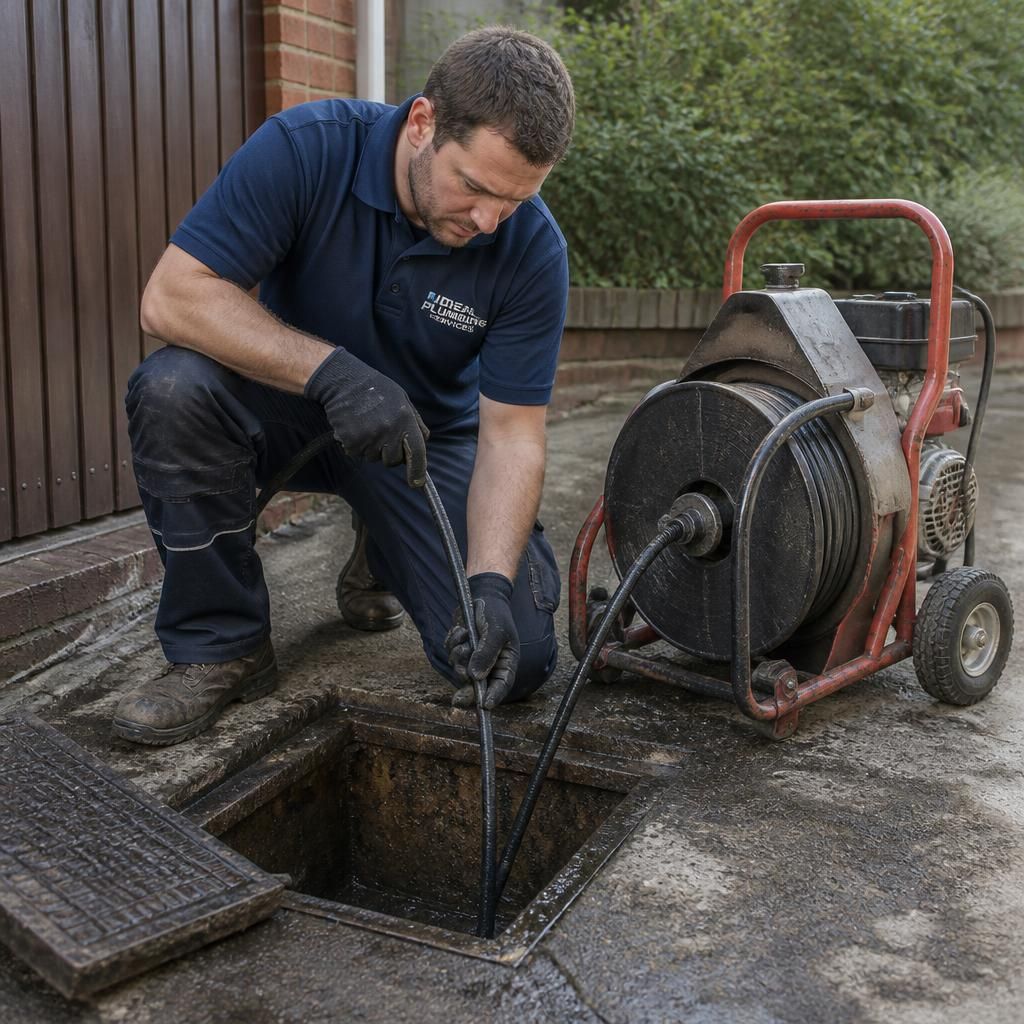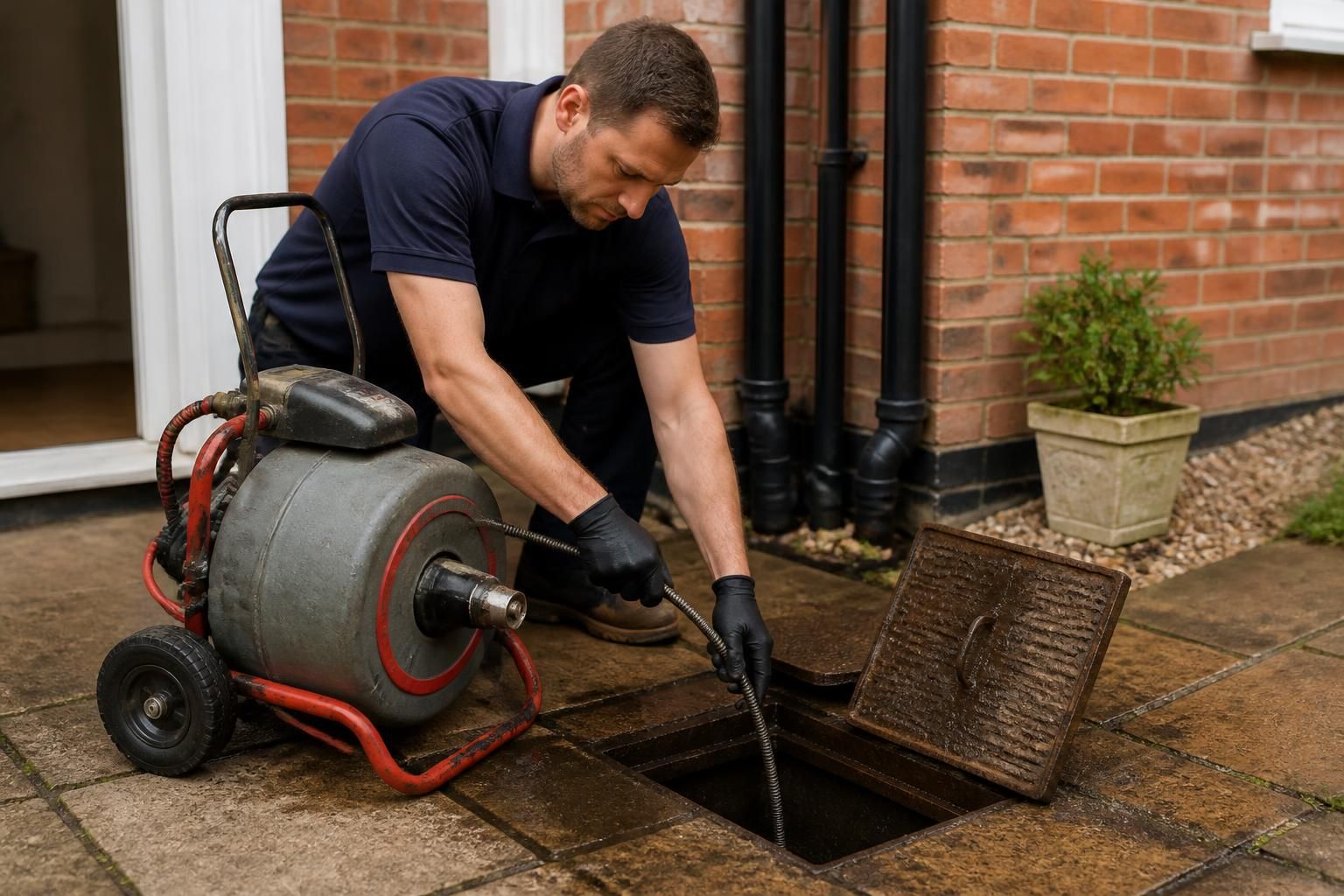
Professional drain cleaning is normally a contained job rather than a major building project. The main effect on your home or business is temporary loss of use of the affected fixtures or drainage points while the blockage is assessed, cleared and tested. The level of disruption depends on whether the obstruction is close to a fixture, deeper in the pipework or located in an external drain.
What happens during the visit
- The plumber identifies which outlets are affected and checks for signs such as slow drainage, standing water, unpleasant smells or repeated blockages.
- Access points are located and the most suitable cleaning method is selected. This may involve mechanical equipment or water-jetting, depending on the pipework and the nature of the obstruction.
- The affected drainage is cleaned and flow is checked. Where appropriate, the plumber may inspect the pipework for damage or underlying defects that could cause the problem to return.
- The work area is left ready for normal use, with any practical aftercare explained to the property owner, landlord, tenant or business representative.
Most of the work takes place at the affected sink, toilet, gully, manhole or other drainage access point. You may therefore be able to continue using other parts of the property, although water use may need to be restricted while the relevant section is being cleaned and tested. If several fixtures share the same blocked line, more than one area may need to remain unused during the work.
Factors that can increase disruption
- Location of the blockage: an obstruction in an accessible trap or near an inspection point is generally more straightforward to reach than one deep within a drain run.
- Type of obstruction: grease, hair, soap deposits, food waste, sanitary products, silt and intrusive roots require different approaches. A solid or recurring obstruction may need more investigation than a simple surface blockage.
- Access: restricted space, fixed units, buried access points or an obstructed manhole can make preparation more involved.
- Condition of the pipework: damaged, collapsed or poorly aligned drains may need separate repair work rather than cleaning alone.
- Extent of the problem: a single slow basin is different from a shared drain affecting toilets, kitchens or several parts of a property.
Drain cleaning does not normally require walls, floors or fitted units to be removed. However, if there is no usable access point or if the blockage is linked to damaged underground pipework, additional work may be necessary. A plumber should explain the reason for any extra access or repair before proceeding.
How to prepare your property
- Clear personal items, cleaning products and loose belongings from around the affected fixture or access point.
- Keep a clear route to external drains, manholes or inspection chambers where these may be needed.
- Tell the plumber about any recent overflow, chemical drain cleaner, previous repair or recurring blockage.
- For rented properties, make sure the landlord or managing agent is aware of any approval requirements.
- For business premises, identify affected facilities and consider how staff, customers or tenants will be kept away from the work area.
Drain-cleaning equipment can create some noise, vibration or splashing, particularly when mechanical tools or high-pressure water are used. Suitable protection around the work area helps limit mess, but access should still be treated as a working zone until the drainage has been tested and the equipment removed.
For a home, the practical inconvenience is usually concentrated around the affected kitchen, bathroom or outside drain. In a business, the impact may be greater if the blocked line serves toilets, food-preparation areas or shared facilities. Planning the work around the least disruptive part of the operating day can help, provided the drainage remains safe to use before cleaning is carried out.
After cleaning, avoid treating the result as a permanent solution if the same drain blocks repeatedly. Recurring problems may indicate defective pipework, tree-root intrusion, inadequate flow, a damaged trap or unsuitable items being put down the drain. Identifying that cause can prevent repeated call-outs and more extensive disruption later.
Ideal Plumbing Services can assess the blockage, explain the proposed cleaning method and carry out the work with attention to protecting the surrounding property. The aim is to restore usable drainage while identifying any separate repair or maintenance issue that needs consideration.