A drain keeps blocking when water and waste cannot pass through the pipework freely, usually because the restriction is recurring or the drainage system has an underlying design or condition issue. A single clearance may restore flow temporarily, but repeated symptoms indicate that the source needs to be identified rather than treated as an isolated obstruction.
Common causes of recurring blockages
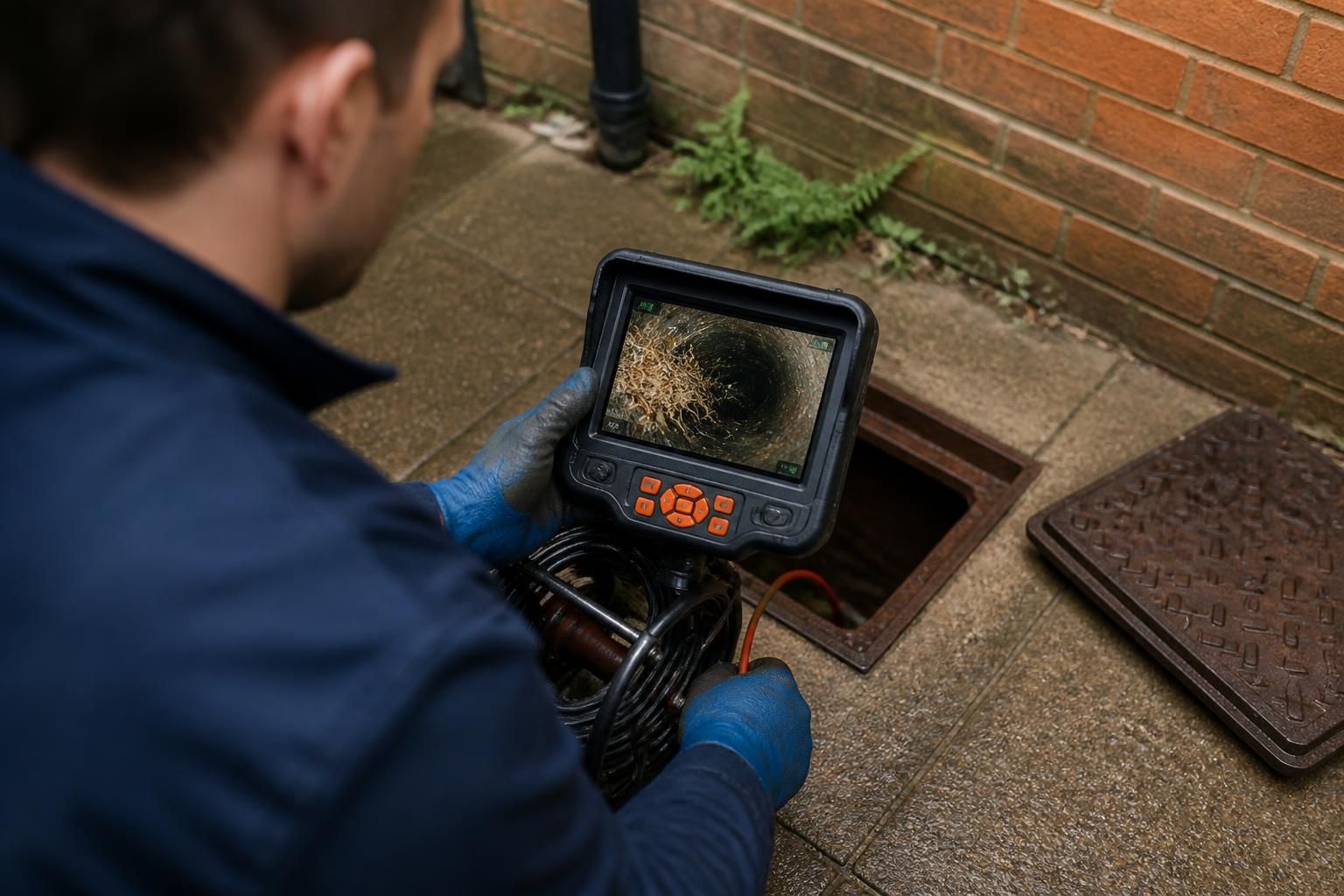
- Mineral scale: Hard-water deposits can build up on the inside of pipes. The rough, narrowed surface slows the flow and provides a place for further waste to catch.
- Poor pipe gradient: Drainage pipes need sufficient fall to carry water away. If a section is too shallow, liquid can remain in the pipe and solids may settle instead of moving through it.
- A displaced or sunken section: Ground movement or settlement can create a low point, sometimes called a belly, where water and sediment collect repeatedly.
- Insufficient pipe capacity: Older or incorrectly sized drainage may struggle to cope with the volume entering it, particularly where several fixtures discharge into the same run.
- A problem in a shared drain: If sinks, toilets or other fixtures in different parts of a property are affected, the restriction may be further along a shared branch or sewer rather than directly beneath one fitting.
- Inadequate ventilation: Drainage systems require air movement to maintain balanced pressure. A ventilation fault can cause slow discharge, gurgling and poor flow, although these symptoms can also indicate a physical restriction.
- Incorrect connections or alterations: Extensions, replacement bathrooms and kitchen refits can introduce unsuitable pipe arrangements, tight bends or poorly aligned connections that encourage recurring problems.
What the symptoms can reveal
The location and pattern of the problem often provide useful diagnostic information. If only one basin or bath drains slowly, the restriction may be close to that fixture. If several fittings are affected at the same time, the issue is more likely to be in a shared section. A toilet that rises when another fitting is used, repeated gurgling, unpleasant odours and water returning through a low-level fitting can all indicate that the obstruction is further into the system.
Blockages that return soon after a basic clearance are also significant. This can mean that material remains attached to the pipe wall, that the pipe has a narrowed internal diameter, or that the system has a gradient or structural problem. Simply adding more chemical cleaner may not remove the underlying issue and can make later work more hazardous.
How a recurring blockage is investigated
- The affected fixtures and the timing of the symptoms are assessed to establish where the problem is likely to be located.
- The drain is accessed using a suitable cleaning method to remove the restriction and restore a clear passage where possible.
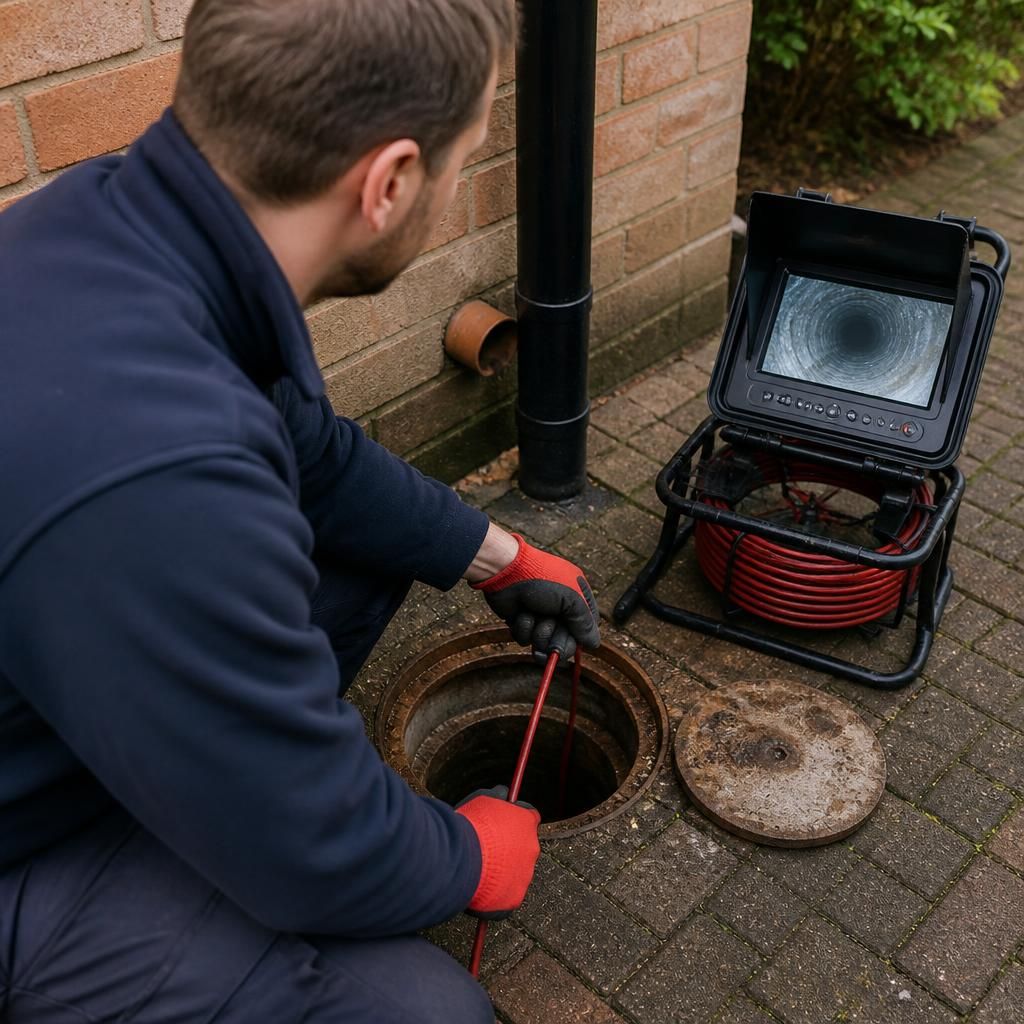
- If the problem has returned, a drainage inspection can examine the internal condition of the pipe and identify scale, low points, misalignment or other abnormalities.
- The findings are used to distinguish between a local maintenance issue and a wider repair requirement.
An inspection is particularly useful when the same drain blocks repeatedly, when more than one fixture is affected, or when clearing the drain provides only short-lived improvement. It can help avoid repeated remedial visits that address the symptom without explaining why it keeps happening.
Reducing the risk of further blockages
- Use suitable strainers on sinks and shower outlets to reduce the amount of solid material entering the drainage system.
- Do not dispose of cooking fats, oils or unsuitable household products through a sink or toilet. Allow fats to cool and follow local disposal guidance instead.
- Use the correct amount of paper and avoid flushing items that are not designed to break down in a drainage system.
- Pay attention to early warning signs such as slower flow, bubbling sounds or changes in water level.
- Arrange investigation of a recurring problem rather than relying on repeated surface-level clearing.
For landlords and tenants, recording which fixtures are affected and when the symptoms occur can help establish whether the issue is within the property or in a shared drainage run. For homeowners, the same information can make a professional assessment more focused. Ideal Plumbing Services provides drain cleaning and drainage inspection for residential properties in Birmingham and the wider West Midlands, helping identify whether repeated blockages are caused by a local restriction or a problem within the wider pipe system.