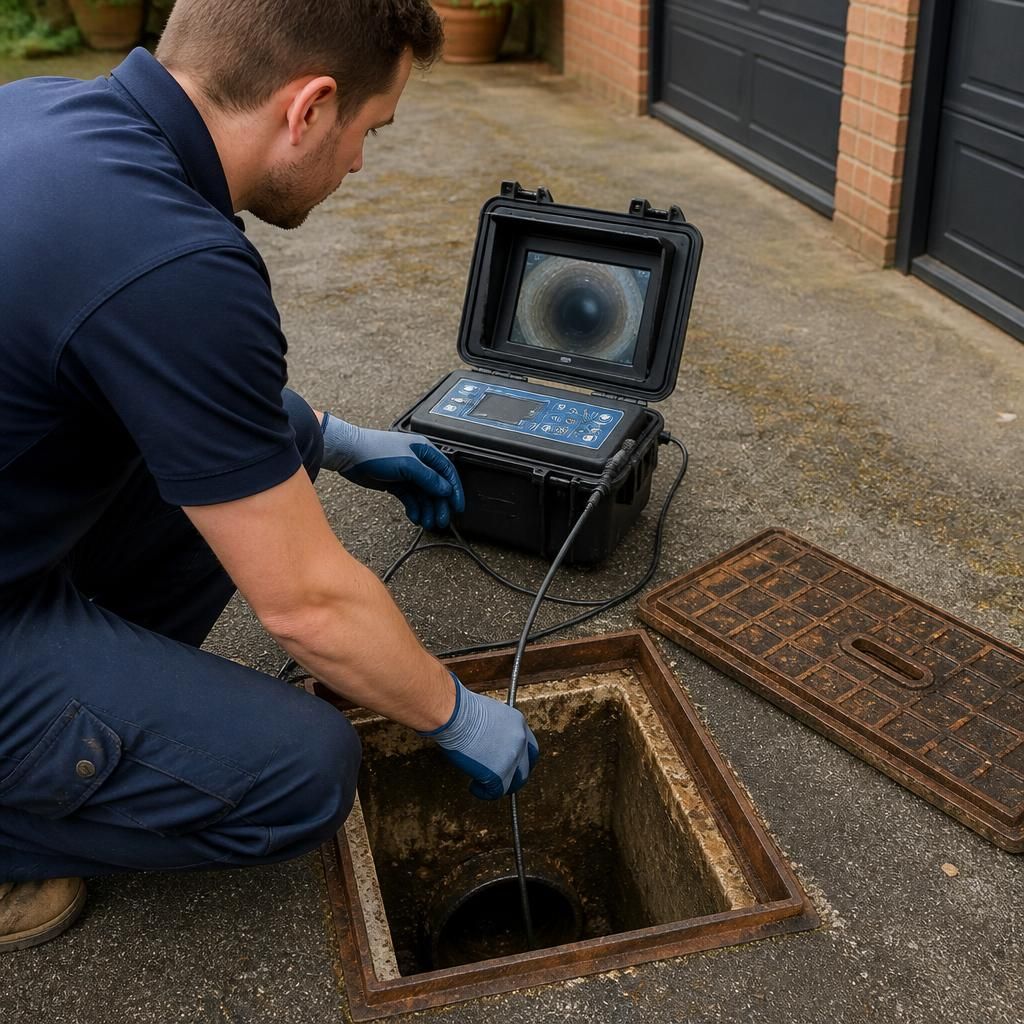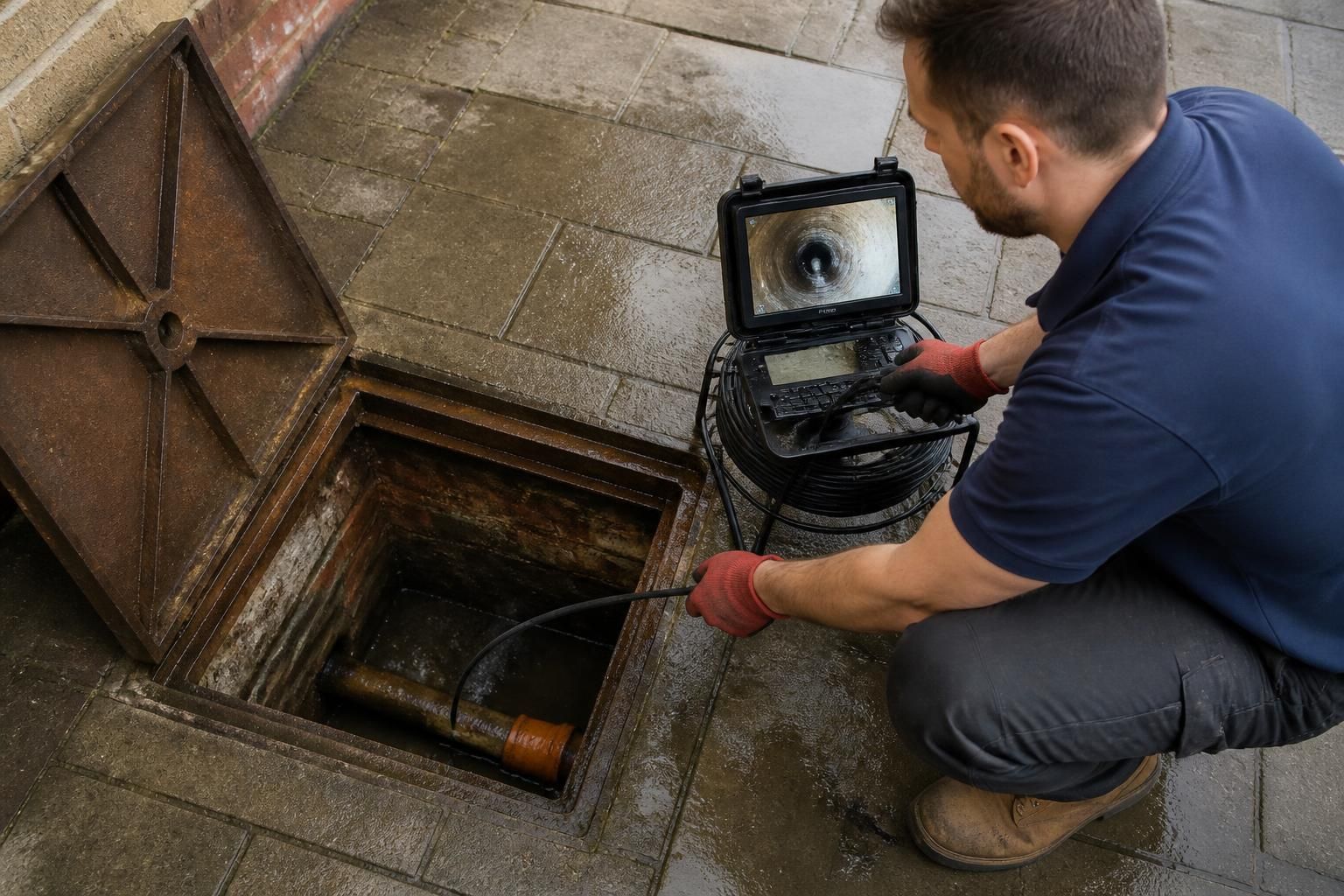
A drain inspection generally requires only one practical entry point into the drainage system, rather than access along the full length of the pipe. The required opening may be an inspection chamber, manhole, rodding eye or another suitable connection point, depending on the layout and condition of the property.
The technician first needs to identify the drainage route and determine where the camera can be introduced. For external drainage, this often means locating a chamber or access cover in a driveway, garden, patio or communal area. For internal pipework, access may be available beneath a sink, behind an appliance or at a drainage connection, although the exact position depends on the installation.
Before the inspection, the access point should be reachable without moving heavy objects or dismantling fixed structures. Covers, grilles and removable panels may need to be lifted, and items stored over the access point should be moved beforehand. Where the opening is in a shared area, the technician may also need permission to enter or to examine a chamber serving more than one property.
What the plumber normally needs:
- A safe route to the inspection point
- Enough working space to remove a cover or connect the inspection equipment
- Clear visibility of the opening and surrounding surface
- Access to relevant indoor areas if the drainage layout cannot be assessed externally
- Information about recent blockages, unusual smells, flooding or building work that may help identify the affected pipework
The camera itself is passed through the drainage system from the chosen entry point. It can then provide information about blockages, displaced joints, cracks, root intrusion, damage or changes in the pipe's alignment. In some cases, a second access point is useful, particularly where the pipe is long, has several branches or requires inspection from both directions. This is assessed during the visit rather than being required for every property.
Access can be more complicated where a cover is buried beneath paving, covered by soil, obstructed by stored items or damaged and difficult to lift. A chamber that is full of standing water or heavily silted may also limit what can be seen until it has been cleared. The technician should explain any additional work needed before proceeding, especially if a cover, surface or fixed fitting has to be opened.
If no usable access point exists, the options depend on the drainage design. A plumber may be able to use an alternative opening, trace the pipework or recommend installing a suitable access point. Creating access through a surface or structure is a separate consideration and should only be undertaken where the inspection cannot be completed by less intrusive means.
For homeowners, landlords and tenants, it is helpful to identify all visible drainage covers before the appointment and ensure the technician can reach them. Photographs of inaccessible areas, details of previous repairs and permission from a landlord or managing agent may also prevent delays. Ideal Plumbing Services can assess access requirements as part of drain inspection work for residential properties in Birmingham and across the West Midlands, including situations where the drainage layout is unclear or access is restricted.