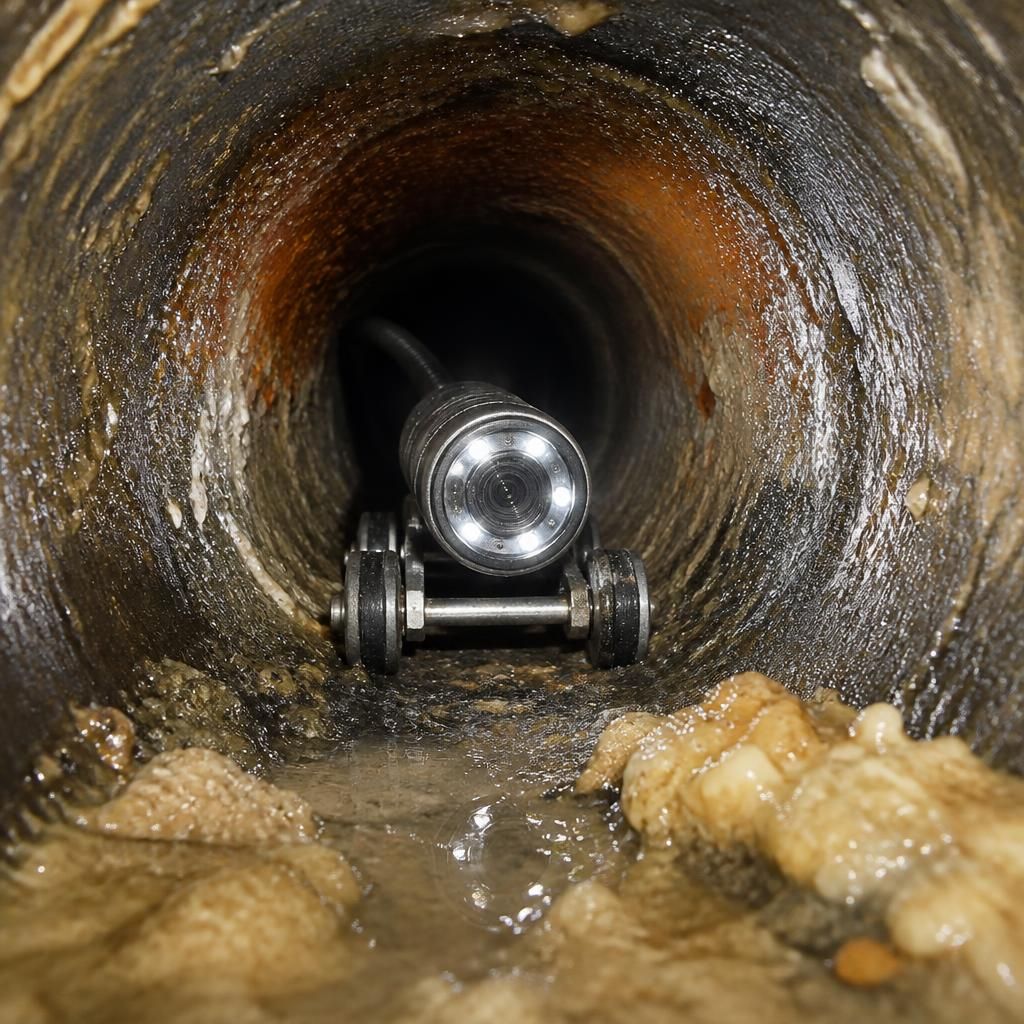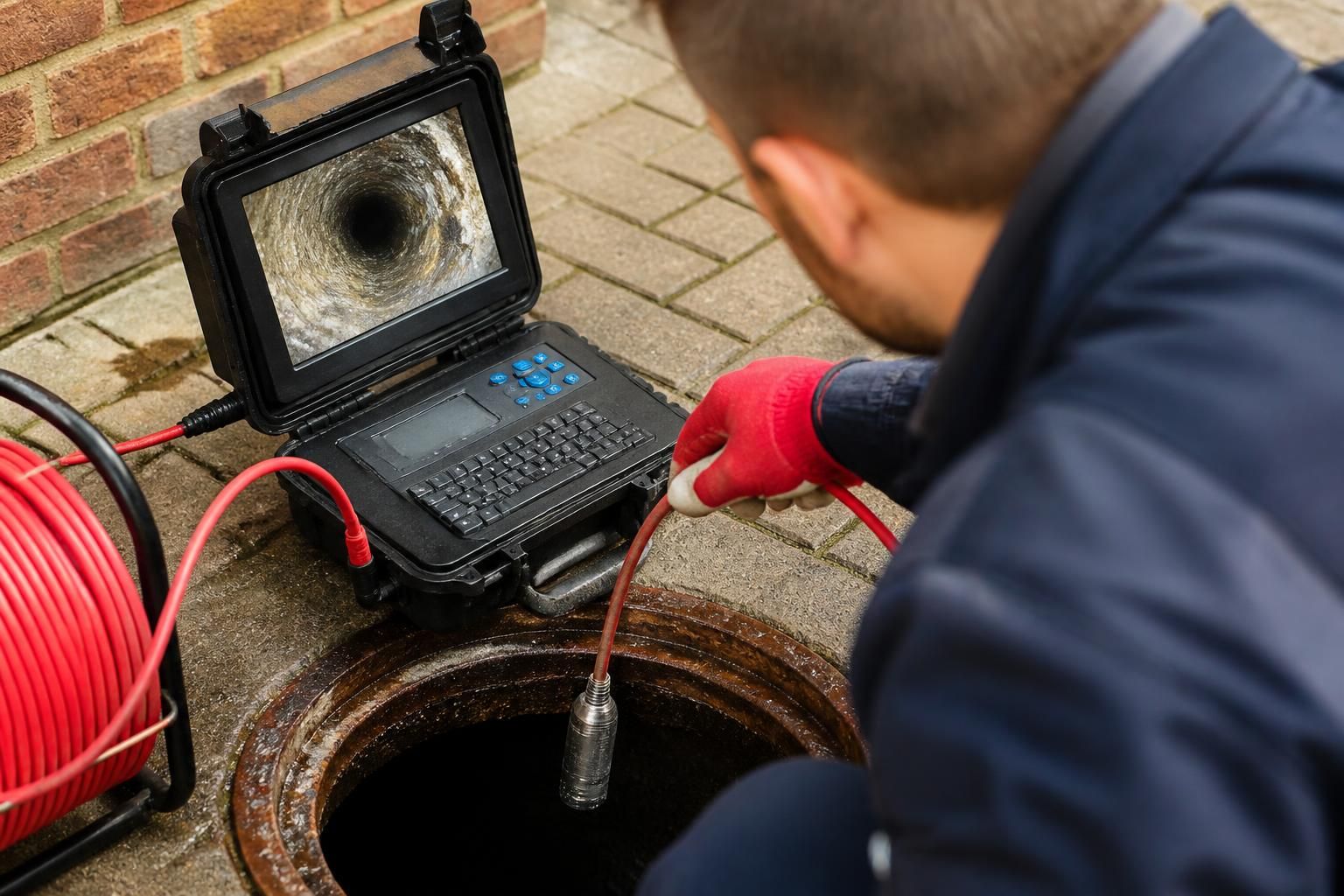
A drain inspection provides visual evidence about the internal condition and performance of underground drainage, allowing an engineer to assess the nature, position and severity of a problem rather than relying only on surface symptoms. Where a camera survey is suitable, the footage can show how the pipe is functioning and which sections require attention.
As well as identifying a fault, an inspection may reveal:
- The precise position of a defect: Camera equipment and sonde locating can help establish where a problem lies in relation to chambers, walls, driveways and other fixed features. This can reduce unnecessary excavation when repair work is being considered.
- The extent of an obstruction: Footage may show whether the internal opening is mostly clear, restricted by deposits or affected along a longer section. This helps distinguish an isolated issue from a wider maintenance concern.
- Problems with drainage levels: Water that remains in a pipe when it should be flowing away can indicate poor falls, a low section or another issue affecting drainage performance. An inspection may also show whether water is moving freely through the system.
- Construction and connection issues: A survey can expose an incorrectly fitted branch connection, intrusive pipework, excess sealant, building debris or another defect introduced during installation or alteration.
- The condition of chambers and access points: Where inspection includes manholes or inspection chambers, it may identify damaged channels, defective benching, unsuitable covers or a chamber that is allowing soil and surface water into the system.
- Pipe material and configuration: The footage can help indicate the type, diameter and route of the drainage, although these details may need to be confirmed against plans or further investigation.
The findings can help determine whether the appropriate next step is cleaning, a localised repair, lining, replacement or continued monitoring. They can also help separate a drainage fault from a problem elsewhere, such as a defective appliance connection or a surface-water issue. A written report should normally relate the footage to the observed symptoms and identify the sections that need action, rather than supplying video without explanation.
There are limits to what an inspection can reveal. A camera shows the inside of an accessible pipe, not every condition surrounding it. Heavy debris, standing water, restricted access or a collapsed section may prevent the camera from reaching the full system. It may also be unable to confirm a leak path, ground movement or the condition of pipework outside the surveyed route. Dye testing, a level survey, excavation or other investigation may therefore be recommended where the footage does not provide a complete answer.
For homeowners, landlords and tenants, an inspection record can provide useful evidence when planning repairs, checking the condition of drainage after work or investigating repeated symptoms. Ideal Plumbing Services provides drain inspection support for residential properties in Birmingham and the wider West Midlands, with findings explained in practical terms.