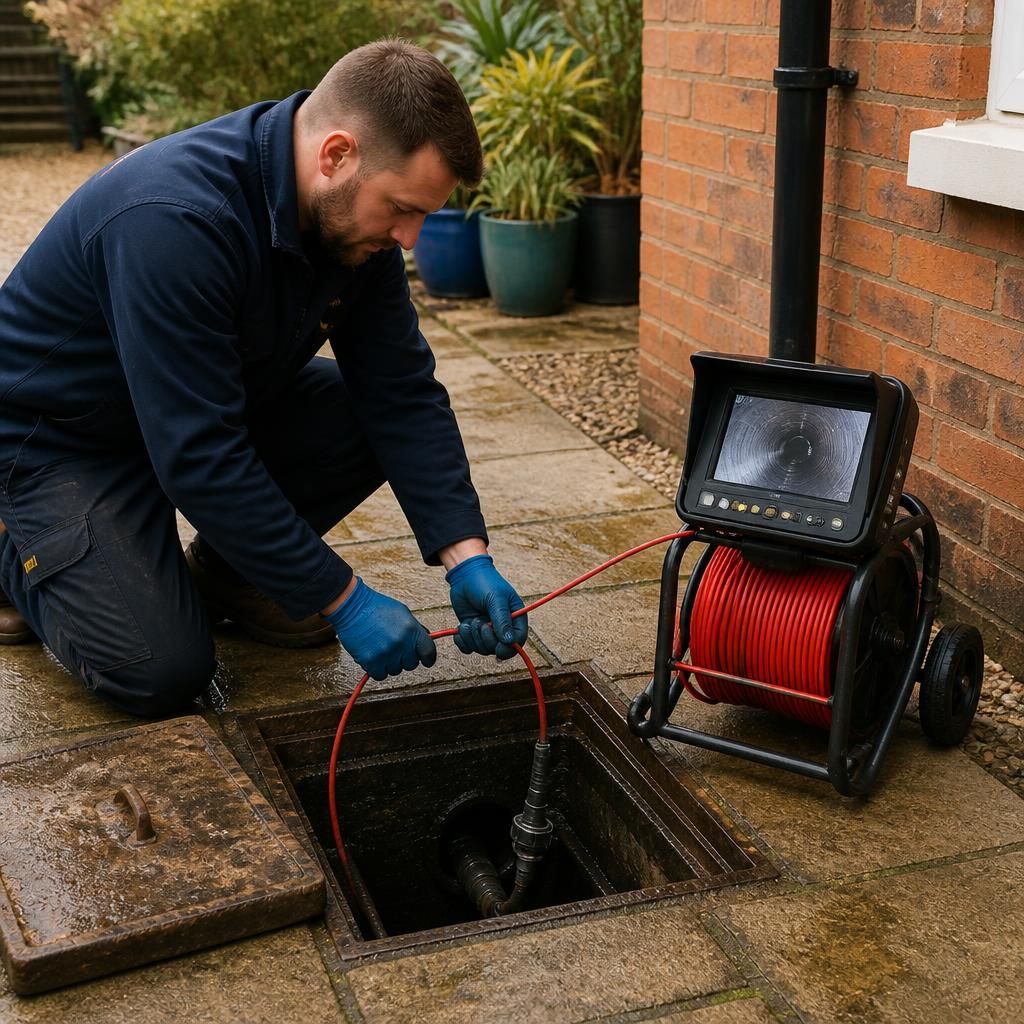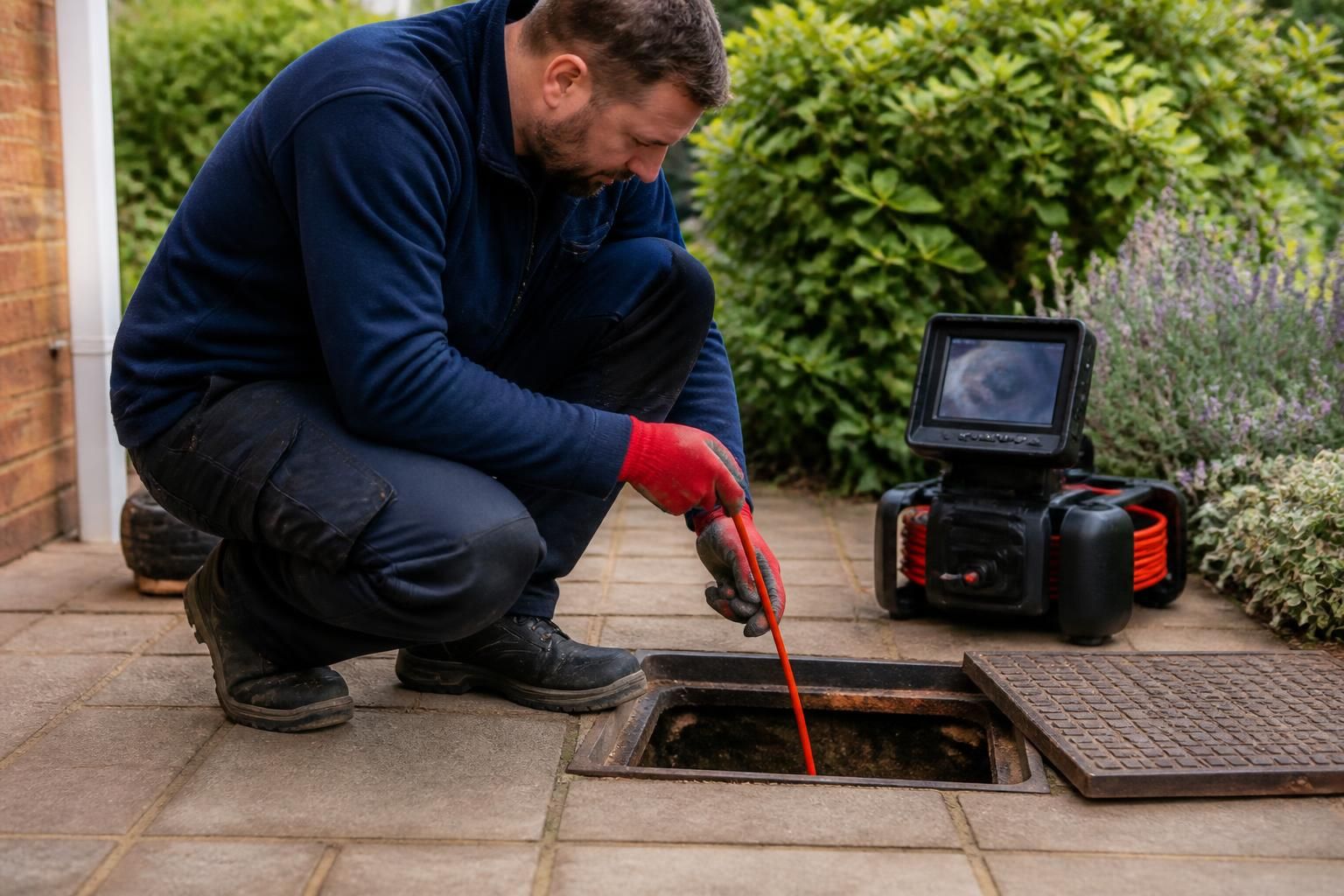
A drain inspection is normally a low-impact diagnostic process. The main effect on your property is temporary access to the drainage points and the movement of inspection equipment between the access location and the relevant areas of the building.
Before the inspection, the engineer will usually identify which drain run needs to be examined and discuss any symptoms you have noticed, such as repeated blockages, slow drainage, unusual smells or damp patches. This helps determine the most appropriate inspection route and avoids disturbing areas that are unrelated to the suspected fault.
You may need to clear items from around inspection points, lift removable covers or provide access to rooms containing relevant plumbing fixtures. In some properties, furniture, stored belongings or outdoor items may need to be moved temporarily so that the engineer can work safely and position the camera equipment. Keeping these areas accessible can help the inspection proceed without unnecessary interruption.
During the survey, a small camera is guided through the drainage system while the engineer observes the internal condition of the pipework. The process is primarily observational, so it does not normally require widespread changes inside the property. There may be some routine noise and foot traffic while equipment is positioned, particularly where the drainage point is outdoors or in a shared area.
The level of disruption can be greater when access is obstructed, a drain is heavily blocked, or the inspection point is damaged or difficult to reach. In those circumstances, the engineer should explain what additional work may be needed before proceeding. A camera survey and any remedial work are separate stages, so clearing a blockage, repairing a pipe or opening up a concealed section should not be assumed to form part of the inspection itself.
Afterwards, the engineer can explain what the footage shows and whether the findings indicate a blockage, crack, displaced joint, root ingress, collapse or another drainage defect. If further work is recommended, you can ask for the proposed method, the areas that would be affected and whether the repair can be completed without disturbing additional parts of the property.
For homeowners, landlords and tenants, useful preparation includes:
- Removing personal items from around likely access points.
- Ensuring outdoor covers, inspection chambers and relevant rooms can be reached.
- Providing details of previous blockages, leaks, repairs or drainage alterations.
- Informing the engineer about vulnerable flooring, restricted areas or shared access arrangements.
- Agreeing how any furniture or household items should be moved and protected.
If the property is rented or the drainage is shared with neighbouring homes, permission or coordination may be needed before the inspection. Clarifying responsibility for the affected drain and confirming which areas can be accessed helps prevent avoidable disruption and makes the inspection findings easier to act on.