For commercial premises, drain jetting is a practical method of dealing with difficult drainage build-up, but the equipment and pressure must be matched to the pipework. A commercial drainage system should be assessed before work begins so that the cause of the problem, the condition of the pipes and suitable access points are understood.
Commercial drainage can be exposed to heavier and more varied use than a typical household system. Depending on the premises, the obstruction may involve:
- Grease, fat and food residue from kitchens or catering areas
- Silt, sludge and sediment entering external drainage runs
- Paper products and other debris accumulating in foul drainage
- Scale deposits narrowing the internal diameter of pipes
- Leaves, soil or roots affecting external drains
Water jetting uses a controlled flow of pressurised water to break up deposits and wash loosened material through the drainage system. It can be used on individual sections, shared private drains and larger commercial runs, provided the pipework can safely withstand the cleaning method.
Assessment is particularly important in commercial buildings. A drainage specialist may inspect the access points, identify the direction and size of the pipework, and use a camera survey where the cause is unclear. This helps distinguish a removable blockage from a structural issue such as a collapsed section, displaced joint or severely damaged pipe. Jetting cannot repair defective pipework, and applying pressure to an unsuitable system could worsen existing damage.
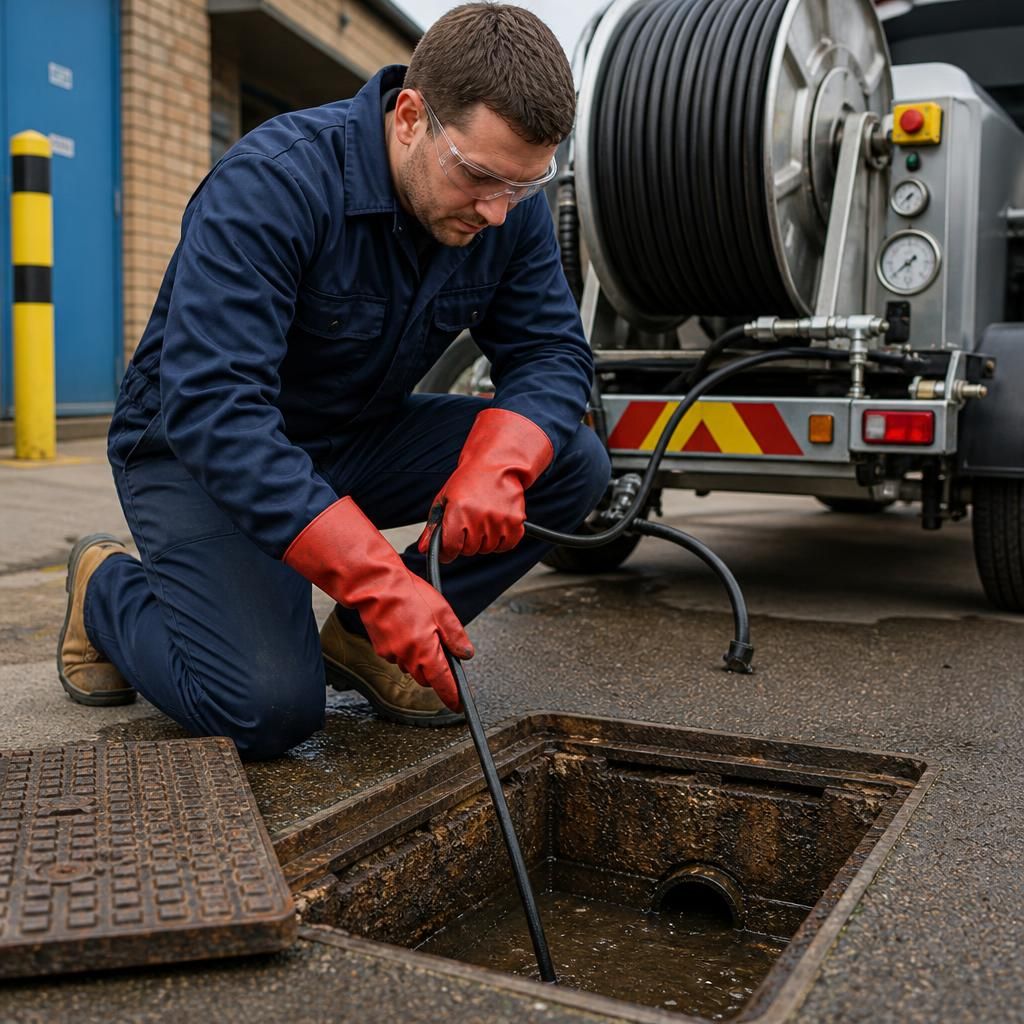
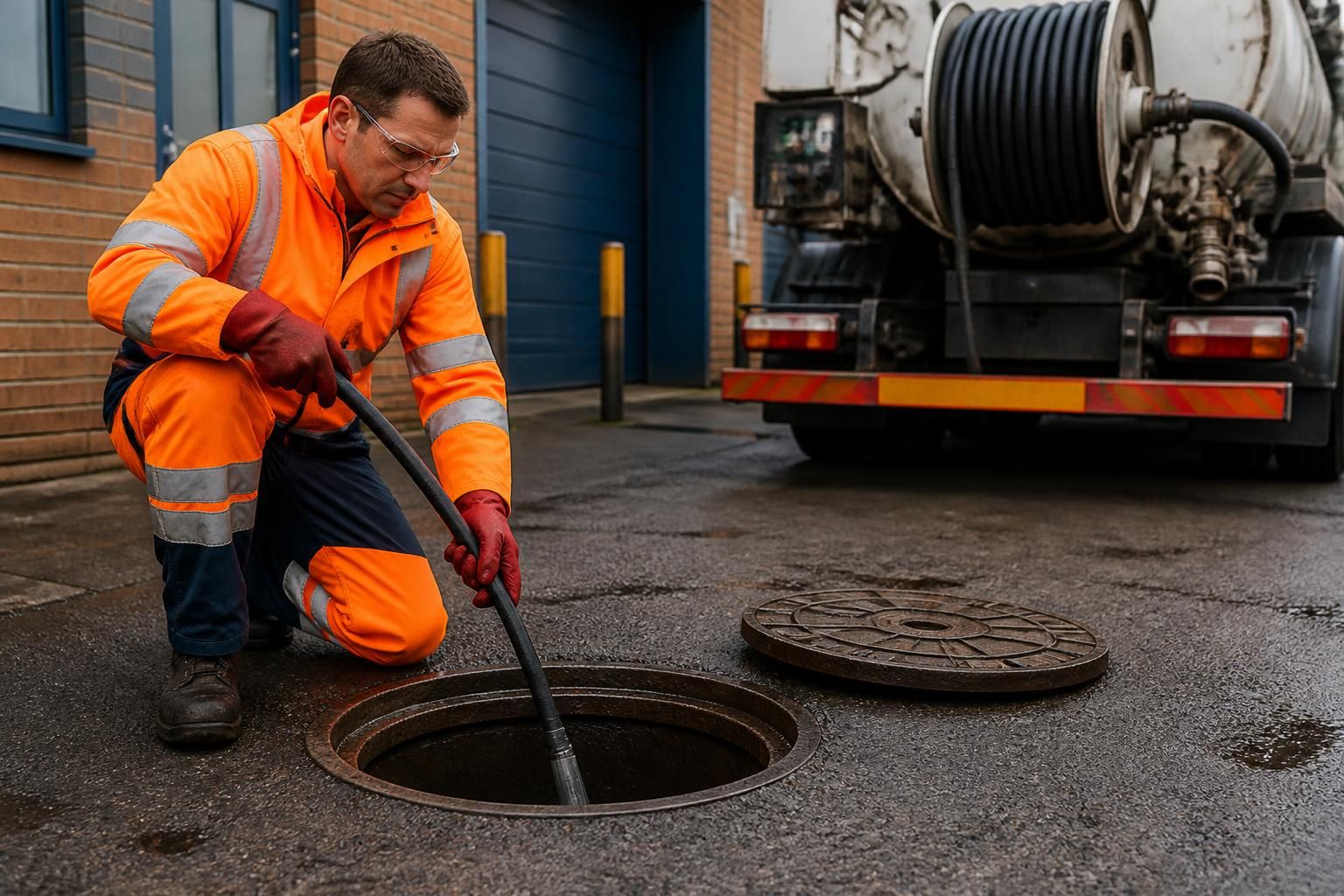
The work may involve positioning specialist equipment near an inspection chamber or other suitable access point, feeding a jetting hose through the affected run and cleaning the pipe walls as the hose is moved through the system. The drainage route is then checked to confirm that water can pass through it. Where appropriate, a follow-up survey can help establish whether deposits have been removed and whether further repairs are needed.
For commercial customers, the condition of the drainage system is only one consideration. The contractor should also account for access restrictions, shared drainage, sensitive areas, hygiene requirements and the potential effect of the work on staff, visitors or tenants. Waste and contaminated water should be handled responsibly, particularly where the blockage contains food waste, sewage or chemicals. Commercial kitchens, managed buildings, retail premises, offices and other sites may each require a different approach.
Jetting can form part of planned maintenance as well as being used when a blockage has already developed. Regular inspection and cleaning can help identify recurring build-up, although the appropriate maintenance interval depends on the drainage design, usage and history of previous problems. A contractor should base recommendations on the property rather than apply a standard schedule.
Before arranging commercial drain jetting, ask what inspection will be carried out, whether the pipework is suitable, how access will be managed and what happens if a structural defect is found. Clear pricing should also explain the intended work and any additional repairs separately. Ideal Plumbing Services provides commercial drainage support alongside residential plumbing services, with a focus on assessing the problem accurately before recommending cleaning or repair.