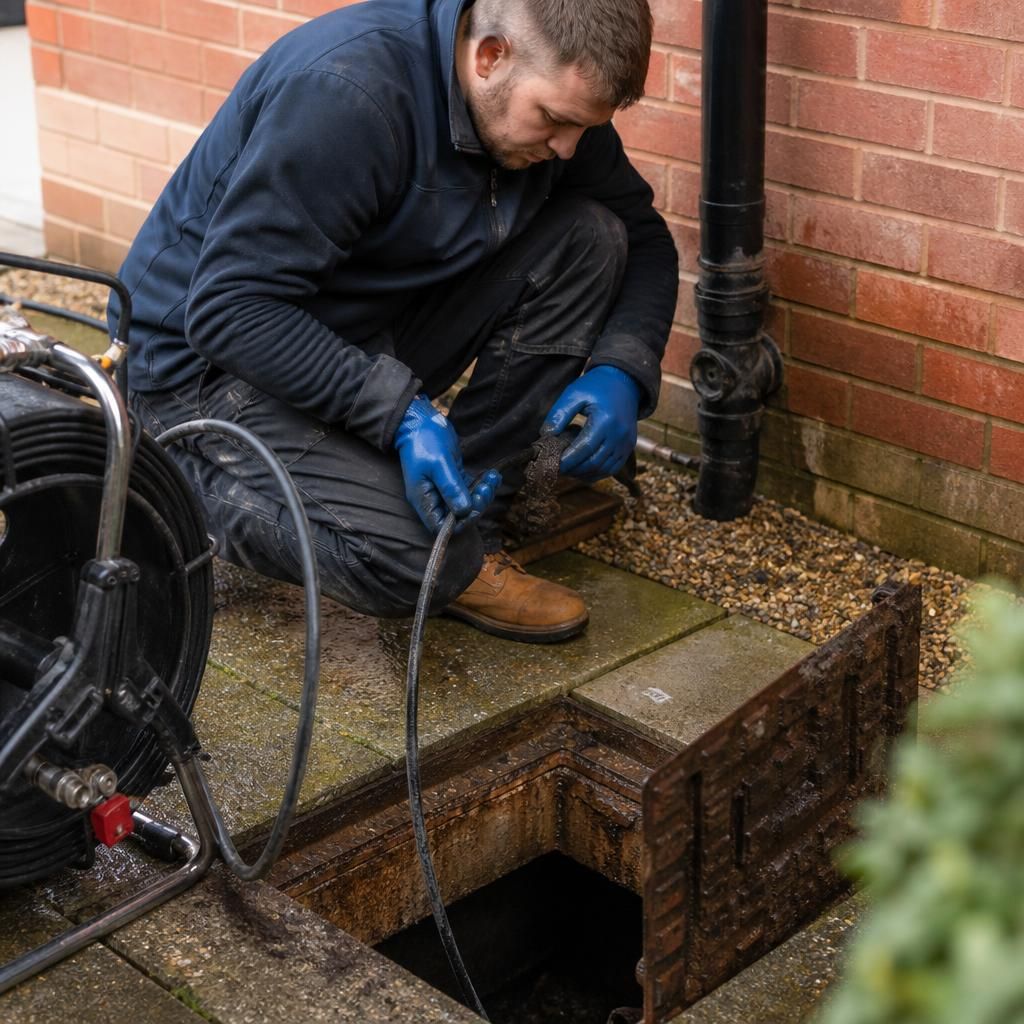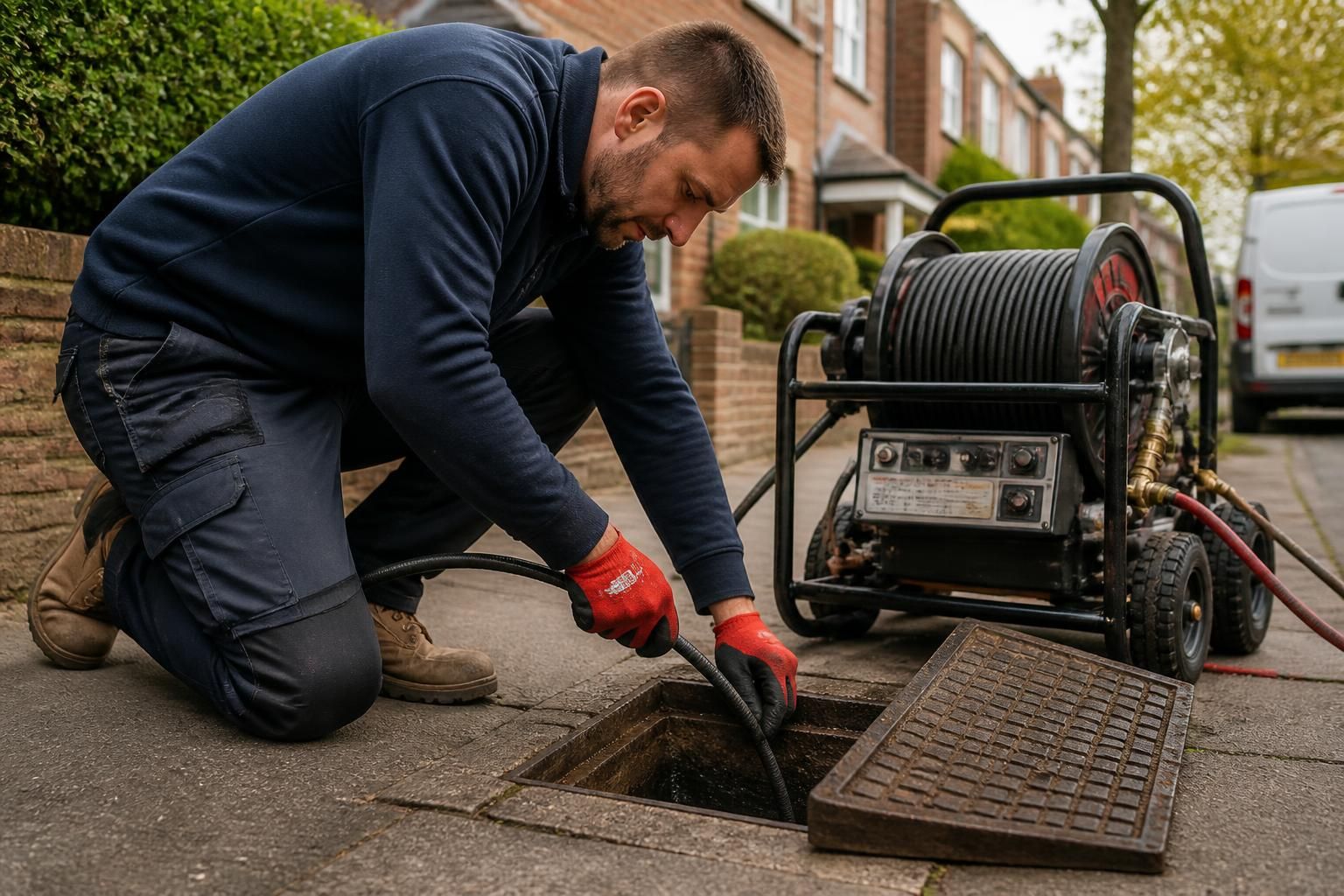
For most residential properties, drain jetting causes limited disruption when the drainage system is accessible and the work is planned around the household. The main effects are restricted access to the affected drain, the sound of the jetting equipment and temporary limits on using connected toilets, sinks, showers or appliances while the work is in progress.
What happens during the service
A technician first identifies the affected section of pipe and establishes how it can be accessed. This may involve an external inspection chamber, rodding point or another suitable access point. A high-pressure water hose is then guided through the pipe to break up obstructions and wash debris towards an appropriate outlet. The hose is removed afterwards and the drainage flow is checked.
Where access is available outside the property, the work may have little effect on rooms inside the home. If the relevant pipework can only be reached through an internal access point, a small area may need to remain clear while equipment is positioned and removed. Furniture, stored items, vehicles or garden objects near the access point may need to be moved before work begins.
Noise and vibration
Jetting equipment produces a noticeable mechanical sound and the movement of water through the pipe can sometimes be heard inside the property. The level of noise depends on the equipment, the location of the access point and the layout and construction of the drainage system. People working or studying at home may need to plan around this, while pets and young children may benefit from being kept away from the working area.
Vibration is generally associated with the equipment and the movement of water rather than with structural work to the property. Drain jetting does not normally require floors, walls or paving to be removed simply to clean an accessible pipe. If an access point is buried, damaged or obstructed, additional work may be needed before jetting can be carried out safely.
Temporary restrictions on water use
Householders may be asked not to use appliances and plumbing fixtures connected to the affected drainage run during cleaning. Flushing a toilet, running a tap, using a washing machine or starting a dishwasher can introduce more water into the system while the hose is in use. Following these instructions helps prevent backflow, splashing or interference with the cleaning process.
The restriction should also be considered when planning access to shared or connected drainage. In flats, converted properties or homes with shared pipework, other occupants may need to be informed so that water use does not continue through the section being serviced.
Water, debris and cleanliness
Jetting uses water to clean the inside of the pipe, so the technician needs to manage where that water and loosened debris go. A suitable discharge route is assessed as part of the work. Strong odours can be released when stagnant water, grease or organic material is disturbed, particularly where the blockage has been present for some time.
Protective measures and sensible positioning of equipment help keep the immediate work area manageable. Residents should avoid standing over open inspection chambers or handling removed debris. Once cleaning is complete, the access point should be checked and secured, but any unusual contamination or damage around the chamber should be reported rather than concealed.
Factors that increase disruption
- Access to the inspection chamber or drain is blocked by paving, stored items, vehicles or landscaping.
- The blockage is extensive, hard or located deep within the drainage run.
- The property has shared drainage or several connected occupants.
- The drainage system has collapsed, displaced or badly damaged sections that cannot be resolved through cleaning alone.
- Water cannot be discharged through the expected route and an alternative arrangement is required.
Drain jetting clears many obstructions, but it is not a substitute for repairing a failed pipe. If a survey identifies structural damage, continued use of the drainage system may lead to further problems and repair work may create more disruption than the jetting itself.
How to reduce inconvenience
- Clear the route to the inspection chamber, drain or internal access point.
- Move valuables, garden items and vehicles away from the working area where possible.
- Tell the technician about shared drainage, previous repairs, recurring blockages or unusual smells.
- Keep children and pets away from open access points and equipment.
- Arrange essential household water use before the service and follow instructions during the cleaning process.
- Ask for any access covers or disturbed areas to be checked before the equipment is removed.
Ideal Plumbing Services assesses the drainage layout and the condition of the access point before carrying out jetting, helping determine the least disruptive method for the property. For homeowners, landlords and tenants, the practical impact is normally confined to preparation, equipment access, temporary water-use restrictions and the work area itself, unless a separate drainage defect is discovered.