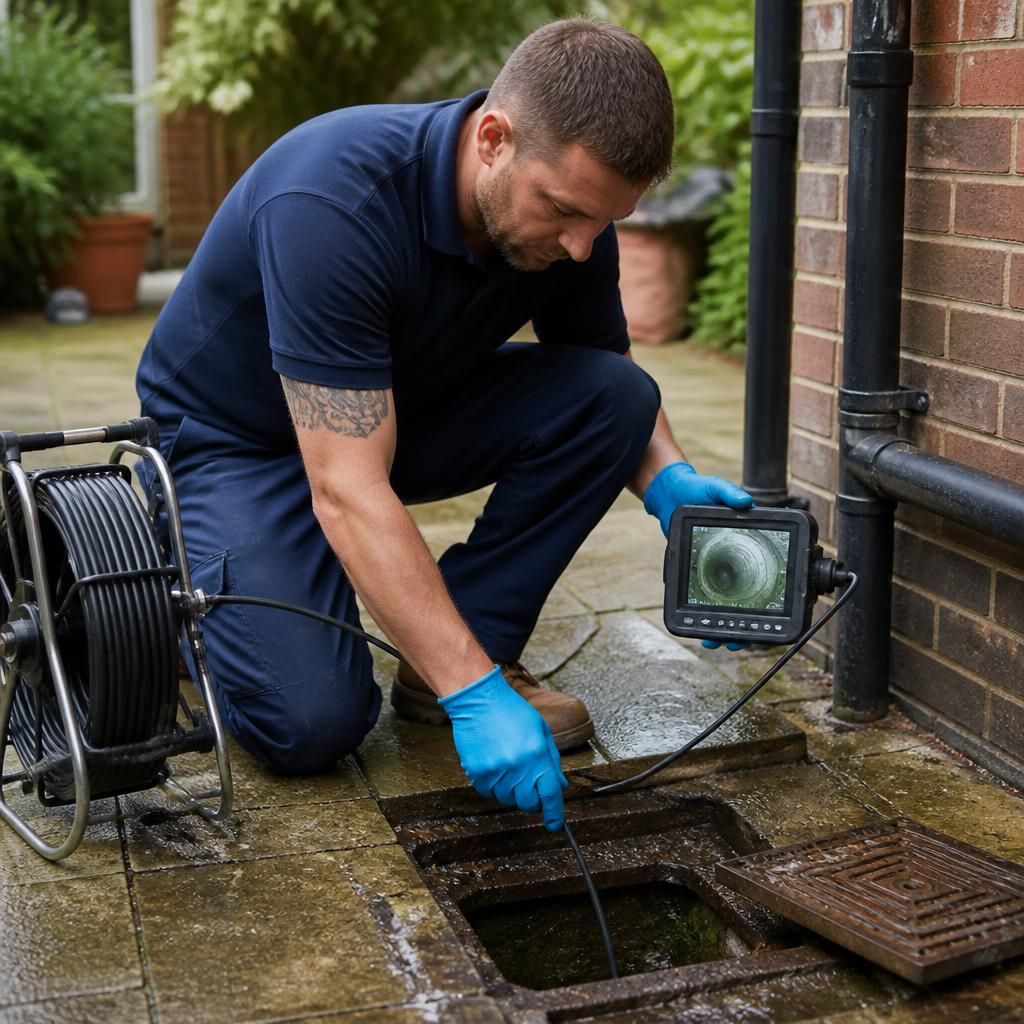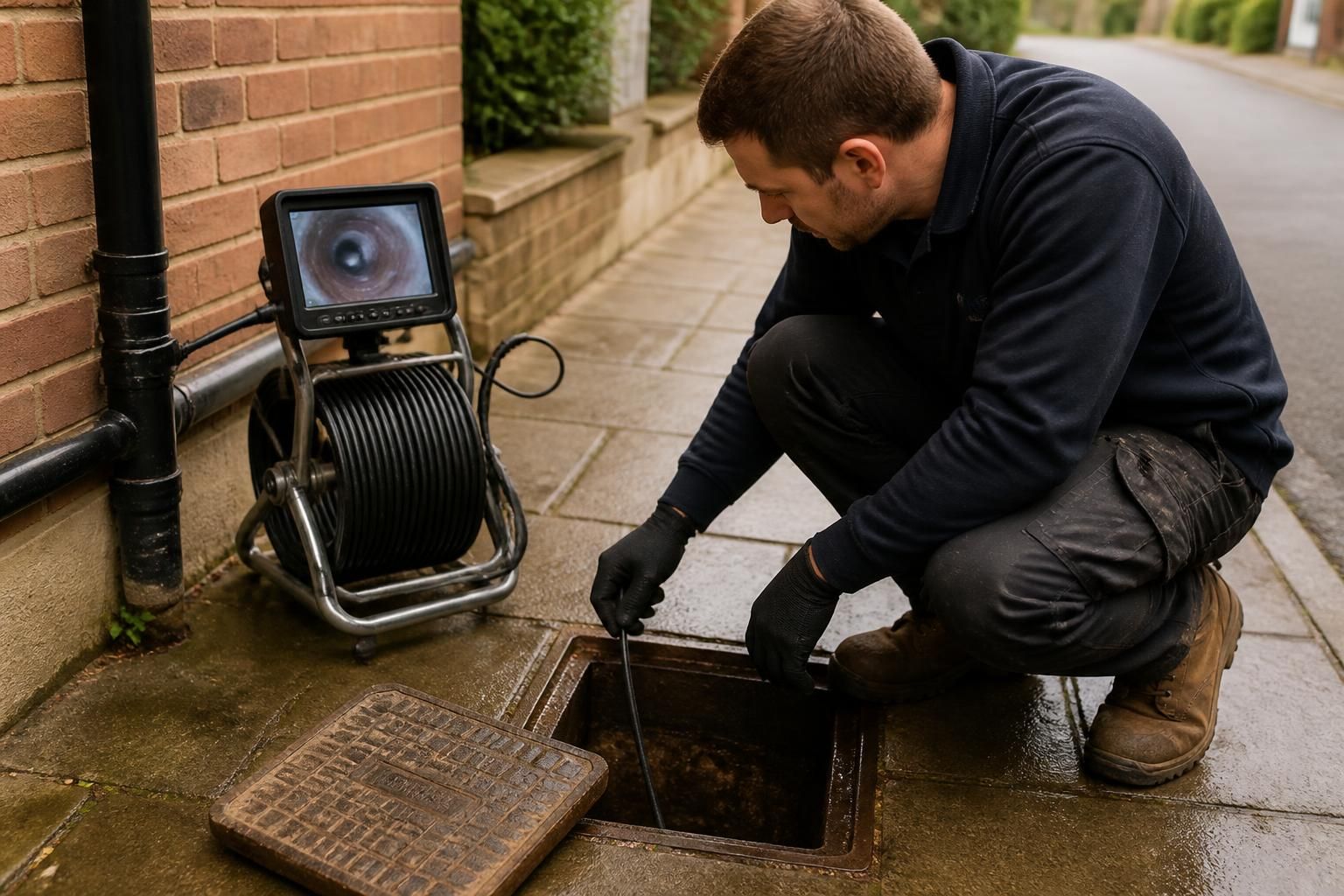
The most reliable way to decide between drain cleaning and drain jetting is to consider the type, extent and location of the restriction. Drain cleaning is usually suitable for routine removal of loose debris or manageable deposits, while jetting uses high-pressure water to scour the internal walls of a pipe and remove more firmly attached or extensive material. Where the cause is uncertain, a professional assessment should come before choosing a method.
Signs that cleaning may be sufficient
A drain may need a conventional cleaning method when the restriction is limited to one accessible section and there is evidence of a relatively light build-up. This can include soap residue, food particles, hair, silt or small amounts of organic matter. A plunger, drain rod or mechanical cleaning tool may be appropriate in some situations, depending on the pipe design and the position of the obstruction.
- Water in a sink, bath or shower takes longer than usual to clear, but does not stop completely.
- A single household fitting is affected while other connected fixtures operate normally.
- The obstruction is close to an accessible trap, gully or inspection chamber.
- The drain has not been repeatedly affected and there are no signs of damage to the pipe itself.
Mechanical cleaning can remove a local blockage without subjecting the full length of a drainage run to high-pressure water. The correct tool depends on the pipe diameter, access available and material causing the restriction. Forcing a rod or unsuitable implement into a pipe can push debris further along, damage joints or leave part of the obstruction behind.
When jetting is more likely to be appropriate
Drain jetting is considered when deposits are bonded to the pipe wall or when a longer section of pipe needs to be cleared. Grease, scale, silt and compacted organic matter can reduce the internal diameter gradually, so removing only the central part of a blockage may provide limited improvement. Jetting can clean the pipe circumference more thoroughly when the pipe condition and access point make the method suitable.
- Several connected fixtures are affected at the same time.
- Water levels change when another appliance is used, suggesting a restriction further along the shared drain.
- There is bubbling or gurgling from a nearby waste outlet when water is discharged elsewhere.
- The same drain becomes restricted again after a basic clearance.
- An inspection shows a significant coating of grease, scale, silt or other deposits.
- An external gully or inspection chamber contains backed-up water, indicating that the obstruction may be beyond an individual trap.
Jetting is not simply a stronger version of rod cleaning. The operator must select suitable equipment and control the water flow to match the pipe material, diameter, access and condition. If the pipe is cracked, displaced, badly corroded or structurally weak, jetting may not be the first choice because clearing the deposit will not correct the underlying defect.
Symptoms that need investigation rather than repeated clearing
A blockage can be the result of a wider drainage fault. Repeated problems in the same location may point to tree-root ingress, a collapsed or misaligned section, defective joints, inadequate falls or an obstruction that cannot be removed by ordinary cleaning. A damaged cover, visible subsidence, standing water around an inspection chamber or unexplained wet patches near a drain also warrant investigation.
Where more than one part of a property is affected, the position of the problem can be established by checking the route of the connected pipework. A camera inspection may be useful after access has been gained, particularly if the problem returns or if jetting could expose a defect that needs repair. This produces a clearer basis for deciding whether the next step should be cleaning, jetting, repair or further drainage work.
How a professional decides which method to use
- The affected fixtures and recent symptoms are reviewed to identify whether the restriction is local or shared.
- Available access points, inspection chambers and the likely direction of flow are checked.
- The pipework may be inspected before cleaning if its condition is uncertain or the blockage is recurring.
- The material causing the restriction is assessed where possible, since grease, silt, scale and roots require different approaches.
- The equipment and method are selected according to the pipe's size, construction and condition.
- The drain is tested after clearance to check that water is flowing through the affected section as expected.
A suitable service should explain whether the recommendation is for local mechanical cleaning, full-length jetting or inspection first. It is reasonable to ask what has caused the restriction, which section is affected and whether the proposed method is intended to remove a symptom or address a known defect.
What to do before arranging work
Stop putting grease, cooking fat, wipes and other unsuitable materials down the drain. Avoid repeatedly adding chemical drain cleaners, particularly if a professional may need to open the pipe, because residual chemicals can create a handling hazard and may not remove the underlying deposit. Do not use multiple products together. If wastewater is backing up, limit the use of connected sinks, baths, toilets and appliances until the route has been assessed.
For sewage contamination, keep children and pets away from the affected area and avoid direct contact with the water. Do not lift a heavy or difficult inspection cover yourself. Providing details of which fixtures are affected, when the issue began and whether the problem has returned after previous clearing can help the plumber identify the likely location and method.
Ideal Plumbing Services provides drain cleaning and jetting assessments for residential properties in Birmingham and across the West Midlands. The appropriate choice depends on the evidence at the property, rather than on the assumption that the most powerful method is always the best one.