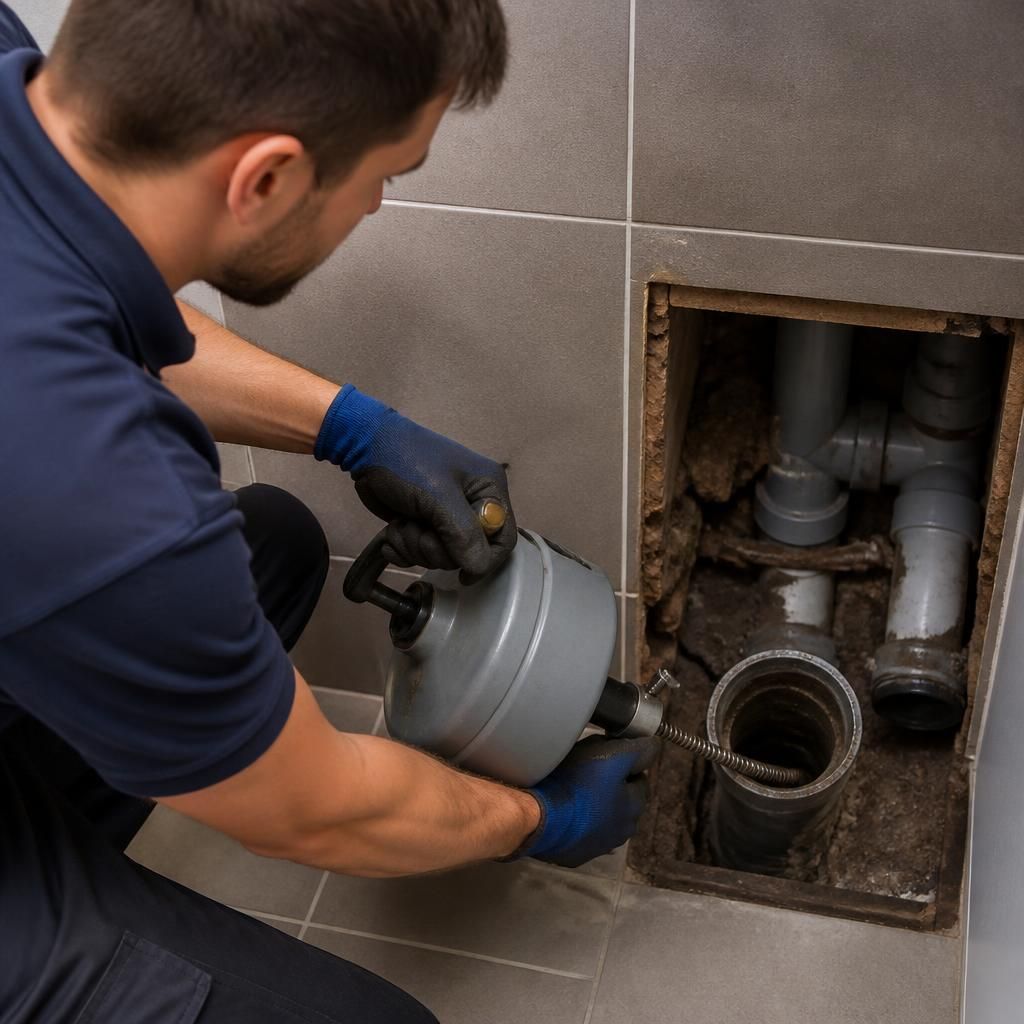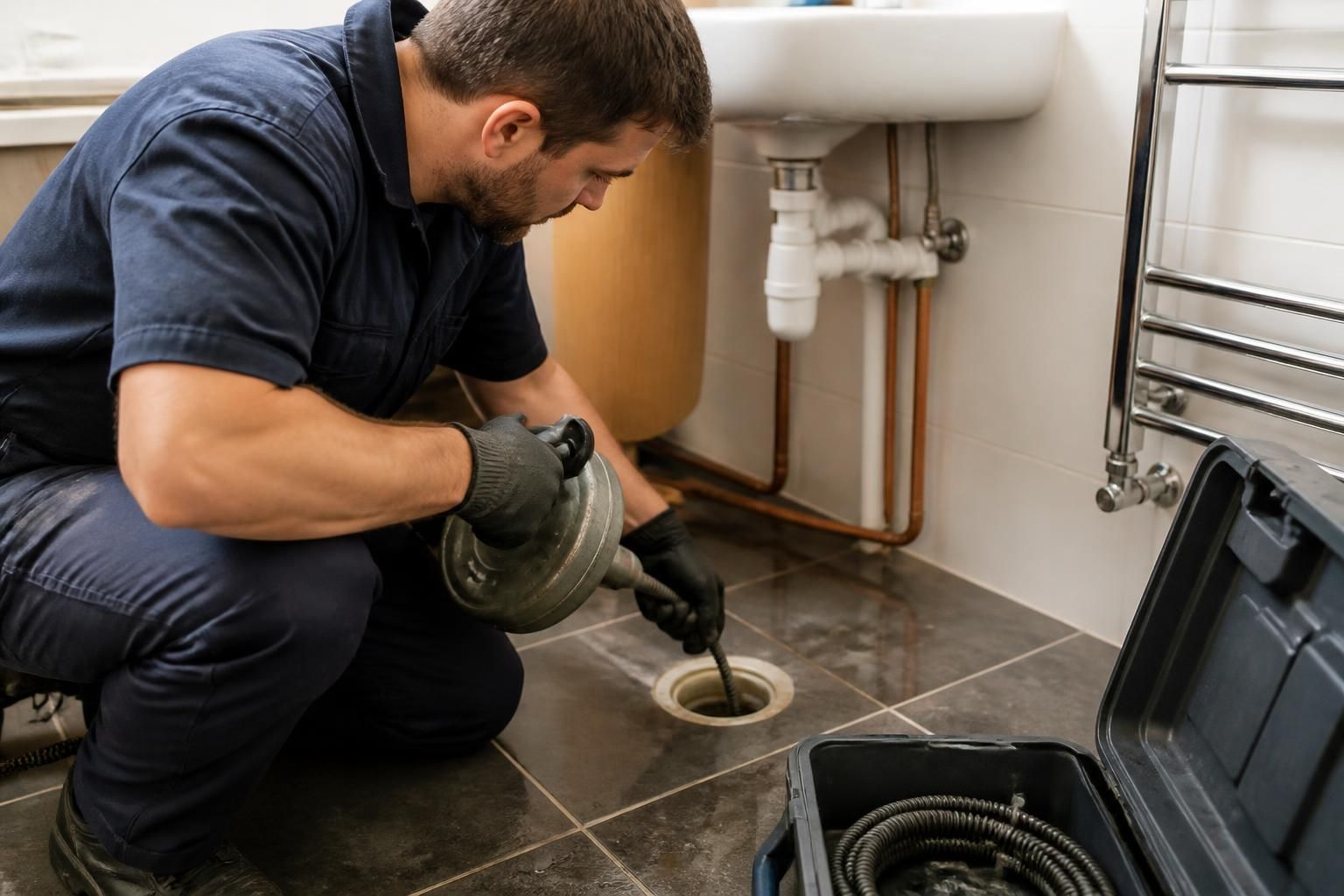
Mechanical drain cleaning is generally the better option when the cause, location or severity of a blockage is uncertain, when the drain is backing up repeatedly, or when a chemical treatment could remain trapped in the pipe. Mechanical methods use tools such as drain rods, hand augers or powered cleaning equipment to reach the obstruction, dislodge it and, where possible, remove it from the system rather than leaving dissolved material behind.
The choice should be based on the condition of the drainage system as well as the blockage itself. Mechanical cleaning is particularly appropriate in the following circumstances:
- Water is standing in the fixture: A chemical product may become diluted or remain concentrated in one section of pipe instead of reaching the obstruction effectively. This can leave hazardous liquid in the drain for anyone carrying out subsequent work.
- The blockage keeps returning: Recurring drainage problems can indicate an underlying restriction, poor flow, displaced pipework or an obstruction further along the line. Repeated chemical treatments may mask the symptom without addressing the cause.
- The drain serves more than one outlet: If several sinks, toilets or other appliances are affected, the restriction may be in a shared branch or underground run. This normally requires investigation and targeted cleaning rather than pouring product into one fixture.
- The material is unknown: Mechanical equipment allows the obstruction to be worked on while its position and resistance are assessed. This is safer than introducing a chemical whose reaction with the blockage or pipe contents is uncertain.
- Roots or structural debris may be involved: Chemical drain cleaners are not designed to remove physical intrusions or damaged pipe fragments. Specialist mechanical equipment may be needed, followed by an inspection to establish whether repair is necessary.
- The property has older or unfamiliar pipework: The age, material and condition of a drainage system may not be obvious. A plumber can select a suitable tool and technique rather than exposing vulnerable joints or surfaces to a highly corrosive substance.
Mechanical cleaning also offers better control during the work. A plumber can begin with a suitable hand tool, increase the level of equipment if necessary and check whether normal flow has been restored. If the obstruction is deep or the pipe contains extensive deposits, high-pressure water jetting may be considered, but it is not automatically appropriate for every system. The pipe condition and access points should be assessed first.
Chemical products are not all the same. Caustic drain cleaners are intended to break down certain organic matter, while enzyme-based products work more gradually and are sometimes used as part of routine maintenance. Neither type is a reliable solution for every blockage. Products can also react with one another, with residual cleaning chemicals or with other substances already in the pipe.
Never combine different drain cleaners, and do not use a chemical product immediately before arranging professional cleaning without telling the plumber. Protective gloves and eye protection are important when handling these products, but personal protection does not remove the risk of splashback, fumes or chemical burns. Do not use a plunger or dismantle a trap without taking care if the drain may contain concentrated cleaner.
A professional assessment is advisable where there is sewage backup, foul odour, repeated slow drainage, several affected fixtures or uncertainty about what has entered the pipe. The plumber can identify whether the problem is a local obstruction, a shared drain issue or a possible defect, then recommend the least invasive effective method. Mechanical cleaning is preferable when the aim is to remove the restriction reliably while preserving information about the drain's condition for any further repair or maintenance.