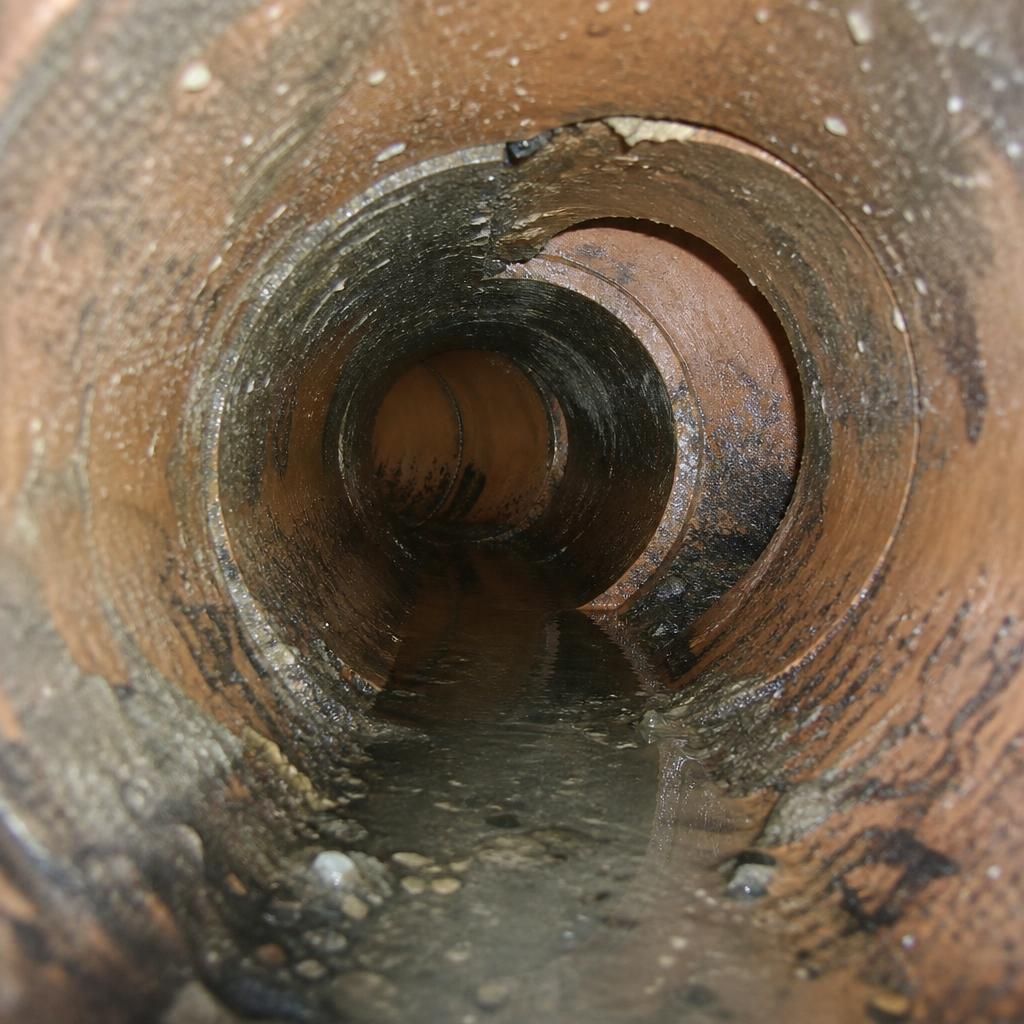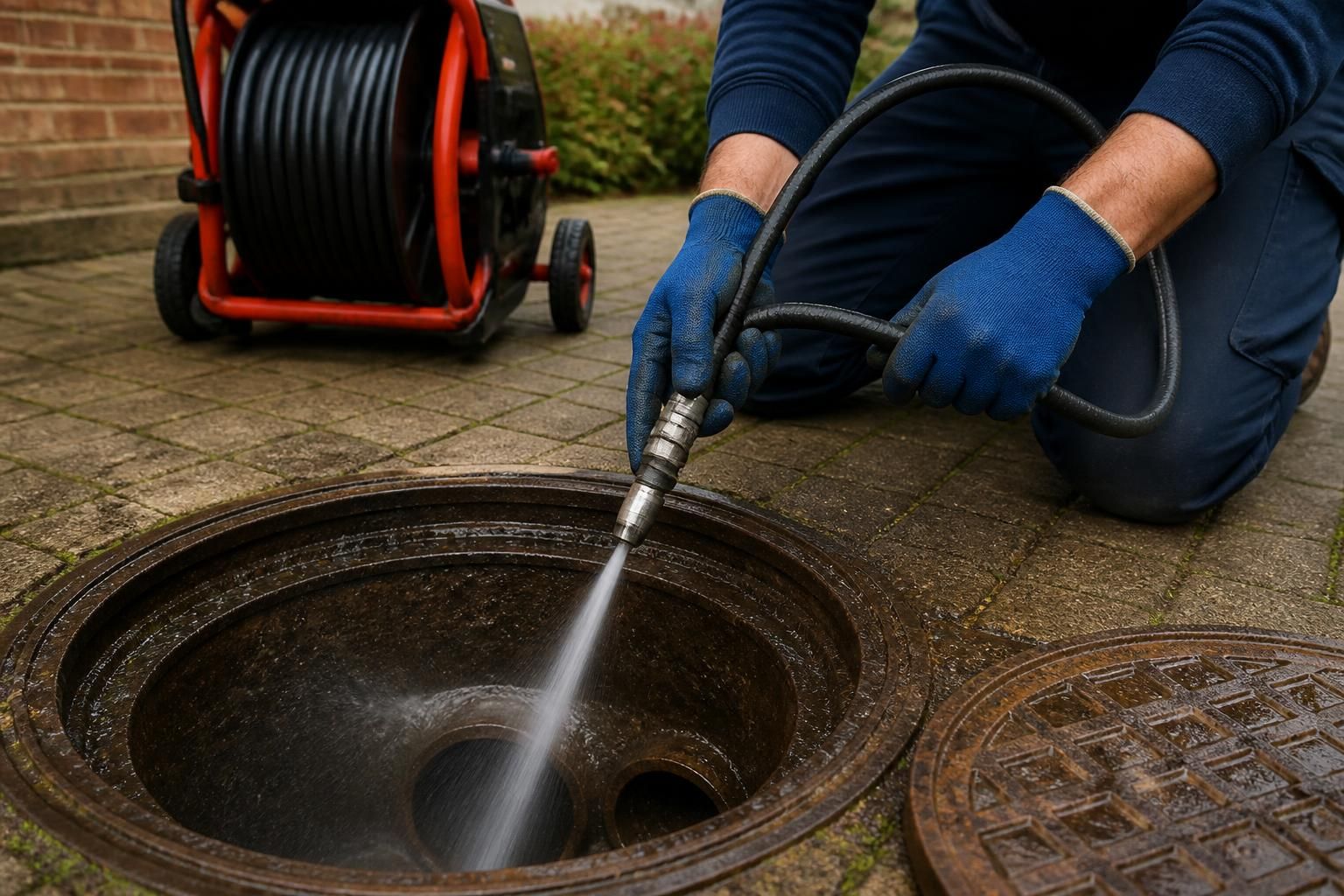
Drain jetting is not automatically unsafe for older pipework, but it must be matched to the drain’s actual condition and design. Age alone is not a sufficient reason to use or reject jetting: an established, sound system may tolerate controlled cleaning, while a newer-looking section with damaged joints or severe corrosion may require a gentler method.
Why older drains need additional care
Older drainage systems can contain materials and joints that behave differently from modern plastic installations. Common issues include:
- Vitrified clay pipes: the pipe barrel may remain strong, but joints can become displaced, cracked or separated by ground movement.
- Cast iron pipes: internal corrosion can reduce the wall thickness and create rough surfaces where debris accumulates.
- Pitch fibre pipes: these may deform, blister or soften over time, making aggressive cleaning unsuitable.
- Brick-built or mixed-material drains: irregular surfaces and mortar joints may be more vulnerable to disturbance.
- Older connections: traps, inspection chambers and branch junctions may be fragile, poorly sealed or difficult to navigate with standard jetting equipment.
Jetting may reveal a defect that was already present rather than create it. For example, removing roots or compacted waste can expose a fractured section that had been concealed by the blockage. This is why a recurring problem after cleaning should be investigated rather than treated with repeated high-pressure attempts.
What determines whether jetting is appropriate
A suitable method depends on more than the pipe’s age. A professional assessment should consider the pipe material, diameter, route, access points, previous repairs, the type of obstruction and any evidence of leakage or structural movement. The location of the blockage also matters: cleaning a short, accessible household drain is different from working through a long run containing several vulnerable joints.
Drain inspection equipment can help identify restrictions, root ingress, standing water, broken sections and displaced joints before cleaning begins. Where the pipe cannot be inspected fully, the safer approach may be to use a conservative cleaning method first and reassess the result, rather than assuming that maximum force will provide the best outcome.
How the cleaning process can be controlled
Safe jetting is based on control, not simply on using more pressure. The operator may adjust the equipment to suit the installation by:
- using a nozzle designed for the pipe size and type of obstruction;
- keeping the nozzle moving rather than directing force continuously at one point;
- approaching vulnerable areas cautiously, particularly joints and bends;
- using forward-facing jets to clear a route and rear-facing jets to draw debris back towards the access point;
- monitoring how the water drains during the work; and
- stopping if the equipment meets unusual resistance, the flow behaves unexpectedly or signs of structural failure appear.
Root cutting, scale removal and grease clearance may require different equipment. A nozzle suitable for hardened deposits may be inappropriate for a deteriorated pipe, so the cleaning objective should be established before choosing the attachment.
When another method may be safer
Jetting is not the only option for an older drain. Mechanical rodding or a flexible cleaning tool may be preferable for a localised obstruction where the pipe is known to be delicate. Careful hand removal can also be appropriate around an exposed or damaged section. If an inspection identifies a collapsed pipe, a substantially displaced joint or severe corrosion, cleaning will not correct the underlying defect; repair or replacement may be needed instead.
Chemical drain products are not automatically a safer alternative. They can be ineffective against structural blockages and may create risks for people, pipe materials and anyone subsequently working on the drain. Mixing different products is particularly hazardous.
Questions worth asking before work starts
- Has the pipe material and likely condition been considered?
- Is an inspection needed before cleaning?
- What cleaning method is proposed, and why is it suitable for this installation?
- How will vulnerable joints, bends and branch connections be protected?
- What will happen if a defect is found during the work?
After cleaning, a follow-up inspection can confirm whether the obstruction has been removed and whether the pipe has any visible defects. If the same blockage returns, the cause may be root growth, poor gradient, damaged joints, scale or a structural restriction rather than insufficient cleaning. Repeated jetting without finding that cause can place unnecessary stress on an already weakened system.
For an older property, professional drain cleaning should therefore be treated as a condition-led service rather than a standard high-pressure procedure. Ideal Plumbing Services can assess residential drainage problems across Birmingham and the West Midlands and advise whether controlled jetting, inspection, mechanical cleaning or repair is the more appropriate option.