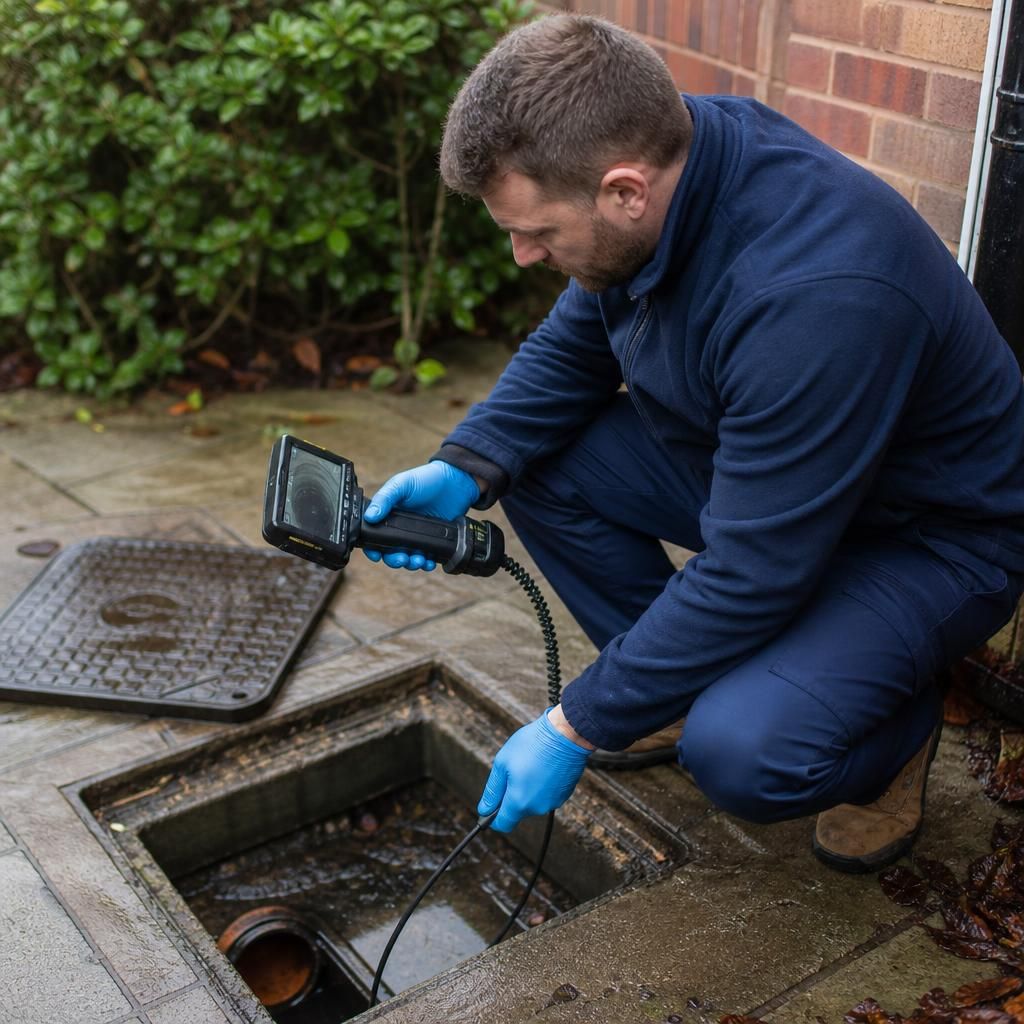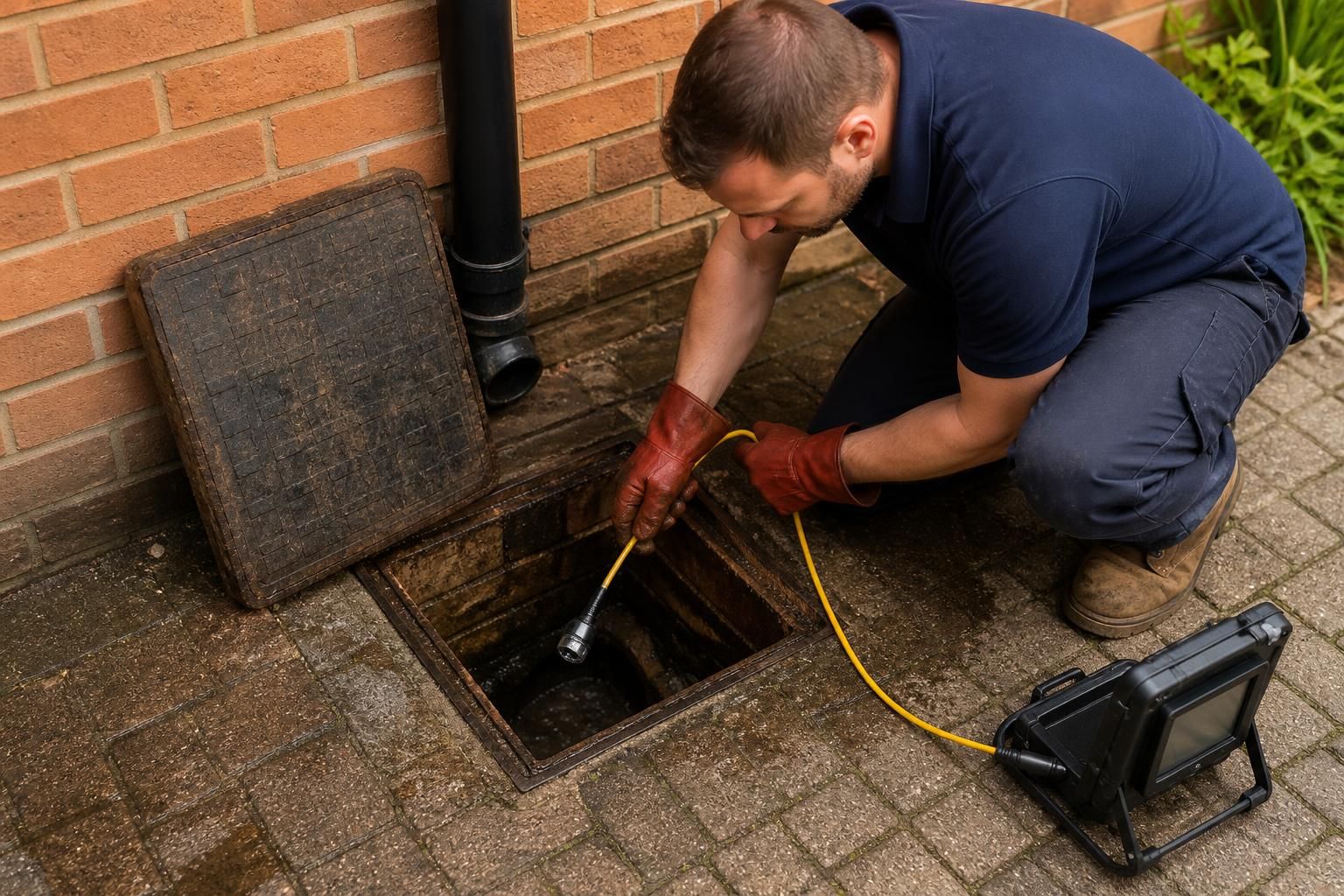
Before arranging professional drain cleaning, gather accurate information about the affected plumbing, make the access points safe and accessible, and check whether any restrictions apply to the property or drainage system. This helps the plumber assess the likely cause, select an appropriate cleaning method and avoid unnecessary disruption.
Check where the drain can be accessed
Look for accessible inspection chambers, rodding points, external covers or internal access panels, but do not remove a heavy or sealed cover if doing so could cause injury or release contaminated water. Note whether access is blocked by stored items, vehicles, paving or furniture. Clearing a safe route is useful, but leave sealed covers and pipework for a professional to handle.
If the property has a shared drain, identify whether the relevant pipework is inside the home, within the garden or driveway, or connected to neighbouring properties. This distinction can affect who is responsible for arranging the work and whether another party needs to be informed.
Gather useful property information
- Note the age of the property if known and whether the drainage system has been altered, extended or repaired.
- Record any recent building work, new bathroom installation, kitchen refurbishment or landscaping near underground pipes.
- Keep details of previous drain cleaning, repairs, surveys or insurance claims available.
- Find out whether the pipework is made from plastic, clay, cast iron or another material if this is documented.
- Identify whether the property is a house, flat, converted building or premises with shared drainage.
This information does not replace a professional inspection, but it can highlight issues such as restricted access, ageing pipework, repeated root intrusion or a layout that requires specialist equipment. Do not assume that a previous repair has resolved the underlying cause; share the details so the plumber can take them into account.
Consider safety before the appointment
Keep children and pets away from standing wastewater, open inspection chambers and areas where contaminated water may have spread. Avoid reaching into drain openings or attempting to dismantle traps, covers or pipework without the correct tools and protective equipment. If electrical equipment, sockets or appliances are close to wastewater, keep clear and explain the situation to the plumber.
Where a drain serves more than one fixture or property, limit use of the connected facilities until the cause has been assessed. This can reduce the risk of further wastewater entering the building, although it may not prevent a blockage from worsening.
Check permission and practical arrangements
Homeowners can usually arrange work directly, while tenants should check their tenancy agreement and contact the landlord or managing agent where responsibility for drainage is unclear. In a block of flats or a property with shared pipework, confirm who can authorise access and work in communal areas.
Make sure the plumber can reach the relevant rooms, outside areas and inspection points. If access involves a locked gate, communal entrance or parking restriction, provide the necessary instructions in advance. Ask whether the proposed work may require access to neighbouring land or temporary use of a driveway.
Ask what the service will involve
Professional drain cleaning may involve mechanical equipment, water jetting or another method selected after considering the blockage, pipe material and access. Ask the plumber to explain:
- what assessment will be carried out before cleaning;
- which cleaning method is being considered and why;
- whether a camera inspection may be appropriate if the issue is recurring;
- what access, water supply or electrical requirements apply;
- whether cleaning alone is suitable or whether damaged pipework may also need attention;
- what is included in the estimate and whether additional work requires approval first.
A clear explanation should distinguish removing an obstruction from repairing a structural defect. Cleaning can restore flow where deposits or a blockage are the main issue, but it will not by itself correct collapsed, displaced or badly damaged pipework. If the cause is uncertain, an inspection may be more useful than immediately choosing the most powerful cleaning method.
Ideal Plumbing Services provides drain cleaning and related plumbing support for residential customers in Birmingham and the wider West Midlands. Supplying the information above enables the plumber to approach the work with a better understanding of the property and the drainage system.