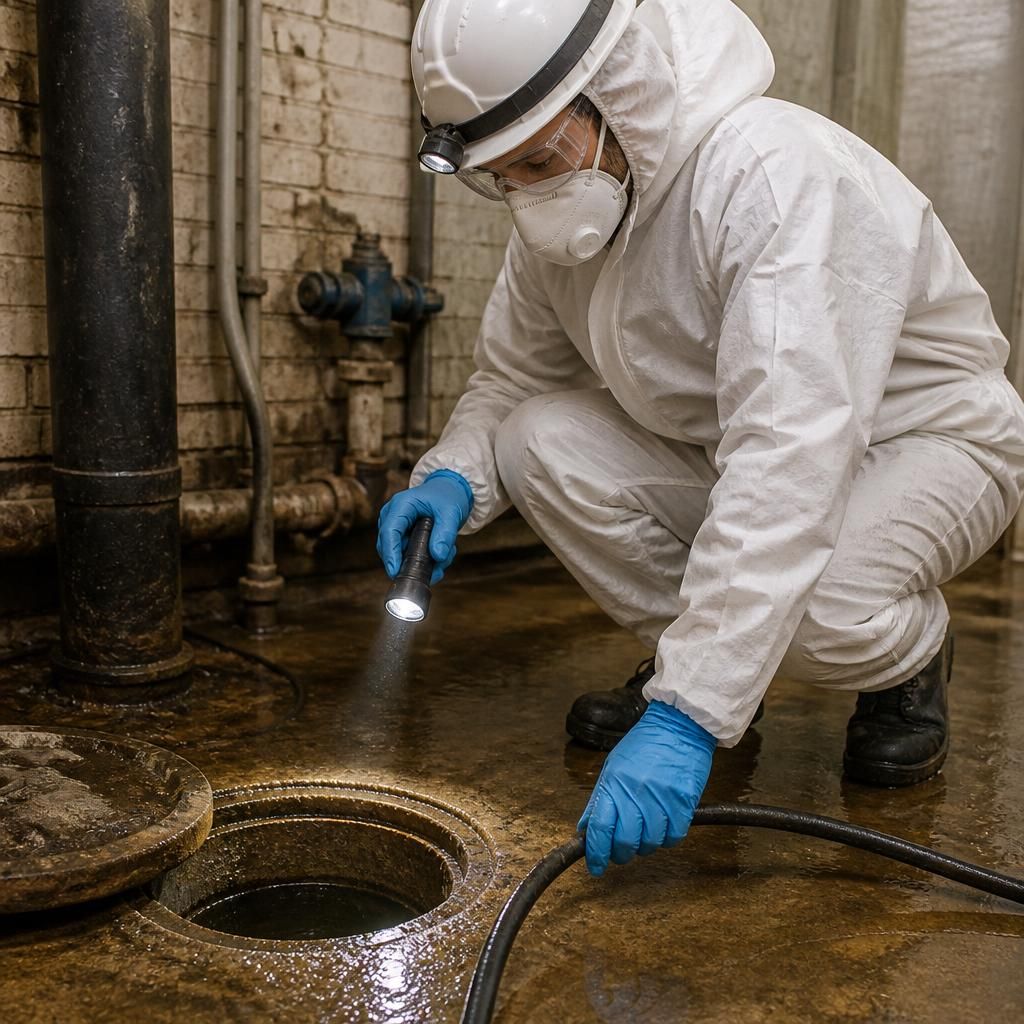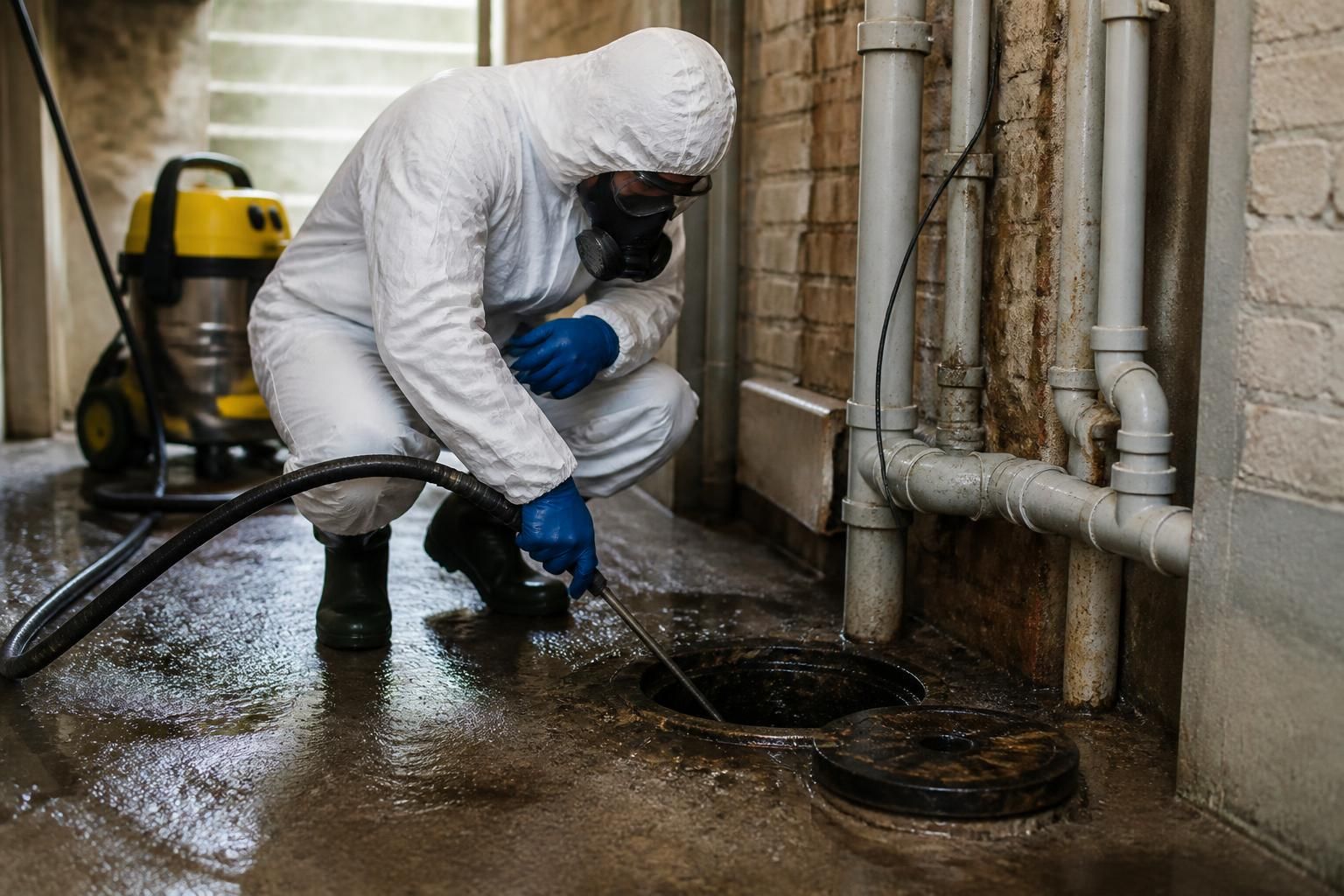
Sewage cleaning is a controlled remediation process designed to make an affected area hygienic and safe to use again. It involves assessing the contamination, protecting people and property, dealing with the affected drainage system, treating surfaces and materials, and checking that the source of the problem has been addressed.
1. Initial assessment and risk control
The technician first assesses where the sewage has travelled, how long it has been present and which surfaces or rooms are affected. This helps establish whether the issue is limited to a local drain, has entered flooring or wall cavities, or has spread through several areas. Access points, inspection chambers, toilets, soil pipes and other relevant drainage components may be examined.
Because sewage can contain harmful microorganisms, unnecessary contact is avoided. Suitable protective clothing, gloves, footwear and respiratory protection may be used according to the conditions found. Children, pets and anyone who is vulnerable to infection should be kept away from the affected area until the work has been completed.
2. Containment of the affected area
Containment limits the movement of contaminated material into clean parts of the property. This can involve restricting access, protecting nearby surfaces and separating equipment used in the affected area from equipment used elsewhere. Items that can be safely removed are taken out for separate assessment rather than being cleaned in place.
Electrical safety is also considered. If sewage has reached sockets, appliances, wiring or other electrical equipment, the affected supply should not be used until it has been assessed by a suitably qualified professional.
3. Drainage and blockage investigation
A sewage incident may result from a blocked drain, damaged pipework, a failed connection, defective seals or a problem with an underground drainage run. The likely cause is investigated before final cleaning takes place. Where necessary, drainage equipment or a camera inspection can help identify obstructions, cracks, displaced joints or other faults that are not visible from inside the property.
Resolving the underlying drainage fault is important because cleaning alone will not prevent a repeat incident if the pipework remains obstructed or damaged. The appropriate repair depends on the location and condition of the affected section.
4. Removal of contaminated materials
Hard, non-porous surfaces can often be treated, while porous materials may absorb contaminated water and odours. Carpets, underlay, soft furnishings, plasterboard, insulation and damaged timber therefore need to be assessed individually. Materials that cannot be reliably decontaminated may need to be removed and disposed of through the appropriate waste-handling process.
Items that can be retained are separated from those requiring disposal. Cleaning a porous item superficially may not remove contamination held below its visible surface, so its condition, exposure and construction all affect the decision.
5. Cleaning and hygienic treatment
Once damaged materials and residues have been dealt with, remaining surfaces are mechanically cleaned to remove deposits. Suitable cleaning agents are selected for the surface involved, since the wrong product can damage flooring, metals, sealants, paintwork or natural stone. A disinfecting or sanitising treatment may then be applied in accordance with the product instructions and the material being treated.
Sanitising is not simply a matter of masking odours with fragrance. It must reach the areas affected by the sewage and be used at the correct concentration and contact time. Particular attention is given to joints, edges, low points, concealed corners and other places where residue can remain.
6. Drying, odour control and final checks
Moisture left behind can contribute to persistent odours, material deterioration and mould growth. The affected area is therefore ventilated or dried using methods suitable for the building and its contents. Moisture levels and visible condition can then be checked before flooring, units or other items are reinstated.
The final inspection considers whether residues remain, whether drainage is operating correctly and whether any further repair or building work is needed. A professional cleaning service should also explain which items were removed, which areas were treated and whether any follow-up work is recommended.
What should the property owner do before cleaning?
- Keep people and pets away from the affected area.
- Avoid touching contaminated items without suitable protection.
- Do not mix cleaning chemicals, particularly bleach with acidic or ammonia-based products.
- Do not use a vacuum cleaner or domestic carpet-cleaning machine on sewage-contaminated water.
- Record visible damage and contact the relevant insurer or property manager if a claim may be required.
For homeowners, landlords and tenants, the correct approach depends on both the contamination and the drainage fault that caused it. Ideal Plumbing Services can assess sewage-related plumbing problems and advise on the appropriate cleaning, repair and drainage work for the property.