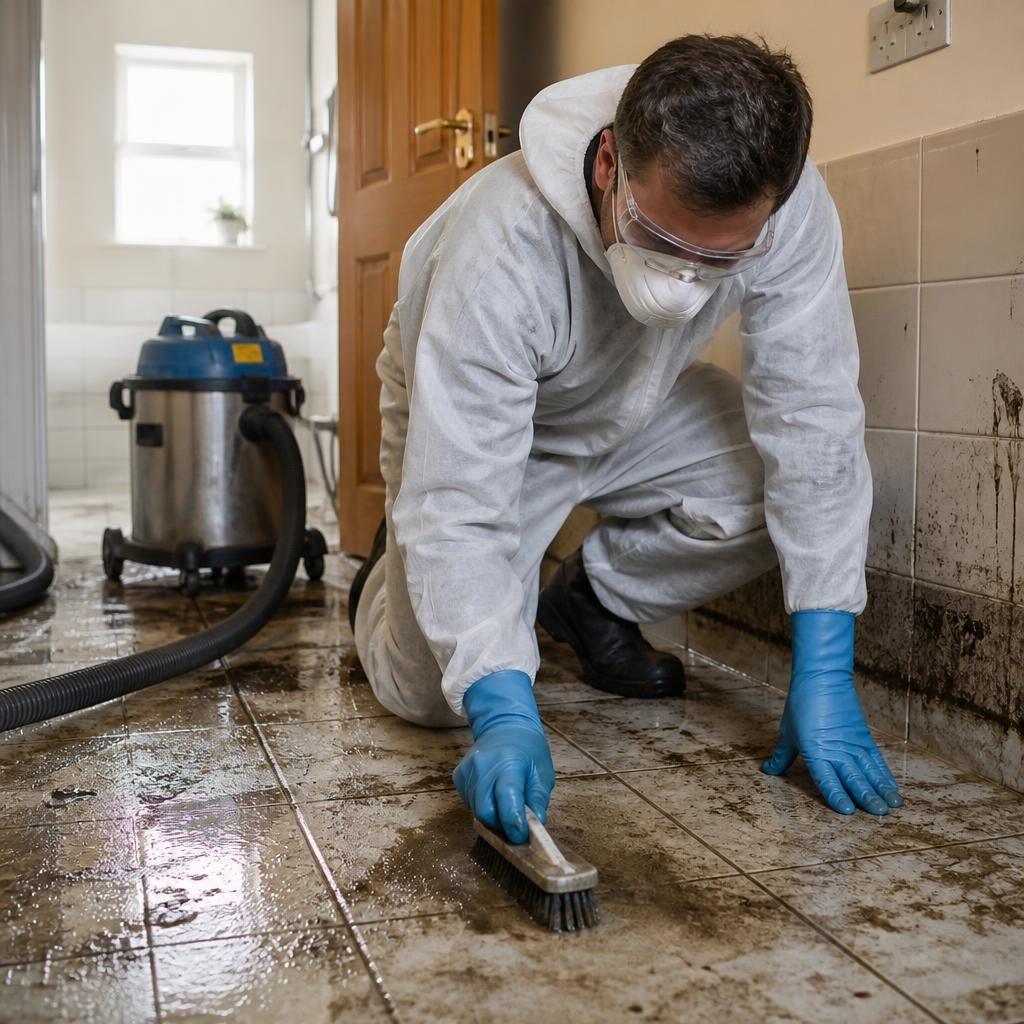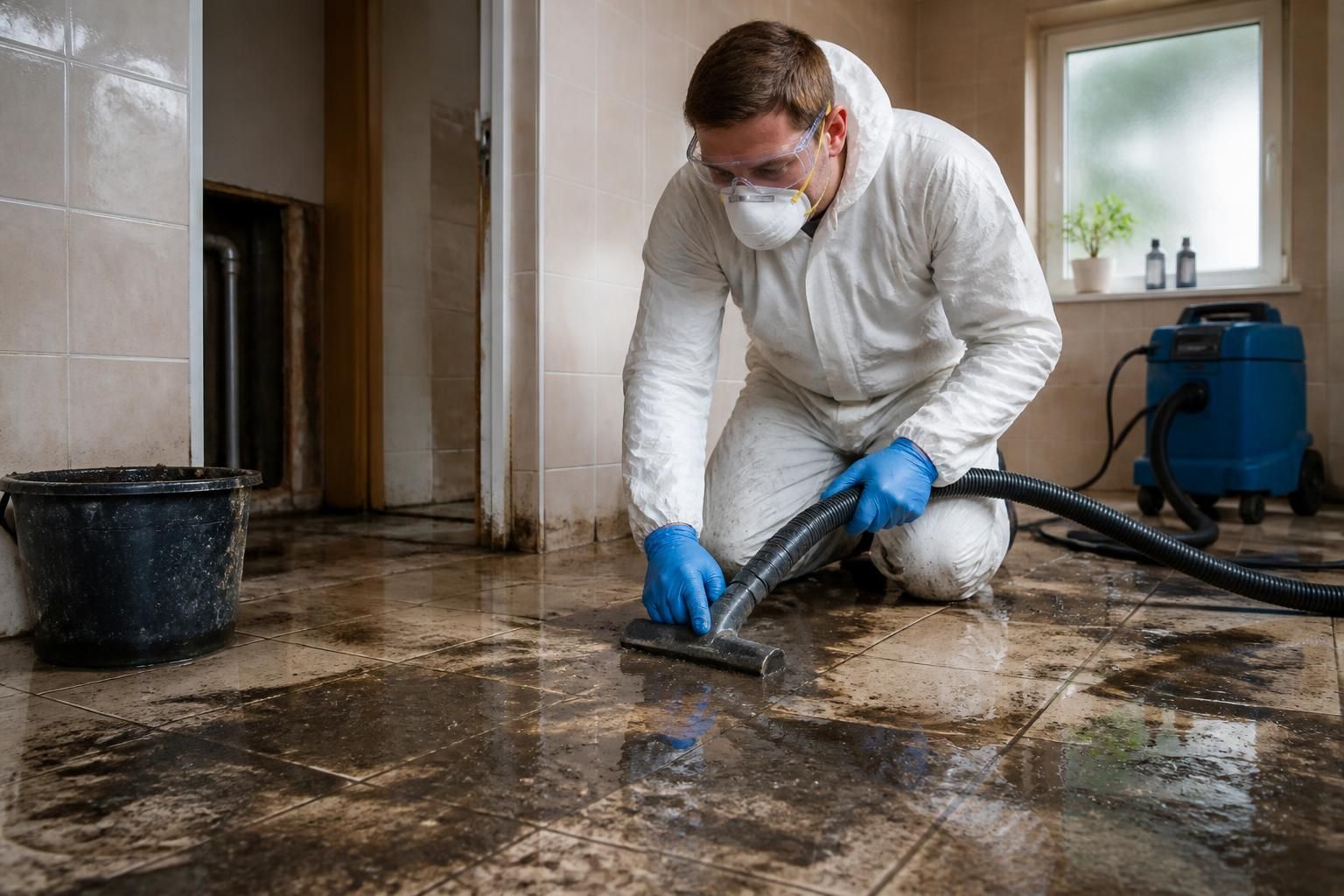
Sewage cleaning is usually a controlled, localised process, but it can temporarily affect how a property is used. The main disruption comes from restricting access to contaminated areas, moving belongings, removing affected materials and allowing surfaces to dry and be disinfected properly. The level of inconvenience depends on whether the incident is confined to one room or has spread into floors, walls, furnishings or shared drainage areas.
Before cleaning begins, the affected space should be isolated from the rest of the property. This may involve closing internal doors, covering routes used by technicians and keeping children and pets away from the work area. People should not walk through contaminated water or handle sewage-affected items, as contamination can be transferred to other surfaces and rooms.
Furniture, stored possessions and household items may need to be moved to create a clear working area. Items that have not been contaminated can often be relocated safely, while porous materials such as carpets, underlay, upholstered furnishings, mattresses and some timber products may require specialist assessment. If an item cannot be cleaned and dried effectively, disposal may be the safer option.
The cleaning process can involve removing standing water and solid waste, washing hard surfaces, applying suitable disinfectant and extracting moisture from materials that can be retained. Equipment may produce some noise and occupy part of the room while it is in use. Access may also be needed to inspection points, drainage connections, affected flooring or concealed pipework, depending on the source and spread of the sewage.
Not every sewage incident requires removal of flooring or plasterboard. However, materials that have absorbed contaminated water can conceal moisture or retain odours beneath the visible surface. A professional assessment helps distinguish between areas that can be cleaned in place and materials that need lifting, cutting out or replacement. This can make the initial work more involved, but it reduces the risk of leaving contamination or moisture behind.
After visible cleaning, the affected area may still be unsuitable for normal use until it has dried and been checked. Drying requirements vary according to the materials, ventilation and the amount of water involved. Attempting to replace flooring, close walls or return furniture too soon can trap moisture and create further problems, including persistent odours, material deterioration and mould growth.
To reduce avoidable disruption, occupants should:
- Keep people and animals away from the affected area.
- Avoid using contaminated sinks, toilets, showers or appliances until the drainage problem has been assessed.
- Remove valuable or unaffected belongings only when it is safe to do so.
- Tell the plumber about vulnerable occupants, access restrictions and any areas that must remain available.
- Keep photographs and a basic record of affected items before cleaning or disposal, where this can be done without entering a contaminated area.
- Follow instructions about ventilation, drying equipment and when the area can be used again.
In a rented property, the tenant should notify the landlord or managing agent, particularly where flooring, walls, fitted units or communal drainage may be affected. In a shared building, neighbouring properties may also need checking if the sewage has travelled through a common soil pipe, drain or service void.
Professional sewage cleaning does not necessarily mean that a room or property must be vacated throughout the work. Whether occupants can remain depends on the location of the contamination, access to essential facilities, the condition of the surrounding areas and the measures needed to keep clean and dirty zones separate. If contamination has spread widely or essential services are affected, temporary alternative arrangements may be more suitable.
Ideal Plumbing Services can assess the source of the problem, the affected areas and the cleaning required as part of its sewage cleaning service for homes and properties in Birmingham and the wider West Midlands. The aim is to identify the practical scope of work clearly, so occupants understand which parts of the property will be affected and what must happen before normal use resumes.