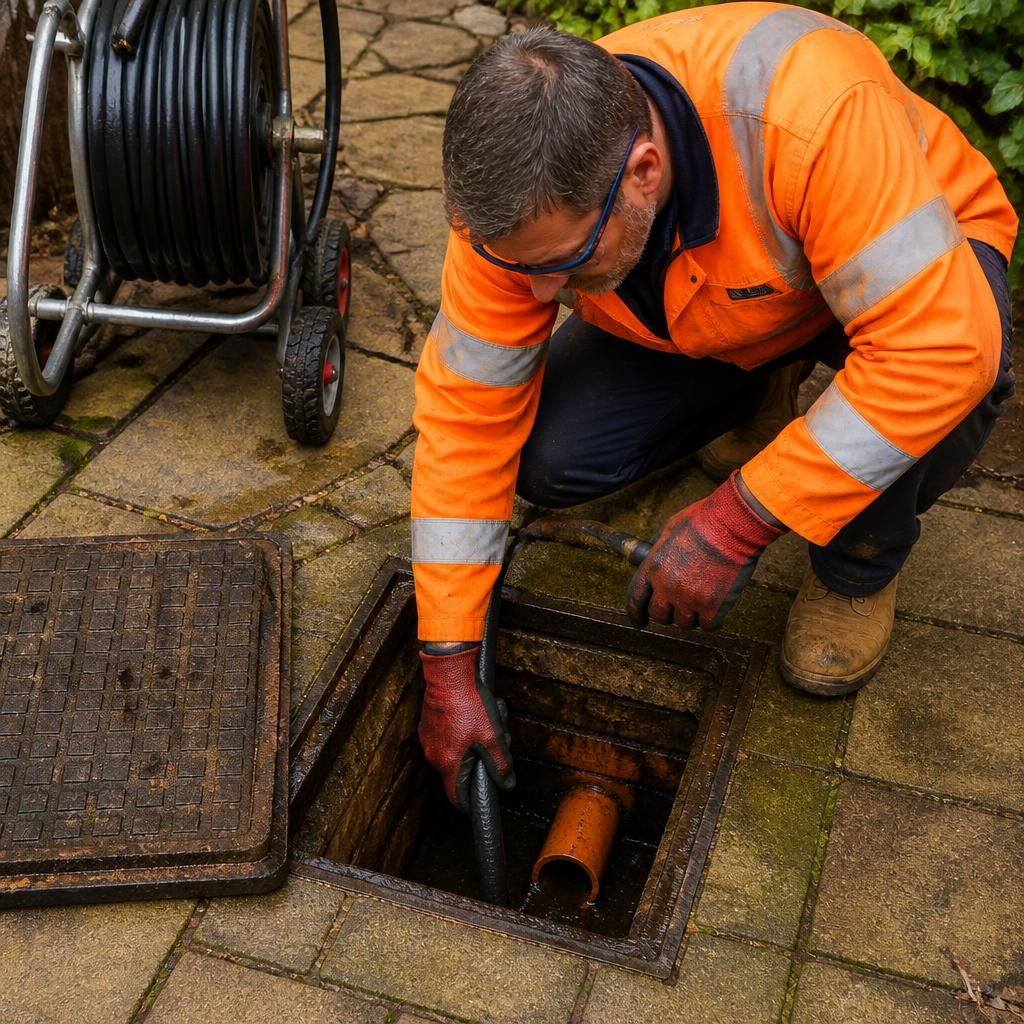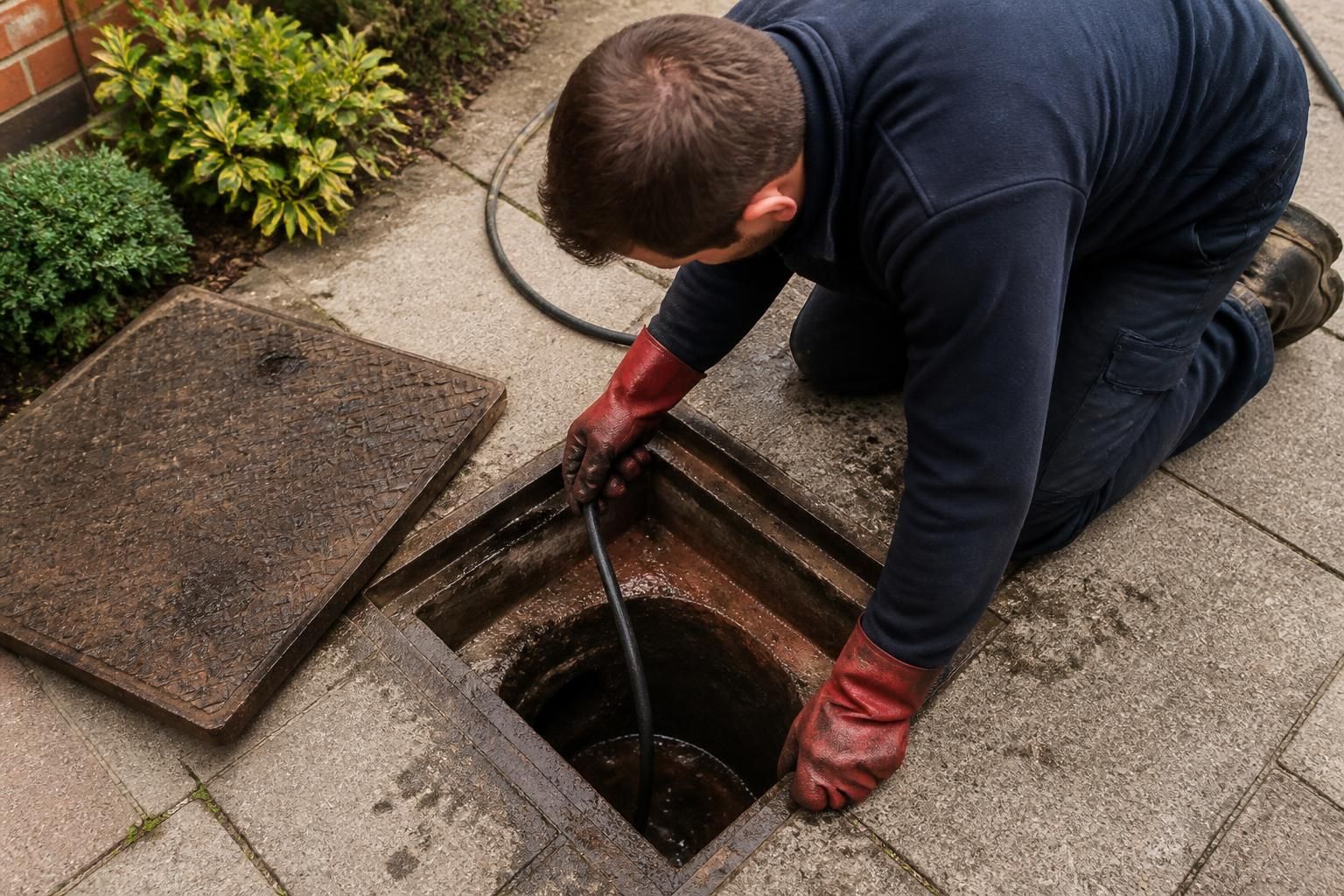
The access required for sewage cleaning depends on the property’s drainage layout, the location of the blockage and the cleaning equipment needed. In most cases, the preferred entry point is an external access chamber that allows the plumber to work on the affected section without removing internal fittings. Where this is not available or cannot be used, access may be needed through an internal drain connection, toilet outlet or another suitable point on the private drainage system.
Before cleaning begins, the plumber will normally identify how the drains run and establish which section is affected. Useful information includes the position of visible covers, recent overflow points, slow-draining fixtures and any areas where wastewater has backed up. A clear route to these points helps the work proceed without unnecessarily disturbing paving, flooring, cupboards or bathroom fittings.
External access may involve:
- Removing an inspection chamber or drain cover safely.
- Reaching a rodding eye or access point on a private drain.
- Positioning cleaning equipment close enough to the access point for the hose or tools to reach the affected pipe.
- Keeping the surrounding ground clear so covers can be lifted and replaced securely.
Access is not limited to the drain itself. The plumber may need to inspect toilets, sinks, utility areas or other connected fixtures to understand the symptoms and check whether wastewater is moving correctly after cleaning. This does not necessarily mean that fittings will be removed. If removal is considered necessary, the work should be explained beforehand, particularly where it could affect tiled surfaces, kitchen units or flooring.
For properties with shared or restricted drainage, permission may be needed before entering communal areas, private courtyards, rented accommodation or neighbouring land. Tenants should usually inform the landlord or managing agent where access to shared facilities, service cupboards or external chambers is required. Landlords and property managers can help by identifying drainage plans, keys and any known access restrictions.
Safe working space is also important. The area around the access point should be kept free from vehicles, stored items, garden furniture and other obstructions. Cleaning can involve water, waste material and specialist equipment, so children and pets should be kept away from the work area. If the access point is in a confined space, the plumber will assess whether it can be worked on safely from above; entering a chamber is not automatically required and should only be undertaken with appropriate controls.
Some access points are difficult to use because covers are seized, buried, damaged or located beneath later building work. A plumber may be able to use another entry point or specialist equipment, but the available options depend on the pipe layout and the condition of the system. Breaking through floors, walls or paving should not be assumed to be necessary. If excavation or removal of a fitting is being considered, the likely reason and scope should be discussed before that additional work starts.
After cleaning, the access point must be closed correctly and the surrounding area checked for signs of leakage, damage or continuing backflow. The plumber may also run water through connected fixtures or carry out a further inspection to confirm that the cleaned section is draining as intended. Providing clear access and accurate information about the property can make diagnosis more straightforward while helping to limit avoidable disruption.