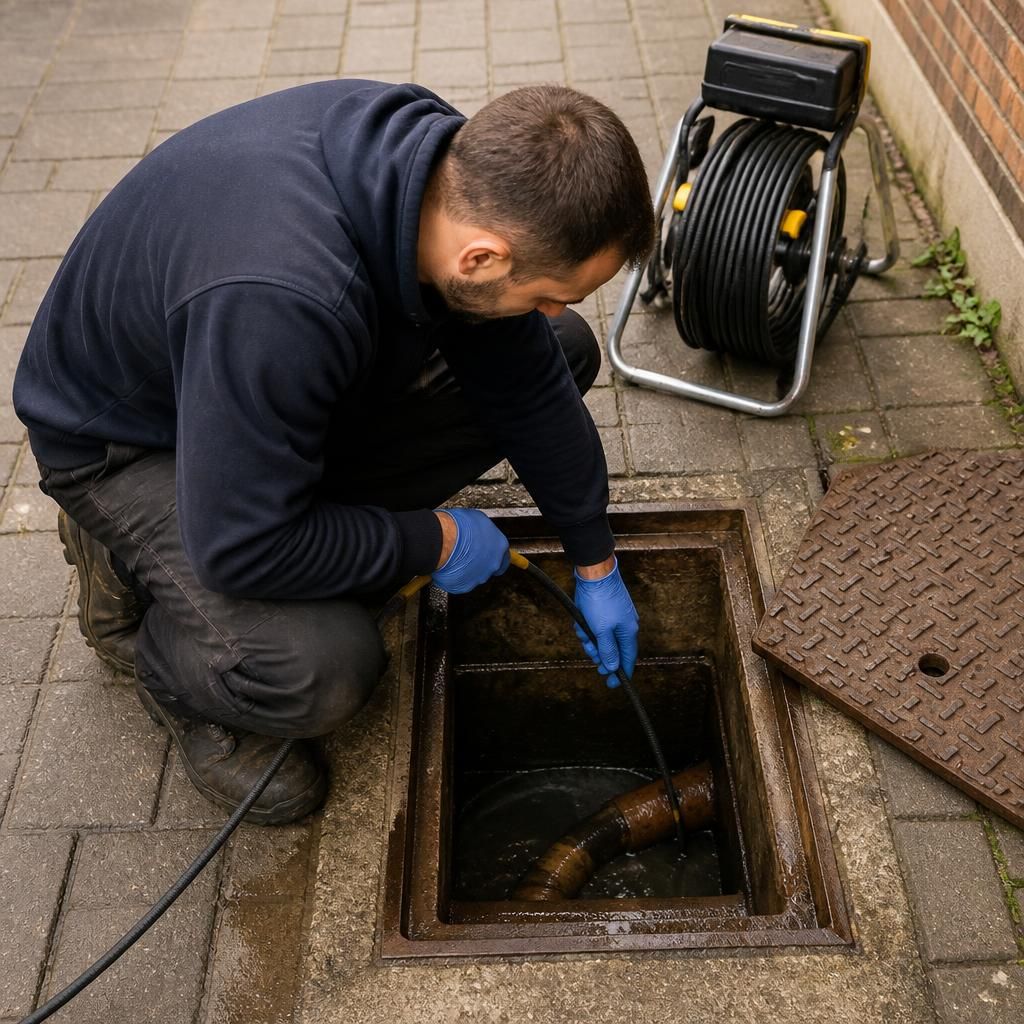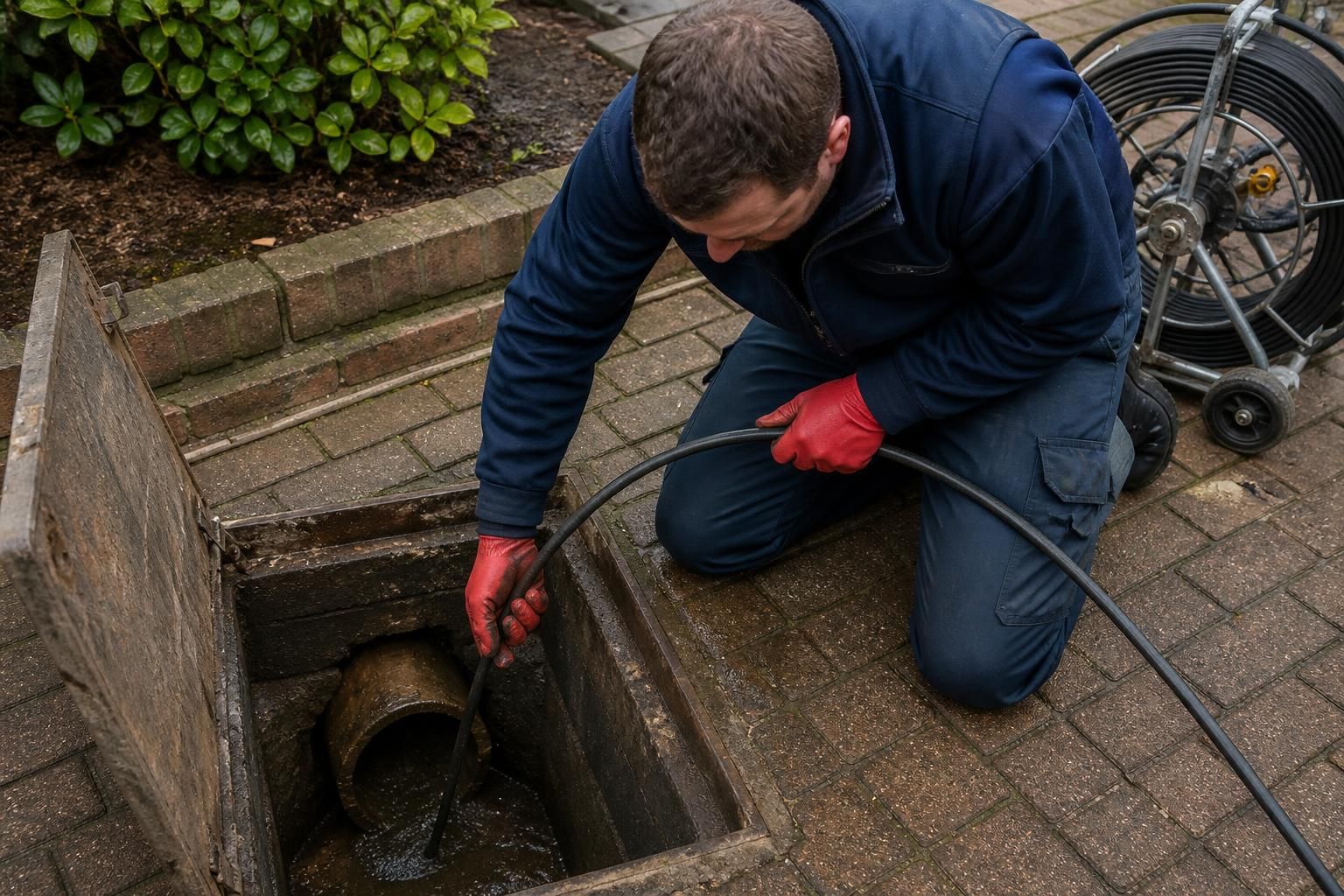
Professional sewage cleaning is most beneficial for properties where wastewater systems carry a high volume of use, have a history of build-up or blockages, or contain underground pipework that is difficult to inspect and maintain. The need is determined less by the property’s appearance or age alone and more by the condition, design and usage of its drainage system.
Older properties with established drainage systems can be suitable candidates because their underground sewer pipes may have accumulated silt, grease, scale, roots or other debris over time. Older pipework may also have uneven joints, narrow sections or damaged surfaces where waste catches more readily. Cleaning can remove deposits that ordinary sink or toilet unblocking does not reach, although damaged pipes may require a separate repair or survey.
Properties with recurring drainage problems may benefit even when each individual blockage appears to have been cleared. Repeatedly slow toilets, gurgling drains, sewage odours or wastewater returning through low-level outlets can indicate that material remains further along the system. Cleaning the affected run can deal with the underlying accumulation rather than only restoring flow at the nearest fixture.
Multi-occupancy buildings often place greater demand on shared soil stacks, lateral drains and private sewers. Where several households use the same drainage route, grease, sanitary products, wipes and other unsuitable materials can combine with silt to restrict the pipe. A cleaning programme may be worth considering when blockages affect more than one unit or when responsibility for shared drainage needs to be managed carefully.
This can be particularly relevant to:
- Blocks of flats and converted buildings with shared drainage;
- Houses in multiple occupation where facilities are used by several residents;
- Rented homes where a recurring drainage fault needs to be investigated rather than repeatedly treated as a minor blockage; and
- Managed residential sites with communal drains, inspection chambers or private sewer connections.
Properties with private drainage arrangements may also need specialist cleaning. A home or building connected to a private sewer, shared private drain, cesspit or treatment system may have maintenance responsibilities that differ from those for a standard public sewer connection. Access points, pipe routes and discharge arrangements should be identified before work begins, particularly where several properties share the same system.
Buildings affected by sewage backups or persistent odours should not be assessed solely by whether water is currently flowing. A partial restriction can allow wastewater to drain slowly while still leaving deposits inside the pipe. Foul smells, bubbling sounds, damp around inspection covers and discoloured water near external drainage points can all justify a more detailed investigation. These symptoms can have other causes, so a professional assessment is needed before deciding whether cleaning is appropriate.
Properties with demanding wastewater use can accumulate deposits more quickly than lightly used premises. This may include accommodation with many occupants, buildings with several bathrooms, and premises where kitchens or washrooms discharge through the same drainage route. The relevant issue is not simply the number of fixtures, but whether the pipe diameter, falls and capacity are suitable for the volume and type of wastewater entering the system.
Landlords, property managers and homeowners should consider professional sewage cleaning where a problem affects several outlets, returns after basic unblocking, or has previously caused wastewater to enter the building. It may also be appropriate before or after major refurbishment if drainage routes have been altered, or when a property is being investigated for a persistent defect.
Cleaning is not automatically the right solution for every sewage problem. Collapsed pipes, displaced joints, serious root ingress, poor gradients and defective inspection chambers may continue to cause trouble after deposits have been removed. A suitable service should therefore distinguish between removable contamination and structural faults, using inspection or other diagnostic work where the cause is uncertain.
In practical terms, the properties most likely to benefit are those with shared, heavily used, older or repeatedly problematic drainage infrastructure. A professional assessment can establish which pipe section is affected, whether cleaning is safe for the system and whether further maintenance or repair should follow.