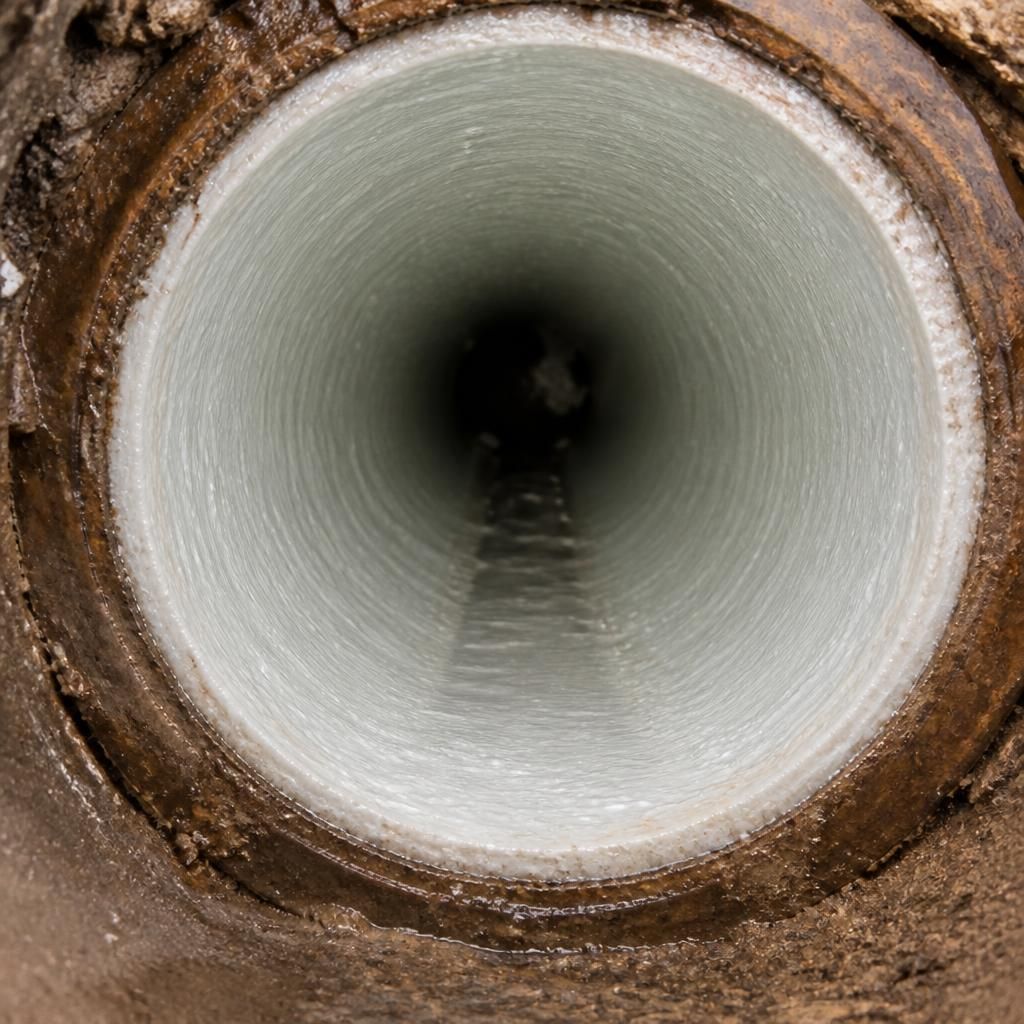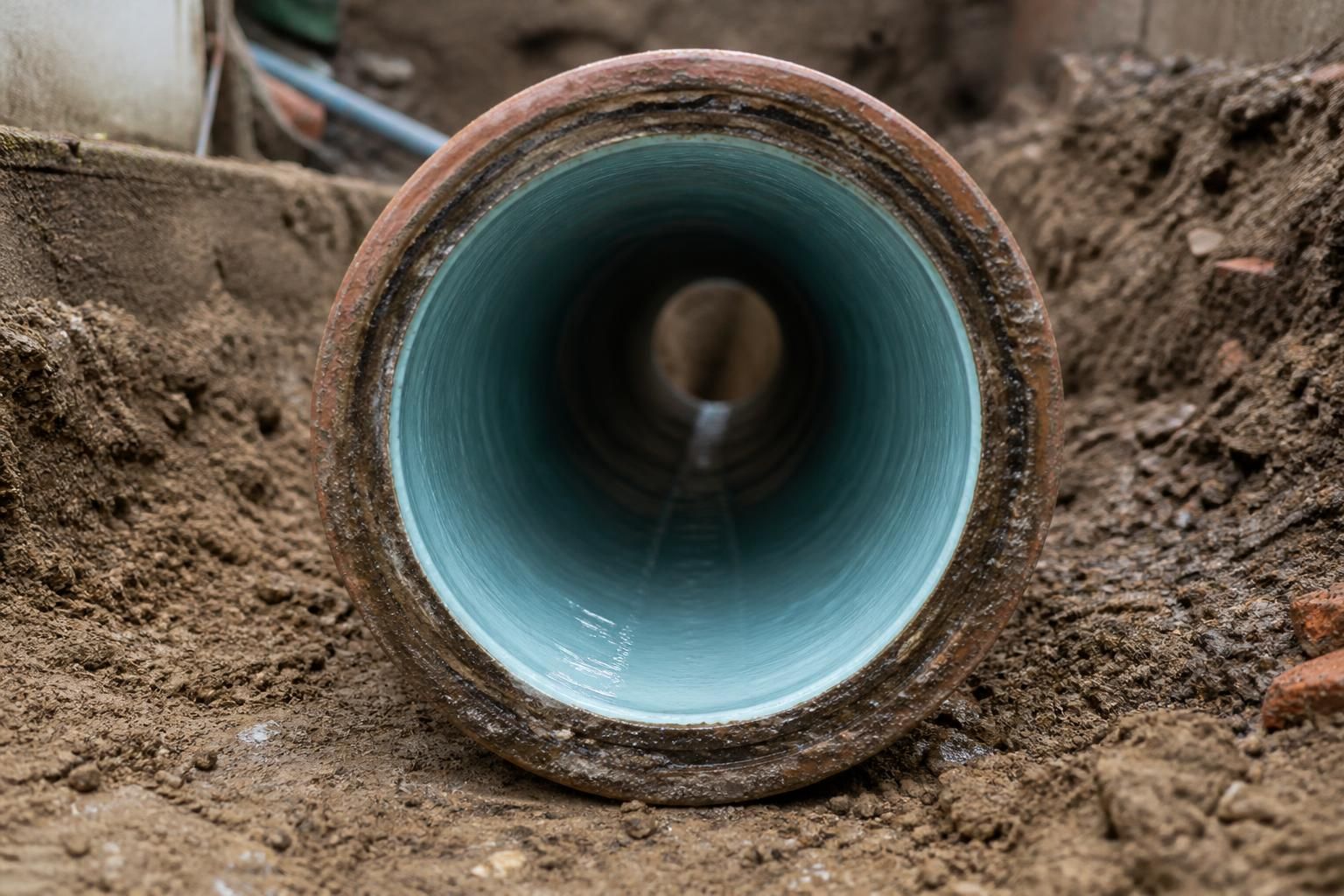
A professionally installed drain reline can last for decades, making it a durable alternative to excavating and replacing a damaged pipe. It is not an unlimited-life solution, however. The eventual service life depends on the condition of the original drain, the lining materials and installation method, the type of damage, ground movement, and how the drainage system is used.
Drain relining works by inserting a resin-impregnated liner inside the existing pipe and curing it to form a new pipe within the old one. Once cured, the liner can seal cracks, close off minor fractures and restore the flow path without removing the entire drain. A correctly prepared pipe and accurately fitted liner are essential, as poor cleaning, incomplete curing or an unsuitable liner can reduce the expected lifespan.
The surrounding conditions also affect how long a reline remains effective. Stable ground, appropriate pipe dimensions and normal domestic drainage use are generally favourable. Repeated ground movement, aggressive chemicals, severe temperature changes, root intrusion around unsealed connections or continuing structural movement can place additional stress on the lining. A survey should therefore assess the cause of the damage rather than treating the visible blockage alone.
Good maintenance helps preserve a relined drain. Practical measures include:
- Keeping fats, oils, wipes and other unsuitable materials out of the drainage system.
- Using strainers where they help prevent solid material entering sinks and gullies.
- Addressing recurring slow drainage, unusual smells or gurgling rather than repeatedly using chemical unblockers.
- Arranging an inspection if the property has a history of movement, root-related problems or repeated blockages.
- Protecting access points so the relined section can be inspected or cleaned when necessary.
A relined drain may need attention if flow becomes restricted again, wastewater backs up, a camera survey shows deformation, or damp patches and foul odours develop near the pipe route. These symptoms do not automatically mean the liner has failed; they can also result from a downstream blockage, a defective connection or a separate section of pipe that was not relined.
Before deciding that a new repair is needed, a drainage professional can use a CCTV survey to check the liner, joints, connections and surrounding pipework. This helps establish whether cleaning, a local repair, a further section of relining or full replacement is appropriate. Ideal Plumbing Services provides drain assessment and repair advice for residential customers in Birmingham and across the West Midlands.