Domestic drain unblocking can do more than restore flow: when a blockage has returned, the work should also assess why the drainage system is failing to clear properly. A one-off obstruction may be removed without further investigation, but repeated symptoms usually justify checking the affected pipework, connected fixtures and the way wastewater is leaving the property.
The first part of the assessment is usually a review of the pattern. Details such as how often the problem returns, whether several fixtures are affected, whether water rises in an outside drain and whether the issue follows particular household activities can help indicate where the restriction is located. A blockage limited to one basin may have a different cause from slow drainage affecting a toilet, bath and kitchen sink.
It is also important to distinguish between a complete clearance and a lasting solution. Mechanical equipment may open a passage through an obstruction while leaving material attached to the inside of the pipe. Water may then flow temporarily before the remaining deposit collects more debris. If the same symptoms reappear, the drainage professional should consider whether the pipe has been fully cleared and whether another section of the system is contributing to the problem.
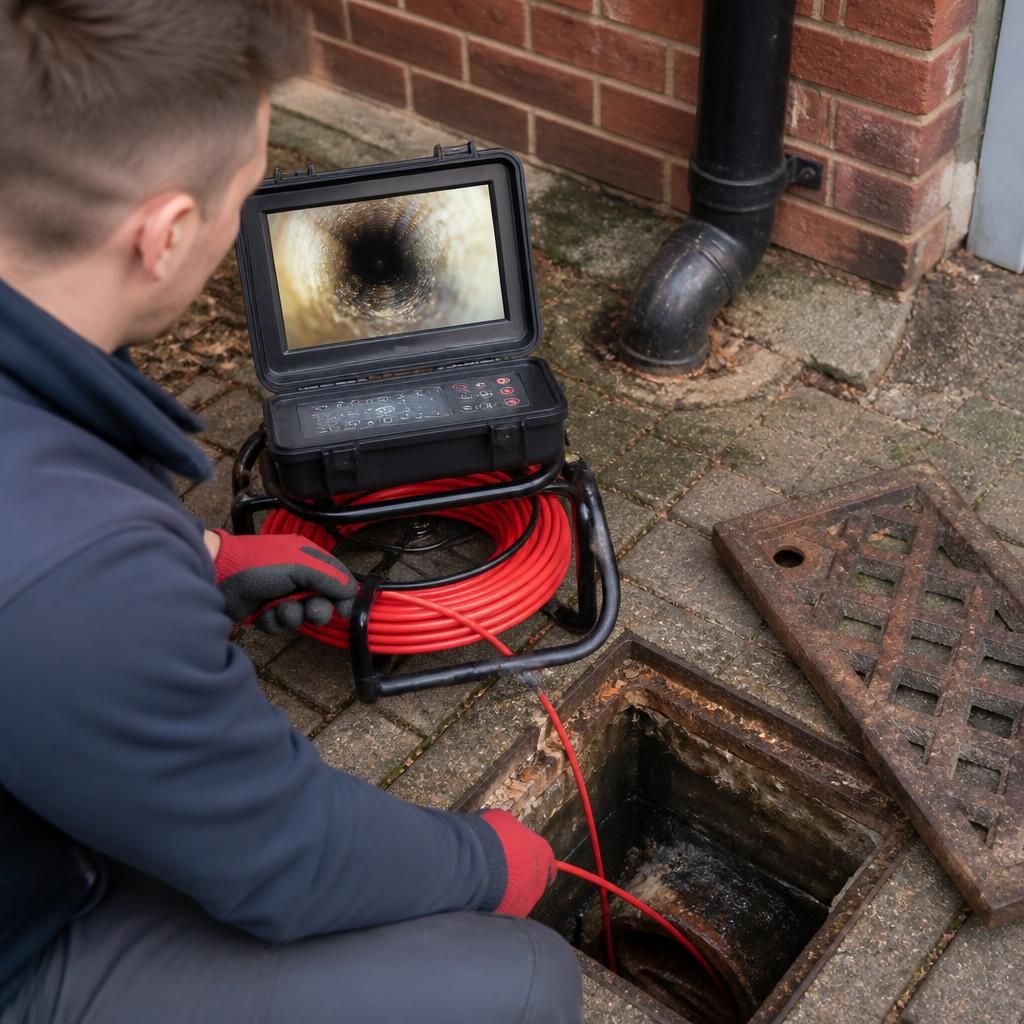
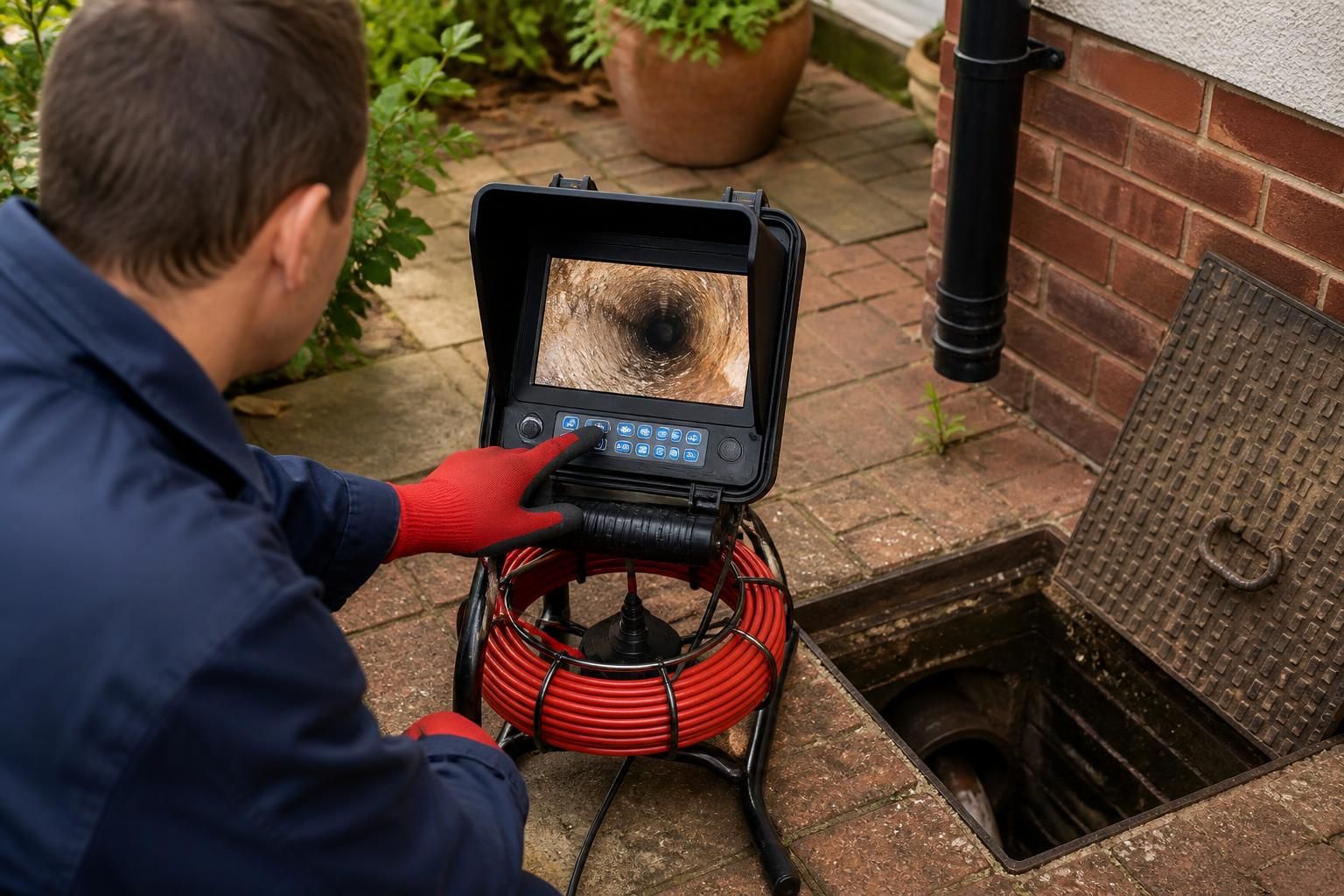
Depending on the symptoms and access available, an inspection may involve checking chambers, gullies, traps and visible connections, followed by a camera survey where the source cannot be established from the surface. A camera can show the internal condition and position of a pipe, helping to distinguish a local restriction from a problem further along the drainage run. It may also reveal displaced joints, a poor connection, an irregular section or a change in the pipe’s internal shape. Not every recurring blockage requires a camera survey, so the appropriate level of investigation depends on the property and the evidence found.
Recurring problems can also result from how a drainage system is being used. Fats, oils, food residue, excessive paper and unsuitable wipes can combine with deposits and narrow the available flow path. In some homes, a slow-running fixture is treated with repeated chemical products rather than being properly examined. This can fail to remove the underlying restriction and may create safety concerns for anyone subsequently working on the drain. A professional assessment can help identify whether changes to disposal and cleaning habits are relevant.
The location of the symptom can provide useful clues:
- A single slow fixture may indicate a restriction in its trap or branch pipe.
- Several affected fixtures may point to a shared section of internal drainage.
- Water backing up at an external point may suggest that the restriction is beyond the property’s internal connections.
- A blockage that returns after clearance may require inspection of the pipe’s condition, fall, joints or connection points rather than another surface-level treatment.
Once the cause has been assessed, the appropriate remedy may be a more complete clean, removal of an obstruction, repair of an accessible component or a recommendation for further drainage work. The findings should be explained clearly so that the property owner, landlord or tenant understands which work deals with the immediate symptom and which work addresses the reason it keeps happening. Where a repair is suggested, it is sensible to ask what evidence supports it and whether the recommendation is essential, preventative or optional.
For landlords, records of repeated call-outs and inspection findings can help establish whether the issue is confined to a tenant’s fixture or involves shared or external drainage. Tenants should report recurring problems rather than repeatedly attempting to clear them without authorisation, particularly where wastewater is backing up or more than one fixture is affected.
After clearance, practical prevention usually involves keeping fats and oils out of sinks, disposing of wipes and sanitary products as directed, using suitable strainers where appropriate and arranging attention when drainage becomes persistently slow. These measures cannot correct a fault in the pipework, but they can reduce the chance of avoidable material accumulating in a sound system.
Ideal Plumbing Services provides domestic drain unblocking and related drainage support for homeowners, landlords and tenants in Birmingham and the wider West Midlands. Where a blockage keeps returning, the useful outcome is not simply restored flow; it is a documented assessment of the likely source and a proportionate recommendation for preventing the same problem from continuing.