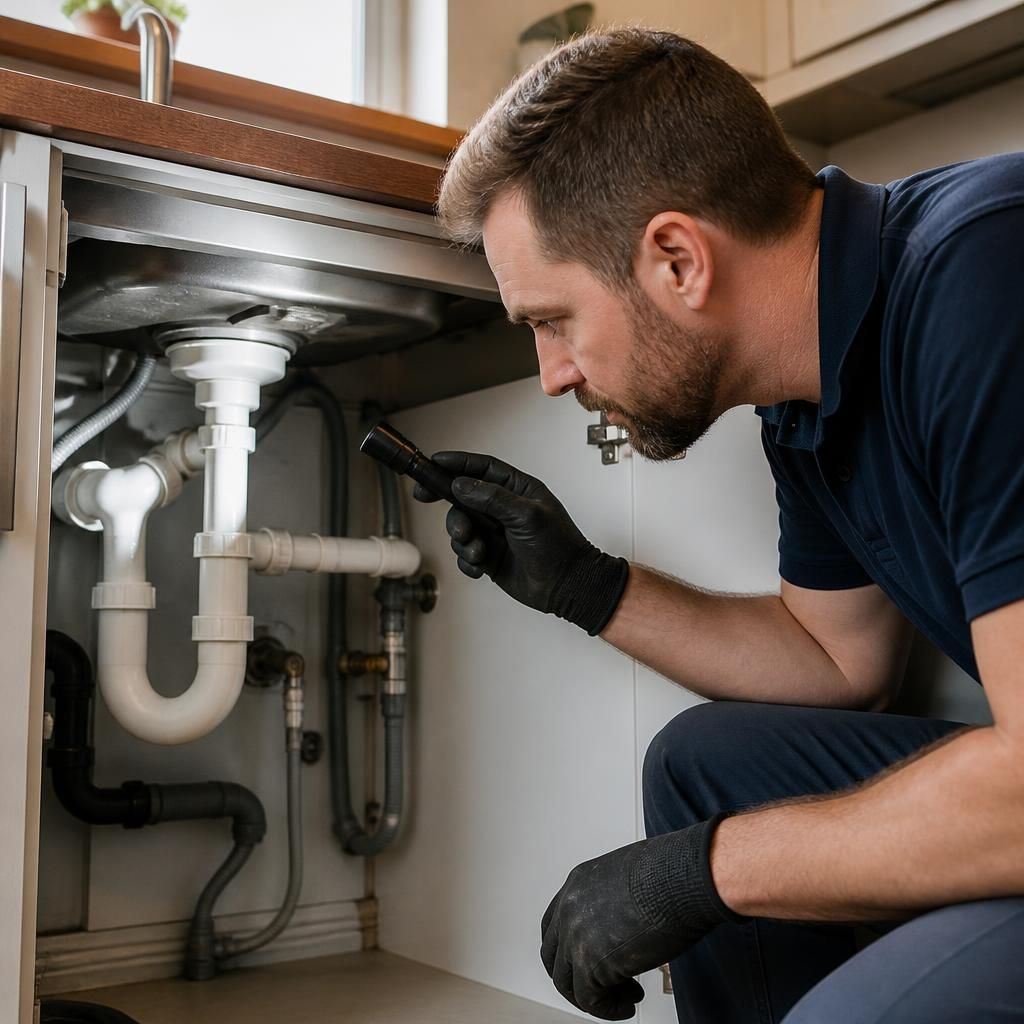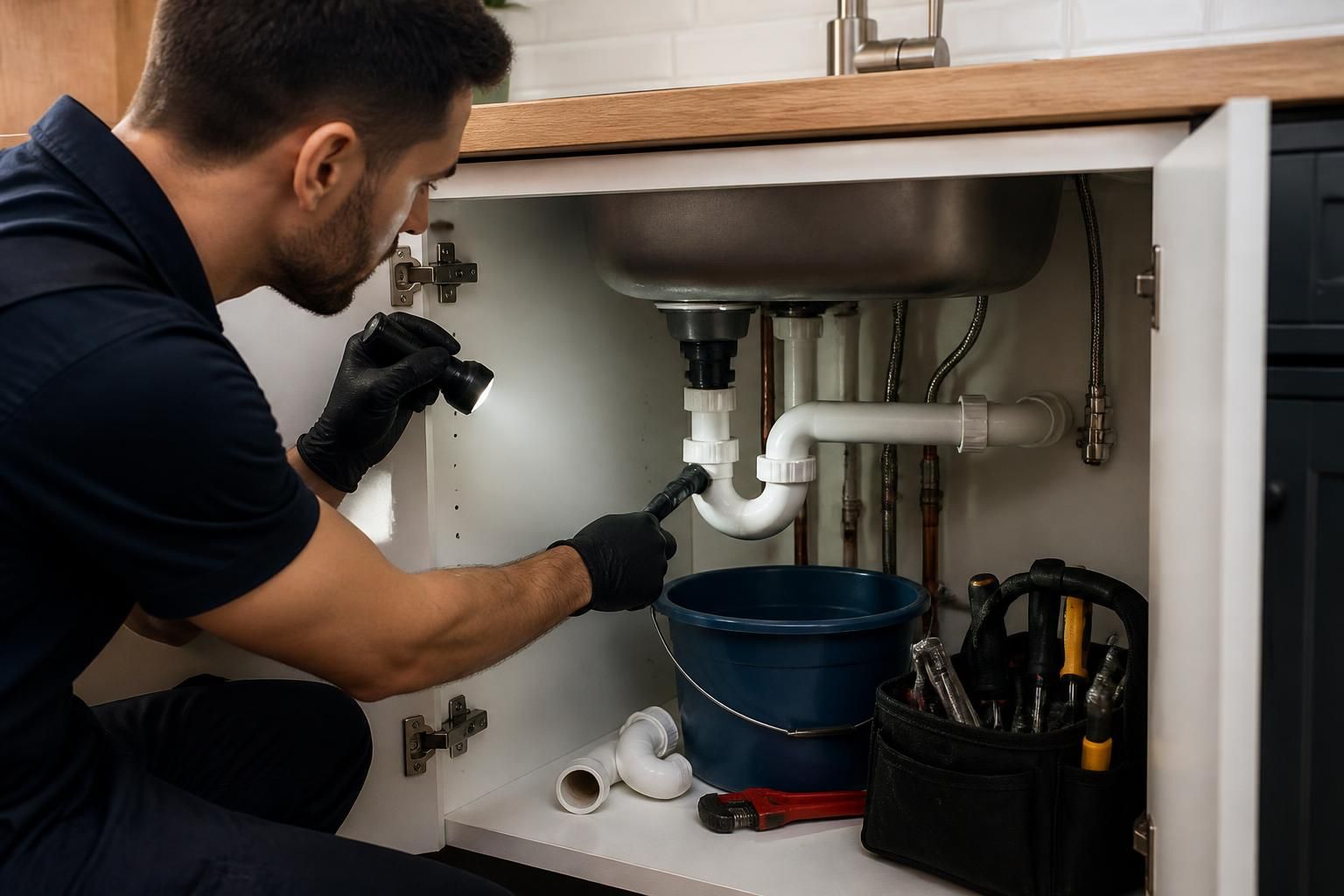
Access to more than one fixture is often useful, but it is not required in every domestic drain unblocking job. The number of access points needed depends on the position of the blockage, the layout of the drainage system and whether several outlets are connected to the same branch or soil pipe.
When access to multiple fixtures may be needed
If a kitchen sink, utility sink or dishwasher is draining slowly, the obstruction may be limited to the nearby waste pipe. In that situation, access to the affected sink or an adjacent cleaning point may be sufficient. However, if water is also backing up through a bath, shower, basin or toilet, the blockage is more likely to be further along a shared section of pipe. Checking the connected fixtures helps establish how far the obstruction extends.
- Several sinks affected: this can indicate a blockage in a shared waste branch rather than in one sink trap.
- A bath or shower backing up when a toilet is flushed: this may point to an obstruction in a shared soil or waste pipe.
- Water appearing in a low-level fixture: this can indicate that the blockage is beyond that fixture and is causing wastewater to seek another route.
- Only one outlet affected: the problem may be local to the trap, waste connection or short pipe serving that fixture.
Why a plumber may inspect more than one outlet
Comparing how different fixtures drain can help locate the blockage without removing unnecessary fittings. A plumber may run or release water from one outlet while observing another, check whether the affected pipe is shared, and use a suitable rodding or cleaning access point. This can distinguish a local obstruction from a blockage in the main internal drain.
Access does not necessarily mean dismantling every fixture. It may involve opening a trap, removing a toilet pan where appropriate, using a fitted access point, or reaching an external inspection chamber. The least disruptive suitable route should be selected according to the pipework and the location of the obstruction. In some homes, an external chamber provides better access than working through an indoor sink or toilet.
What to do before the visit
- Identify every fixture that is slow, backing up or producing unusual gurgling sounds.
- Tell the plumber whether the problem occurs when another outlet is used.
- Keep the area around affected sinks, toilets, baths and inspection covers clear.
- Do not use a fixture that is at risk of overflowing, particularly if wastewater is already standing in it.
- Provide details of any previous drain cleaning or repair work, if known.
For tenants and landlords, reporting all affected fixtures rather than describing only the first one noticed can help the drainage issue be assessed more accurately. Where several outlets are involved, the inspection may need to cover internal connections and accessible external drainage points before the appropriate unblocking method is chosen.
Once the obstruction has been cleared, the connected fixtures can be checked again to confirm that wastewater is flowing through the relevant section of the system. If the same outlets continue to drain poorly, further investigation may be needed to identify a damaged, displaced or repeatedly obstructed pipe rather than treating the symptoms as a single isolated blockage.