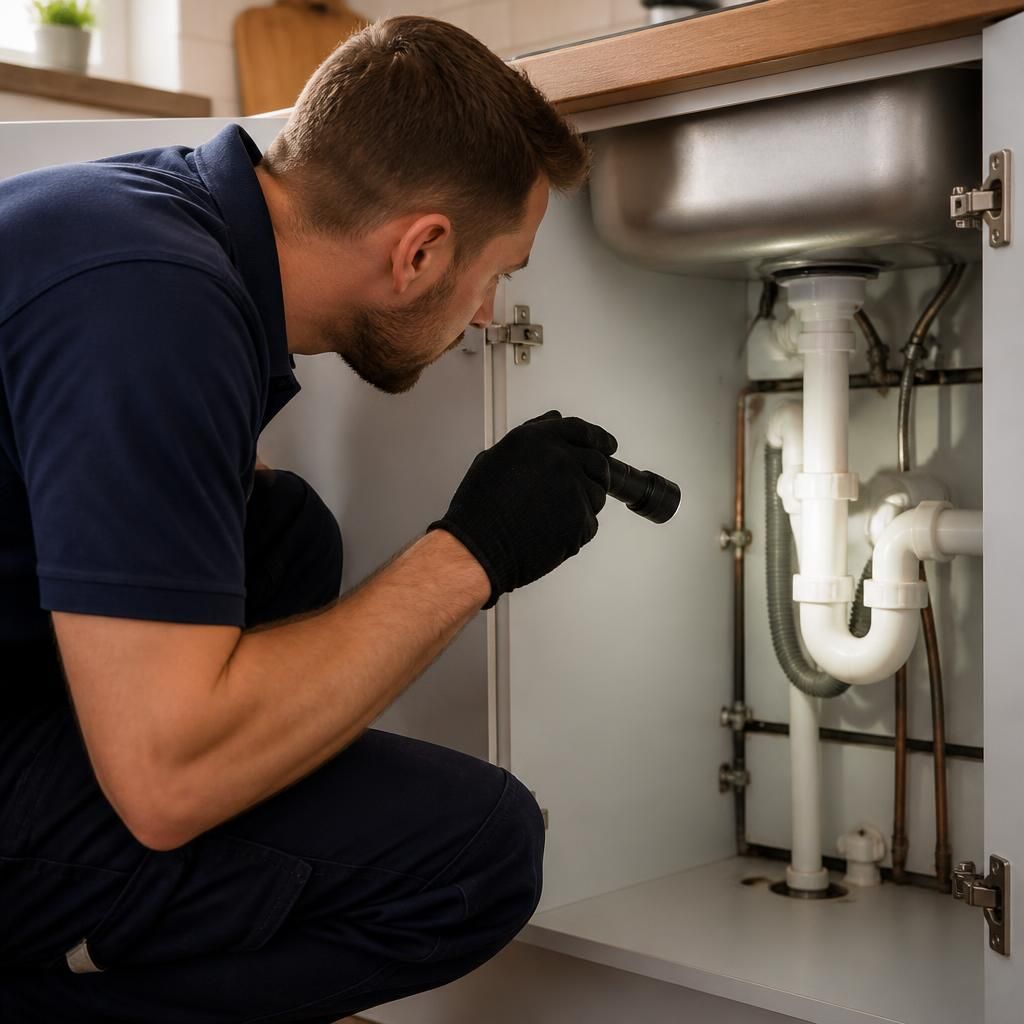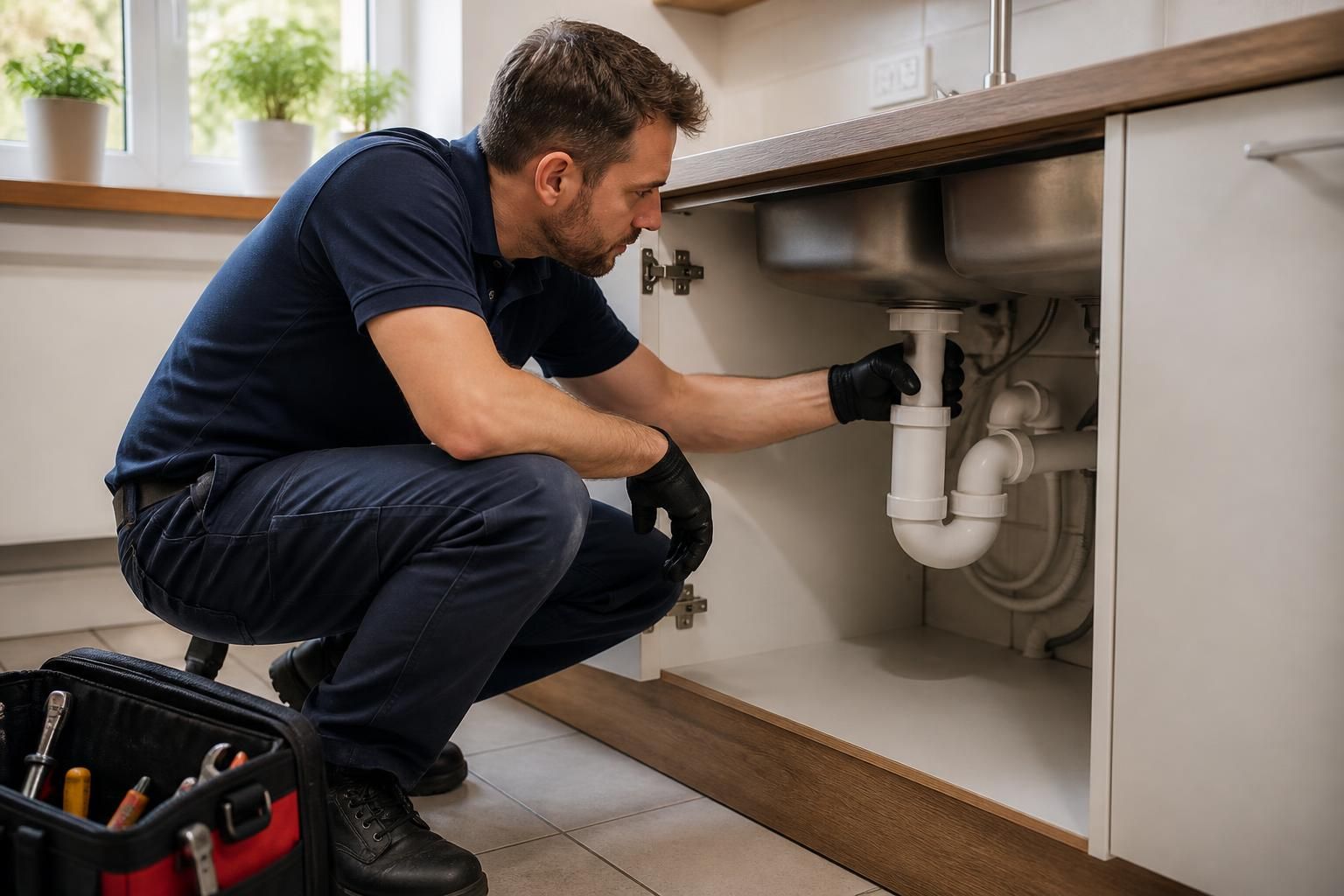
Preparing for a professional drain unblocking visit means making the property safe, giving the plumber relevant background information and checking what the inspection and repair will involve. Good preparation helps the visit proceed efficiently and reduces the risk of chemical exposure, accidental damage or delays caused by missing information.
- Avoid chemical drain cleaners before the visit. Caustic products can remain in standing water or inside pipework, creating a safety risk for anyone who opens the system. Do not mix different cleaning products, and tell the plumber if any chemical cleaner has already been used. Keep the packaging available so the product can be identified.
- Make the surrounding area safe. Keep children and pets away from the work area and remove loose objects that could be knocked over. If the plumber may need to work beneath a sink or near a utility area, move personal items that are not part of the plumbing. Do not dismantle pipework yourself unless a professional has specifically advised you to do so.
- Gather useful property information. If you know the approximate age of the plumbing, the location of inspection chambers or any previous drainage work, have those details ready. Information about earlier repairs, recurring blockages or alterations to the property can help the plumber understand how the drainage system is arranged.
- Check who needs to authorise the work. Homeowners can usually discuss the proposed work directly with the plumber. Tenants should check whether their landlord or managing agent needs to approve an inspection or repair before work begins. This is particularly important where the issue could involve shared drainage serving more than one property.
- Prepare relevant records or photographs. If you have invoices, reports or photographs from previous drainage work, keep them available. They may show where pipes run, what repairs have already been attempted or whether a recurring issue has affected the property before. Only take photographs from a safe position; do not remove covers or enter areas that could expose you to contaminated water.
- Think about access inside the property. If the plumber needs to inspect a kitchen, bathroom, utility room or other internal plumbing point, ensure the room can be entered without moving heavy furniture or stored items. Where access depends on a locked room or a key held by another person, arrange for the relevant person to be present or the key to be available.
- Prepare questions before work is authorised. Ask what the initial inspection will cover, which unblocking method is suitable and whether further investigation may be needed if the obstruction cannot be cleared immediately. It is also sensible to ask how any additional work will be explained and charged before authorising it. This gives you a clear understanding of the proposed work rather than assuming that every drainage problem has the same solution.
During the visit, the plumber may inspect accessible pipework and drainage points before choosing a method. The appropriate approach depends on the position and nature of the obstruction, the condition of the pipes and whether the problem appears isolated or connected to a wider drainage fault. Mechanical equipment or water-based cleaning methods may be considered where suitable, but the method should be selected after assessing the system rather than relying on a one-size-fits-all treatment.
After the blockage has been addressed, ask whether the plumber has identified anything that could contribute to another obstruction, such as poor flow, damaged pipework or an access problem. If follow-up repairs, drainage surveys or maintenance are recommended, request an explanation of why they are needed and what the work would involve. Keeping any written advice or invoice can also help if the same drainage issue returns.