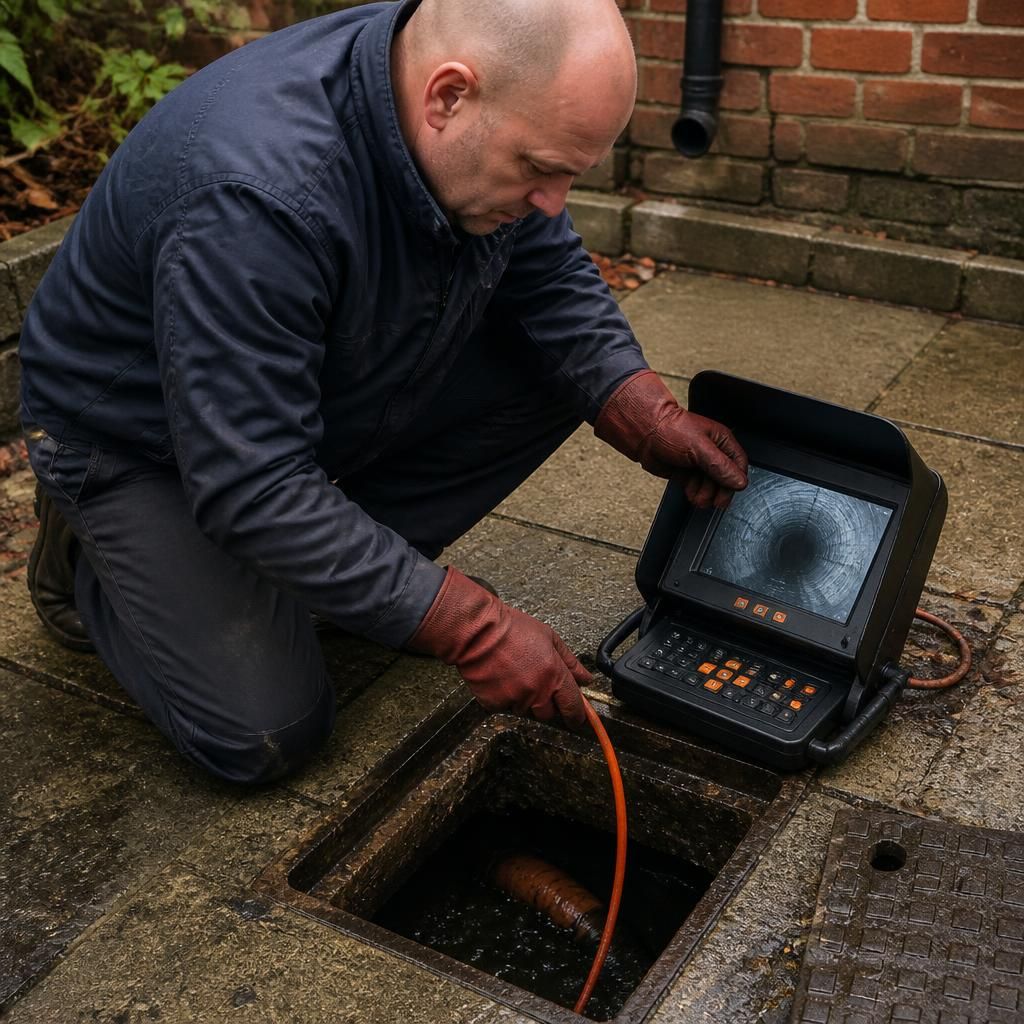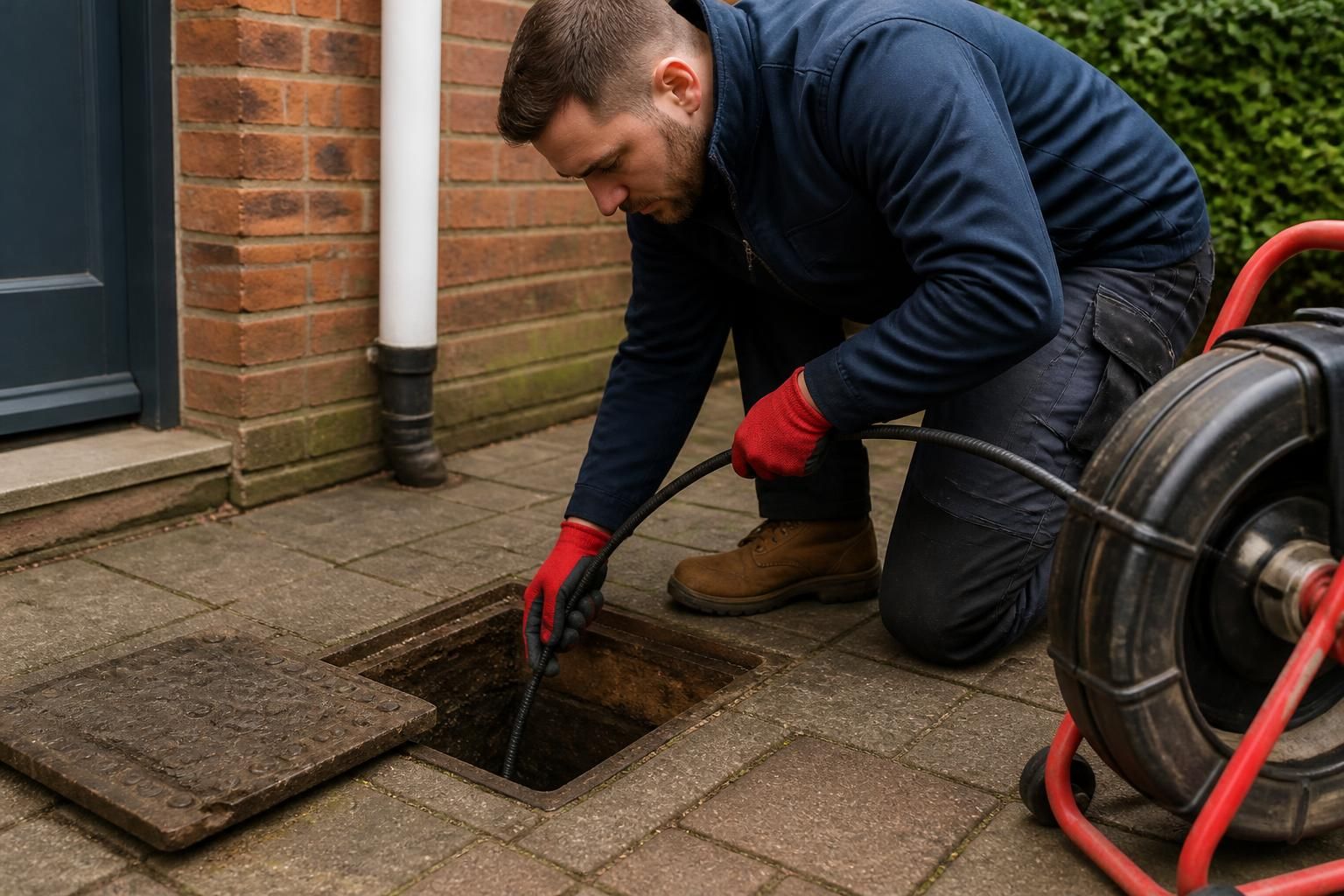
Professional drain unblocking is normally a localised job rather than major building work. The amount of disruption depends on where the blockage is found, how accessible the drain is and whether the obstruction can be cleared through an existing access point.
Most work takes place at an existing drain access point. This may be an external inspection chamber, a rodding point, a gulley or an accessible internal connection. Where suitable, the engineer can work from that point without removing floors, walls or fitted units. The access route and work area should be agreed before equipment is positioned.
Some practical disruption is possible while the work is carried out. Drain-cleaning equipment can be bulky, and mechanical equipment or water-jetting tools may create noise, vibration or splashing. Furniture, stored items and vehicles may need to be moved away from the access point. Keeping the route clear helps the engineer work safely and reduces the risk of contact with dirty water or drainage residue.
A professional service should include reasonable precautions to protect the property. These can include using suitable coverings, handling removed waste carefully and keeping tools and hoses to the agreed working area. The precise measures depend on whether the drain is inside the property, in an outbuilding, on a driveway or in a garden.
Excavation is not normally the first option. Breaking into paving, floors or walls may only be considered where the drainage system cannot be reached through its normal access points, or where a damaged pipe needs attention rather than a simple blockage clearance. If intrusive work appears necessary, the scope and likely effect on the property should be explained before it begins. Clearing a blockage and repairing a damaged pipe are different types of work, so they should not be treated as the same job.
During the visit, occupants may need to avoid using affected sinks, toilets, baths or appliances until the drainage system has been checked. This helps prevent additional water entering a restricted pipe and reduces the chance of an overflow. If access is inside a rented property, the tenant should also ensure that the landlord or managing agent is informed where their agreement requires permission for works.
After the blockage has been cleared, the engineer should check that water is draining correctly and leave the immediate work area in a suitable condition. It is sensible to ask what caused the restriction, whether any follow-up repair is recommended and whether there are signs of a wider drainage problem. These checks can help distinguish a one-off obstruction from an issue that could lead to further disruption.
To keep the visit as straightforward as possible, clear access to the drain, remove fragile items from nearby areas and identify any previous drainage issues before the engineer arrives. This preparation does not remove every possible inconvenience, but it can reduce delays, protect belongings and make it easier to assess the drainage system accurately.