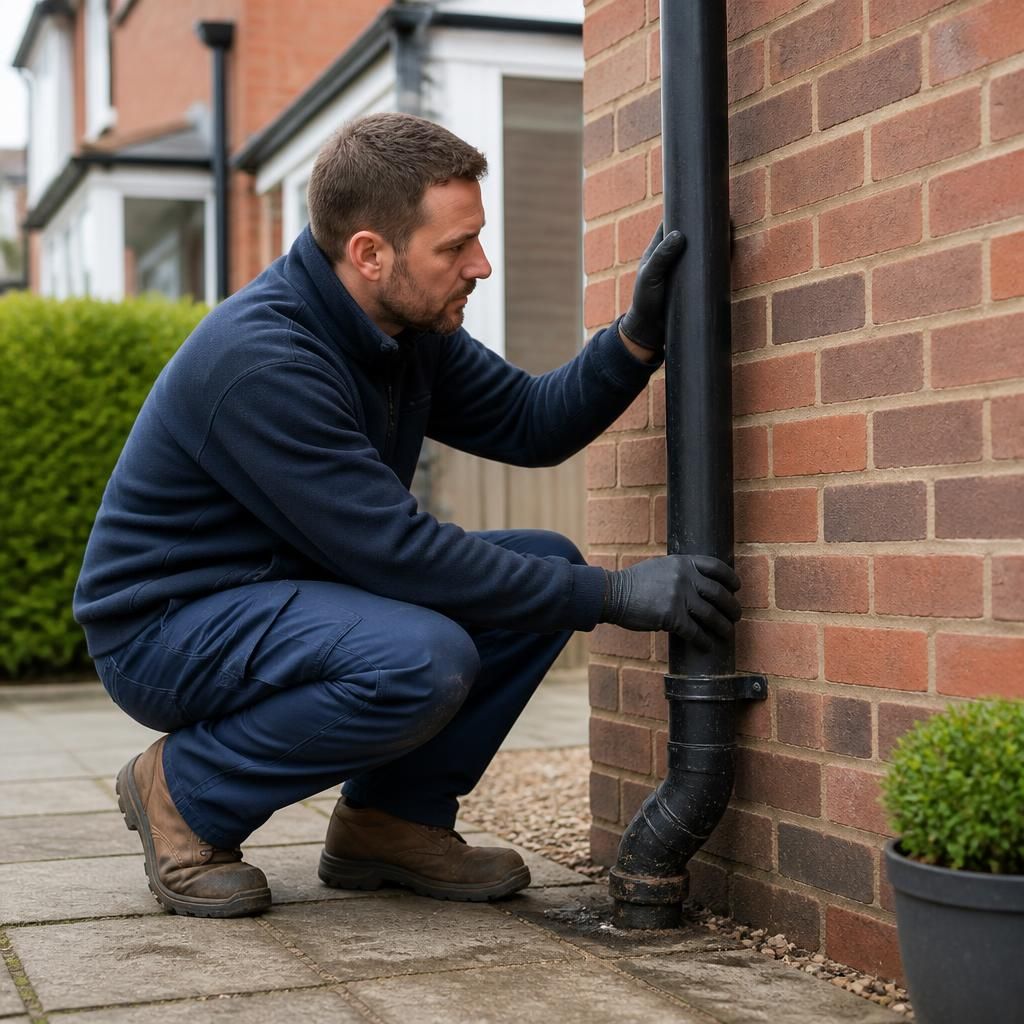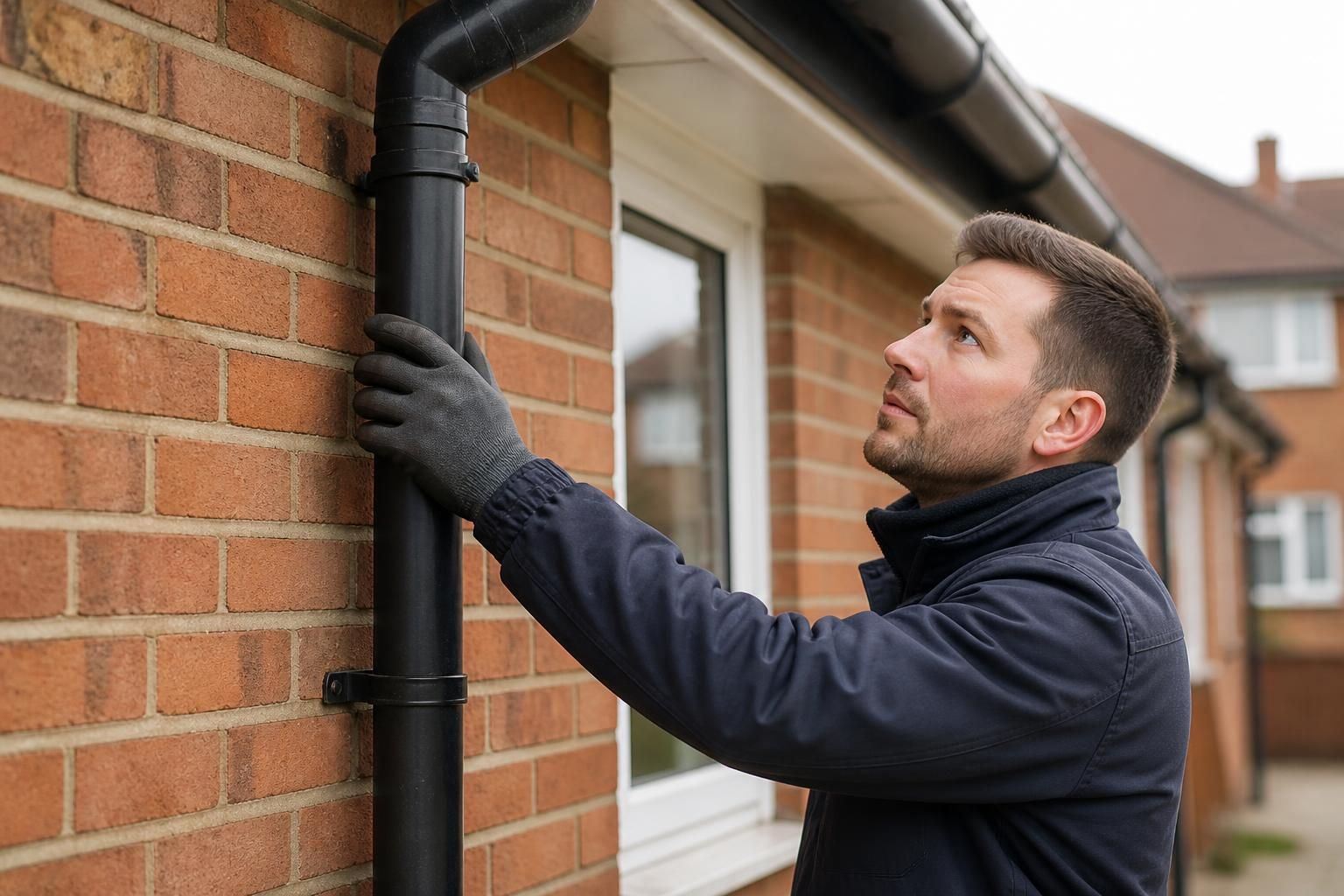
Suitability depends less on the property category than on how the rainwater system is arranged and whether the affected section can be reached without creating a safety risk. Downpipe unblocking can be considered for many residential and some commercial settings, but the inspection should establish the pipe route, ownership of the drainage section and the safest access method before work begins.
Common property arrangements
- Detached and semi-detached houses: A downpipe is usually accessible from the outside, although conservatories, extensions, porches and narrow side passages can restrict equipment placement. The discharge point should also be checked, as the obstruction may be at the shoe, gulley or underground connection rather than in the vertical pipe.
- Terraced houses: Closely spaced properties can have limited access and shared drainage features. Work may need to be planned around neighbouring walls, rear yards or adjoining extensions, particularly where several downpipes connect to one outlet.
- Flats and maisonettes: Rainwater systems may serve several dwellings or run through communal areas. A blockage should be reported to the responsible landlord, managing agent or freeholder where appropriate, since altering a shared pipe without permission can affect other residents.
- Commercial and mixed-use buildings: Larger roofs, taller elevations and multiple outlets can increase the amount of inspection required. The work may involve tracing which downpipe serves the affected roof section and distinguishing a rainwater obstruction from a problem with surface-water drainage.
Some buildings require more careful planning than others. Tall elevations may need suitable access equipment rather than ladders, while internal downpipes, boxed-in pipes and concealed rainwater channels cannot always be reached from outside. Older properties may also contain unusual pipe sizes, fragile fittings or alterations carried out over several periods. These features do not automatically rule out unblocking, but they can affect the method and whether opening an access panel or removing a fitting is necessary.
Listed, period and recently renovated properties deserve particular care. External finishes, decorative rainwater goods and repaired masonry may be vulnerable to forceful handling. Where the pipe is enclosed or connected to specialist roof drainage, an inspection should take place before any cleaning method is selected. The objective is to clear the obstruction without disturbing joints, fixings or surrounding fabric.
Ownership and access are important practical considerations. Homeowners can normally arrange an inspection of their own system, whereas tenants should notify the landlord or property manager if the pipe is shared, built into the structure or located in a communal area. In blocks of flats, responsibility may depend on the lease and the position of the blockage. A contractor may need consent before accessing another dwelling, a neighbour’s land or a managed communal space.
The likely cause also influences whether unblocking is appropriate. Loose leaves, silt, moss and small accumulations can often be removed using suitable tools. A pipe affected by displaced joints, crushing, root ingress or a collapsed underground connection may need repair or further drainage investigation instead of repeated cleaning. Overflowing water can sometimes originate from a blocked gutter, defective outlet or gulley, so the complete route should be assessed rather than treating only the visible section.
A suitable assessment should consider:
- the height and position of the blockage;
- whether the downpipe is external, internal, boxed-in or shared;
- the material, diameter and condition of the pipe and its fittings;
- the distance to the discharge point or underground drain;
- safe access for people, tools and any necessary equipment;
- the risk of water entering walls, floors or neighbouring premises; and
- whether the obstruction is a simple blockage or evidence of a wider defect.
Where access is restricted or the drainage layout is unclear, a professional inspection can identify the relevant section before work starts. This is particularly useful for flats, high-level systems, concealed pipework and properties with repeated overflow. The findings can then determine whether straightforward unblocking, partial dismantling, drainage cleaning or a repair is the appropriate next step.
In summary, most property types are not excluded from downpipe unblocking, but the building’s layout, access conditions, shared responsibilities and drainage design determine how suitable the work is in practice. A method selected after inspecting those factors is less likely to cause unnecessary disturbance or treat the wrong part of the rainwater system.