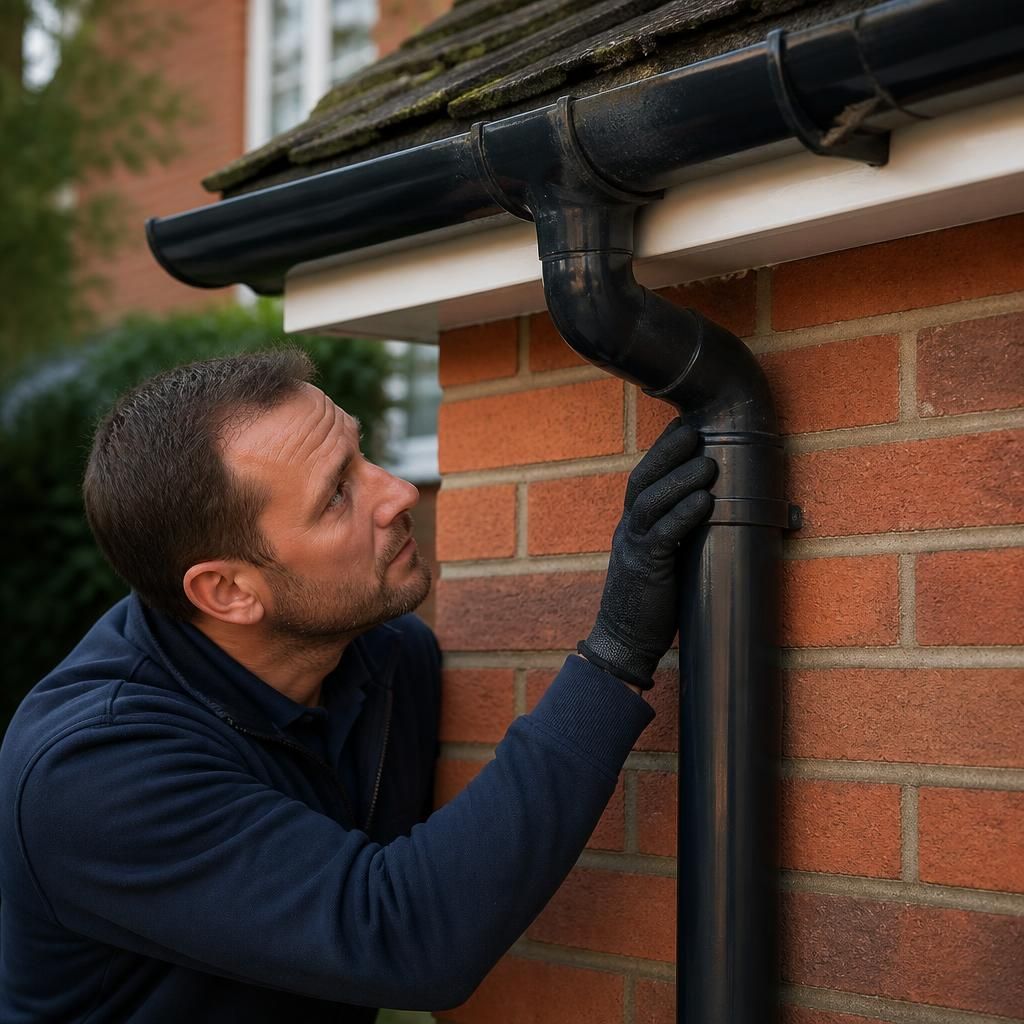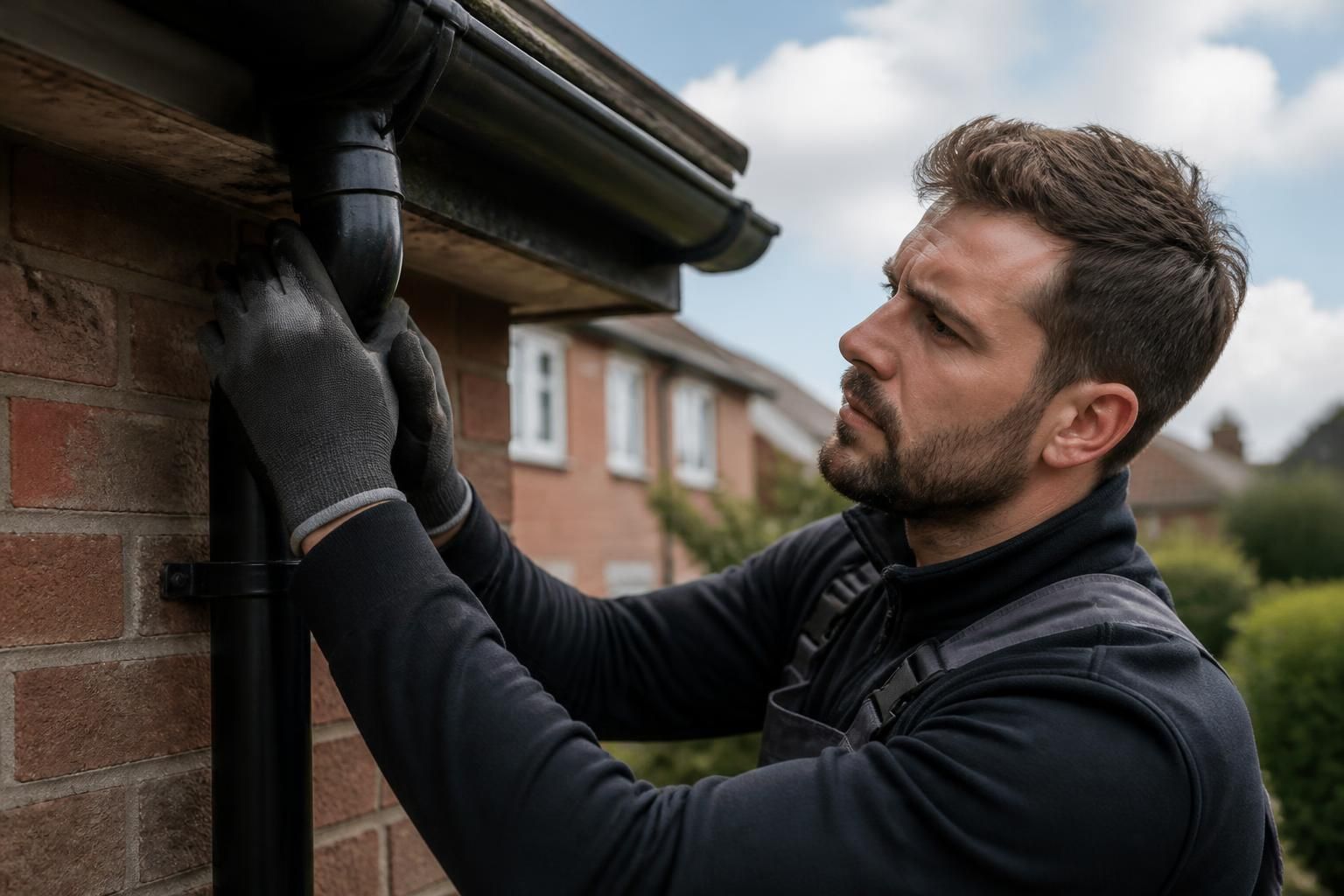
The main property risk is usually not the removal of the blockage itself, but disturbing an already weakened rainwater system or directing water where it cannot drain safely. A suitable unblocking method should preserve the gutter profile, joints, brackets, fascia and the connection at the base of the downpipe.
How damage can occur
- Gutter joints and seals: twisting or pulling sections apart can displace seals, allowing water to escape at the joint during rainfall.
- Brackets and fascia boards: leaning ladders against guttering or applying sideways pressure may pull brackets away from the fascia or expose existing timber deterioration.
- Downpipe sections: rigid rods or other equipment can catch on an internal obstruction, pushing pipe sections apart or damaging a connection that was already poorly supported.
- Roofline and render: careless access or falling debris may mark soffits, fascias, painted surfaces or rendered walls.
- Underground connections: forcing debris downwards can move a blockage into a shoe, gully or drain, where it may be harder to remove and can cause further backup.
Some damage is indirect. A blocked or leaking rainwater system can repeatedly wet brickwork, render, timber and soil beside the building. Over time, this may lead to staining, damp patches, algae growth, frost damage or erosion around the base of the wall. If the system is unblocked but the outlet is left obstructed, the original problem can continue.
What a careful unblocking process involves
- The condition of the guttering, downpipe, brackets, joints and accessible outlets is considered before work begins.
- The likely position and type of blockage is assessed. Leaves, silt and moss may need a different approach from compacted material, nesting debris or an obstruction at the lower outlet.
- Debris is removed in a controlled way rather than being forced through the system without checking where it will go.
- The route is checked for free flow, with attention to joints and discharge points that could be concealed by the blockage.
- The surrounding wall, roofline and ground are inspected for signs that water has been escaping before or during the work.
Where access is needed, the equipment should be positioned so that the load is carried by suitable parts of the building rather than by the gutter. This is particularly important for older properties, conservatories, extensions and systems made from brittle or weathered materials. Plastic, cast iron, aluminium and older pressed-metal guttering can each respond differently to pressure and movement.
When unblocking may reveal a separate problem
A downpipe that repeatedly blocks may have inadequate support, a damaged joint, a poorly aligned section or an outlet that cannot cope with the flow from the roof. Water marks on the wall, dampness inside the property, sagging guttering or movement at a joint should not be treated as normal results of clearing debris. They may indicate that a repair or replacement component is needed in addition to unblocking.
Water should also be kept away from electrical fittings, openings, vulnerable wall finishes and areas where it could enter the building. If internal damp, ceiling staining or water around a conservatory or extension is present, the source should be established before the rainwater system is tested with a large volume of water.
Is DIY unblocking safe?
Simple debris that can be reached safely from ground level may sometimes be removed without affecting the property. However, climbing onto a roof, stretching from an unsuitable ladder position, dismantling tightly fitted pipework or using high-pressure equipment creates a greater risk of personal injury and building damage. Do not force equipment into a blockage when the outlet, pipe condition or discharge route is unknown.
Ideal Plumbing Services can assess gutter and downpipe blockages for residential properties in Birmingham and across the wider West Midlands, taking account of the rainwater system and the parts of the property around it. The appropriate method depends on the obstruction, the condition of the fittings and how safely the system can be accessed.