A house drainage system inspection is a structured assessment of how wastewater leaves a property, whether the pipework is accessible and serviceable, and whether any defects could lead to blockages, leaks or structural damage. The process usually moves from gathering information about the property to carrying out practical tests, examining relevant sections of the system and documenting what the evidence means.
1. Reviewing the property and reported symptoms
The inspection begins by establishing the history of the issue. Useful details include where water is backing up, whether smells or slow drainage are present, which fixtures are affected and whether the problem occurs continuously or only after heavy water use. Previous repair work, extensions and recurring blockages can also help indicate how the drainage layout has developed.
The inspector may review available plans or trace the likely route of private drains between the property, inspection chambers and the connection to the wider drainage network. This helps determine which sections are the homeowner’s responsibility and which may involve a shared or external drain.
2. Checking access points and the surrounding area
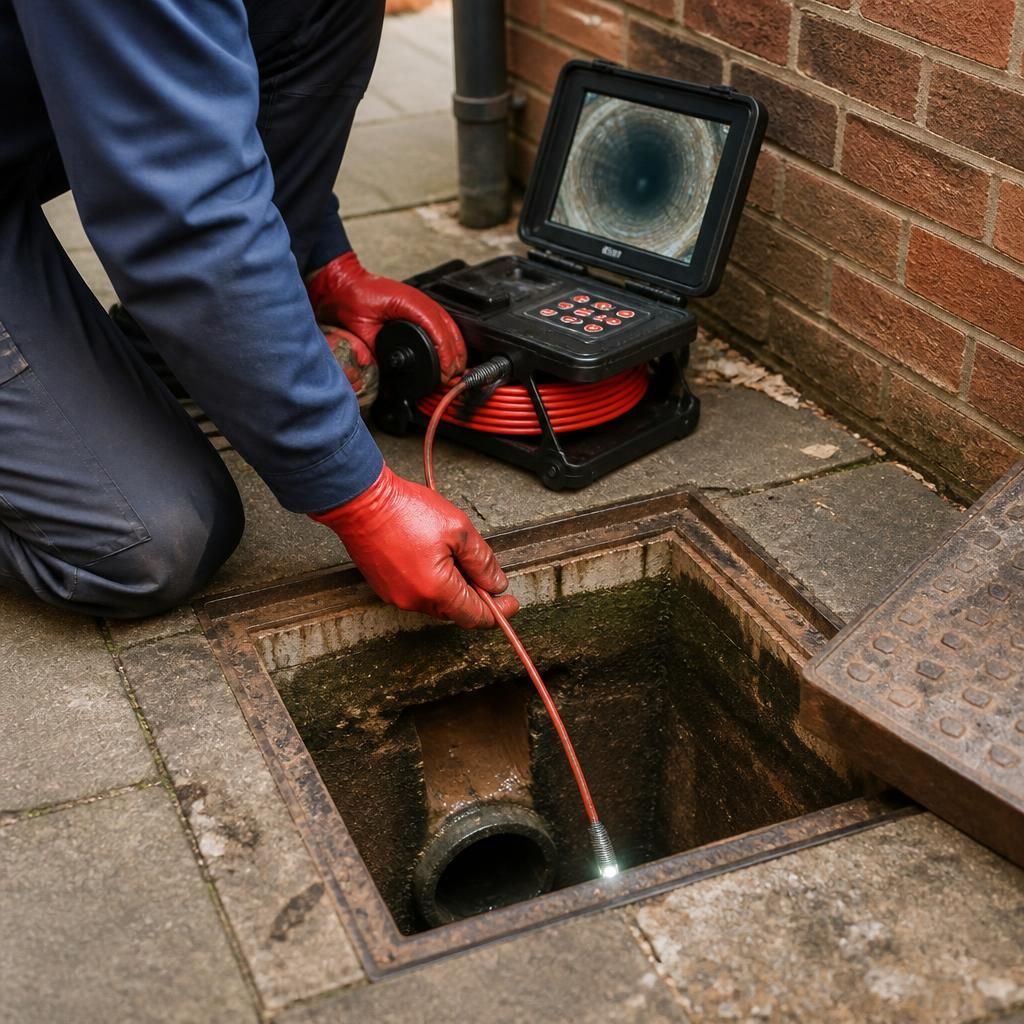
Inspection covers, rodding eyes, gullies and other access points are assessed for their condition and position. The state of a chamber can provide useful evidence: standing water may suggest restricted flow, while silt, displaced channel sections or damaged benching can point to a defect within or near the chamber.
The surrounding ground and external areas are also considered. Depressions, persistently wet patches, damaged paving or unusual vegetation can indicate that water is escaping below ground, although these signs need to be confirmed with further testing rather than treated as proof on their own.
3. Carrying out flow and drainage tests
Controlled water-flow tests can show how efficiently the system carries wastewater away and whether water is reaching the expected outlet. Where appropriate, non-invasive tracing methods may be used to identify the route of a pipe or distinguish between connected drainage runs. These tests can help separate a local fixture problem from a restriction or defect further along the system.
Testing is selected according to the property and the suspected fault. A straightforward inspection may not require every available method, while a recurring or unexplained problem may need more detailed investigation. Access, pipe condition and the type of drainage system can all affect what can be examined.
4. Examining concealed pipework
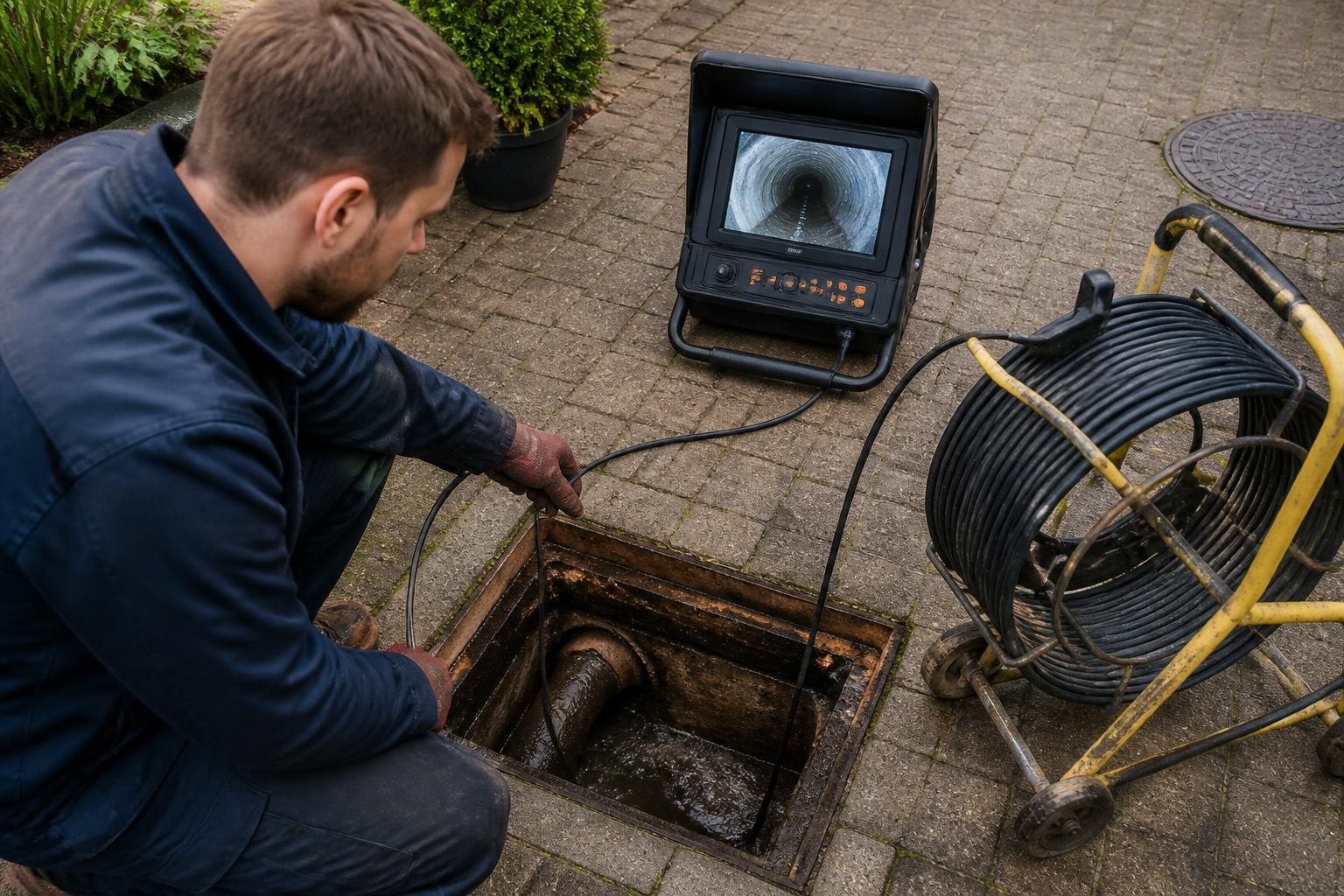
Where there is a suitable access point, a drain camera can be guided through the pipe to inspect its internal condition. The footage may reveal fractures, open joints, deformation, deposits, root intrusion, displaced sections or evidence that the pipe has been poorly installed. The position of a suspected defect can sometimes be estimated from the camera’s progress, allowing repairs to be planned more precisely.
CCTV findings must be interpreted carefully. A camera cannot always pass through a heavily restricted, collapsed or badly misaligned section, and some defects may be hidden by standing water or debris. In those circumstances, the inspection may identify the likely location and nature of the problem without providing a complete view of every part of the run.
5. Assessing the evidence
The information from the visual checks, tests and camera examination is considered together. This assessment helps distinguish between:
- a temporary restriction caused by waste or silt;
- a damaged or displaced section of pipe;
- water escaping from a joint or fractured pipe;
- root growth entering through a weakness;
- poor falls, connections or alterations; and
- a drainage issue that may lie beyond the private system.
Not every irregularity requires immediate excavation or replacement. The appropriate response depends on the defect’s position, severity, effect on drainage performance and likelihood of recurring. Minor maintenance, targeted cleaning, local repair or wider replacement may each be suitable in different circumstances.
6. Receiving the inspection findings
The conclusion should explain what was inspected, which areas could not be accessed, what evidence was found and what action is recommended. If camera footage or images are available, they can help show the condition of the pipework and support decisions about remedial work. A clear inspection record is particularly useful for landlords, buyers and homeowners comparing repair options.
For a Birmingham property, a drainage inspection can also clarify whether an issue is limited to the house’s private pipework or involves a shared connection or external network. If repairs are advised, the findings should be used to define the work rather than relying on assumptions about the cause.