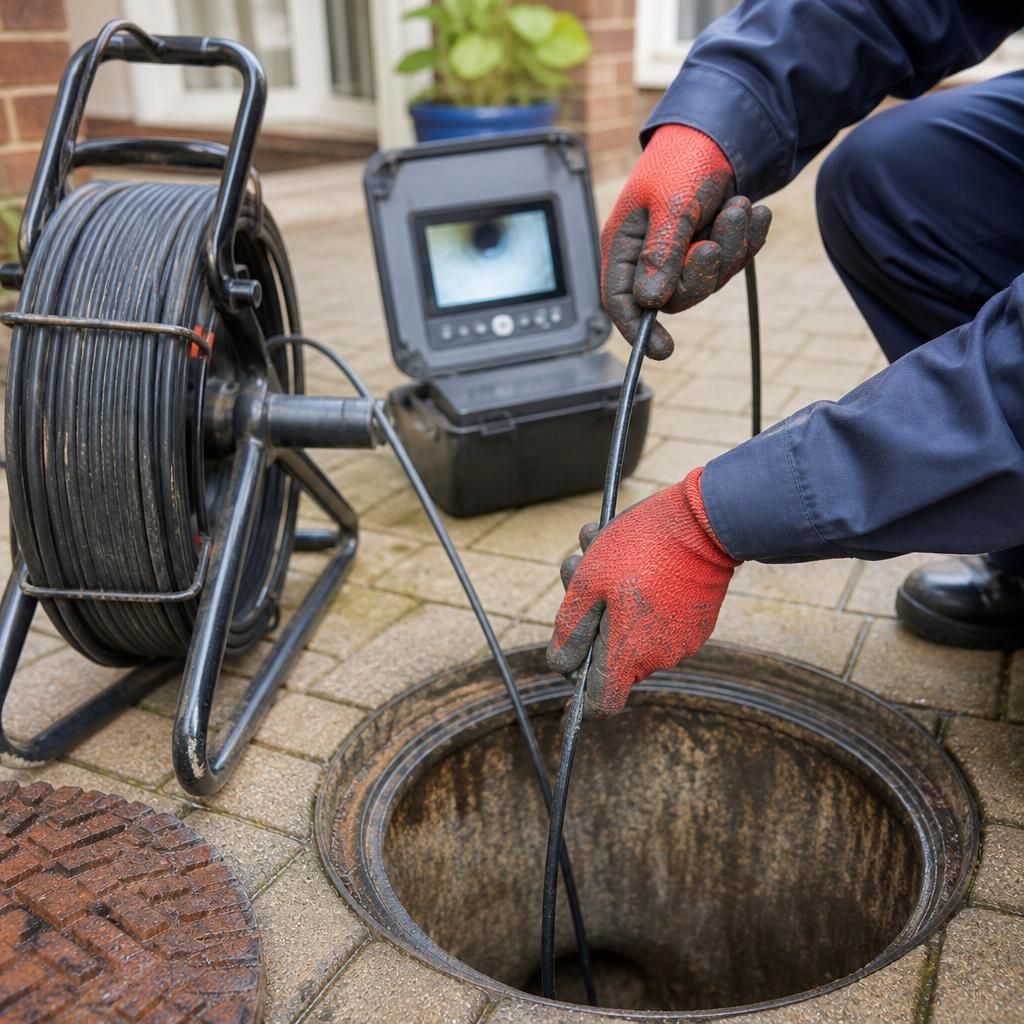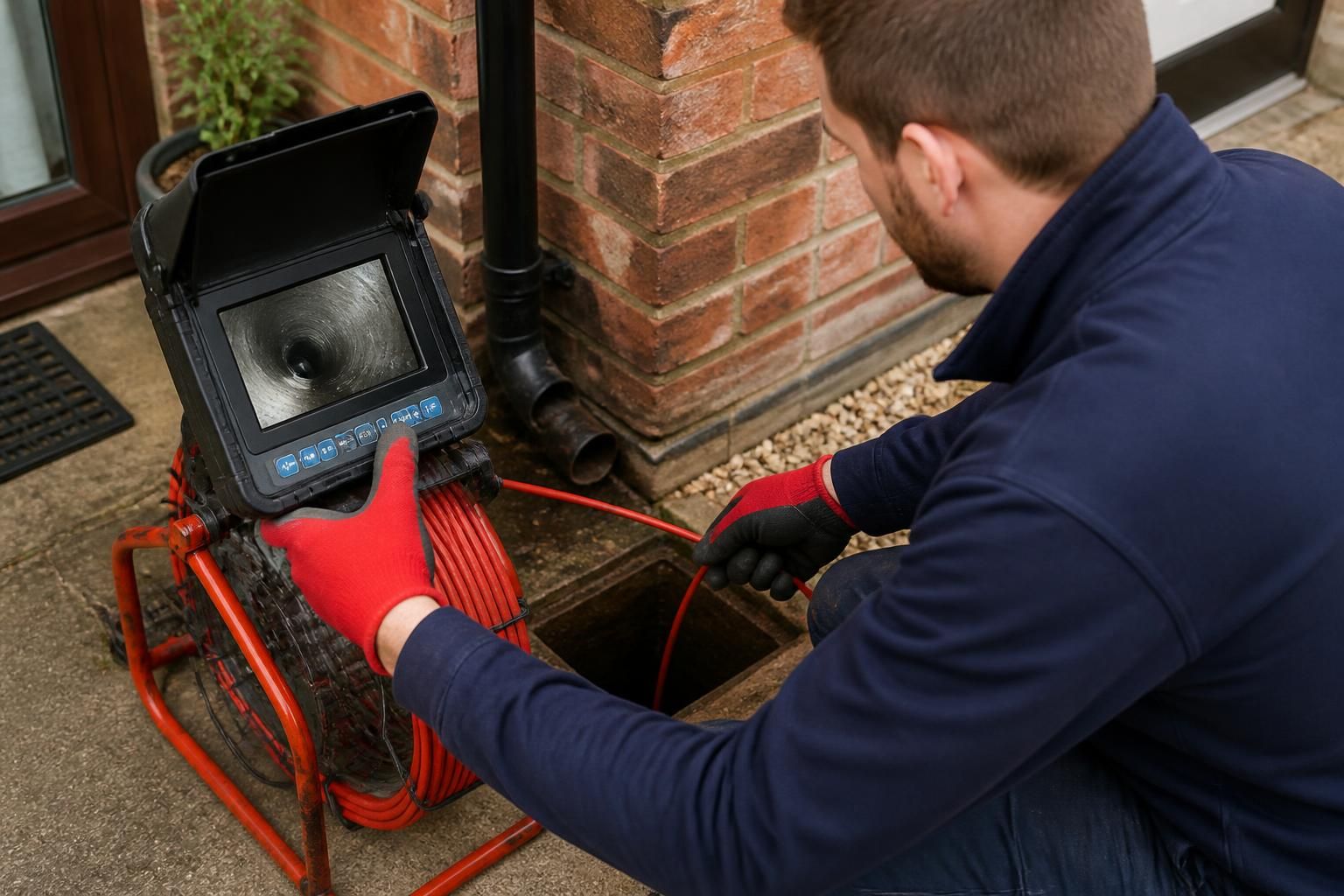
A house drainage system inspection is most beneficial where the property’s layout, surroundings, occupancy history or drainage arrangements make defects difficult to identify from inside the home. Some properties have a higher risk of concealed blockages, damaged pipes, groundwater ingress or connection problems, while others benefit from an inspection because access to the drainage network is limited.
Properties with cellars, basements or lower-ground rooms are a particular case. Drainage faults below ground level can allow water to enter through floors, walls or gullies, and a problem in the external drainage system may not be obvious until dampness or flooding develops. An inspection can help establish whether water is coming from a defective drain, surface-water route, groundwater or an internal plumbing fault.
Homes with mature trees close to the building or drainage runs may also benefit. Tree roots can enter joints or cracks in underground pipes, restricting flow and making a drain vulnerable to further damage. The risk depends on the location and condition of the pipework, so an inspection is more useful than assuming that every property near trees has a fault.
Properties served by shared or combined drainage arrangements deserve careful consideration. In some homes, waste from more than one property passes through a shared drain, or foul and surface water use connected parts of the system. This can make responsibility, access and fault-finding more complicated. An inspection can identify which sections serve the property and whether a restriction is within a private run or a shared connection.
Houses on sloping or low-lying ground can have drainage challenges that are not present on level sites. Gravity may not carry water away effectively in every section of the system, while low points can collect silt and standing water. Where a property is close to a watercourse, has a history of surface-water pooling or sits below surrounding ground levels, checking the drainage routes can help identify vulnerable points.
Older buildings with undocumented pipework can benefit even when the drains appear to work normally. Alterations made over the years may have left redundant pipes, unusual connections, fragile materials or access points that are not shown on current plans. This is especially relevant to converted houses, divided properties and homes where bathrooms or kitchens have been moved from their original positions.
Properties that have been vacant for a prolonged period may need an inspection before normal occupation. Water seals in traps can dry out, debris can collect in gullies, and unnoticed leaks or damage can remain undetected while the building is empty. A check can establish whether the system is ready for regular use and whether any maintenance is required first.
Homes affected by flooding, ground movement or significant weather damage should be assessed if the drainage system may have been displaced or overwhelmed. Movement can affect pipe joints and gradients, while flooding can leave silt or debris in underground runs. The inspection should consider both the visible effects inside the property and the condition of the external drainage network.
Properties undergoing building work may also benefit before major groundwork, landscaping or structural alterations begin. Excavation, new paving, extensions and changes to surface levels can affect inspection chambers, gullies and the direction in which rainwater flows. Checking the existing arrangement first helps reduce the risk of covering access points or placing new structures over damaged pipework.
Landlords, tenants and homeowners should consider an inspection where the drainage layout is unclear, access points are missing, or the property has a history that cannot be confirmed. Commercial or mixed-use buildings with residential accommodation may need particular care because higher usage and multiple connections can place different demands on the system.
An inspection does not necessarily mean that repair work is required. Its purpose is to establish the condition, route and performance of the drainage system so that maintenance can be planned based on evidence. Depending on the property, this may involve checking chambers, gullies and accessible pipework, followed by a camera survey where an underground section needs closer examination. Ideal Plumbing Services can advise on house drainage system inspections and repairs for residential properties across Birmingham and the wider West Midlands.