You can usually identify a blocked outside kitchen drain by checking whether water is reaching the drain correctly, whether the obstruction is visible at the surface and whether other appliances are affected. A basic inspection can indicate the blockage’s location, but it cannot always confirm how far along the underground pipe it extends.
Before inspecting the drain, stop using the kitchen sink, dishwasher and any appliance that discharges into the same waste pipe. Continued use can force more water into a restricted section and make the blockage harder to assess. If the drain is covered, approach it carefully and use gloves; contaminated water may contain bacteria and sharp debris.
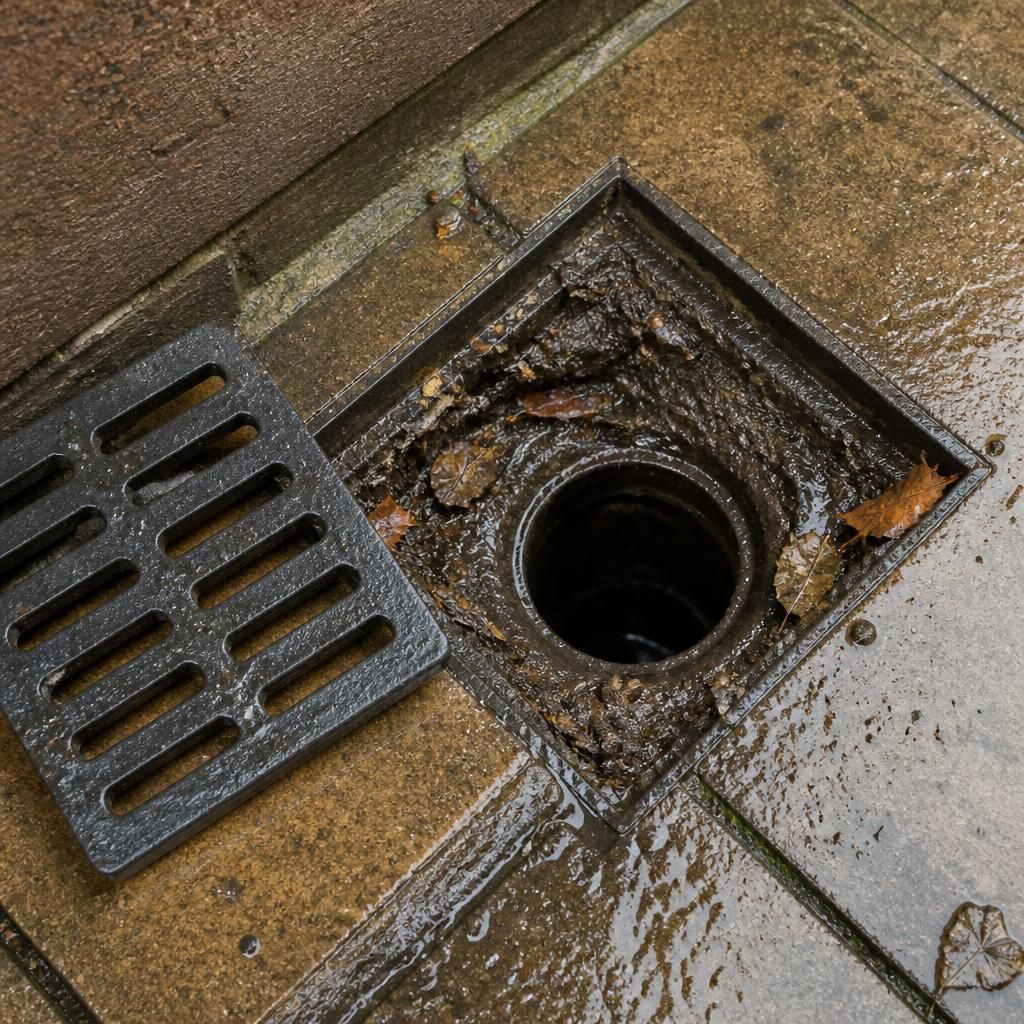
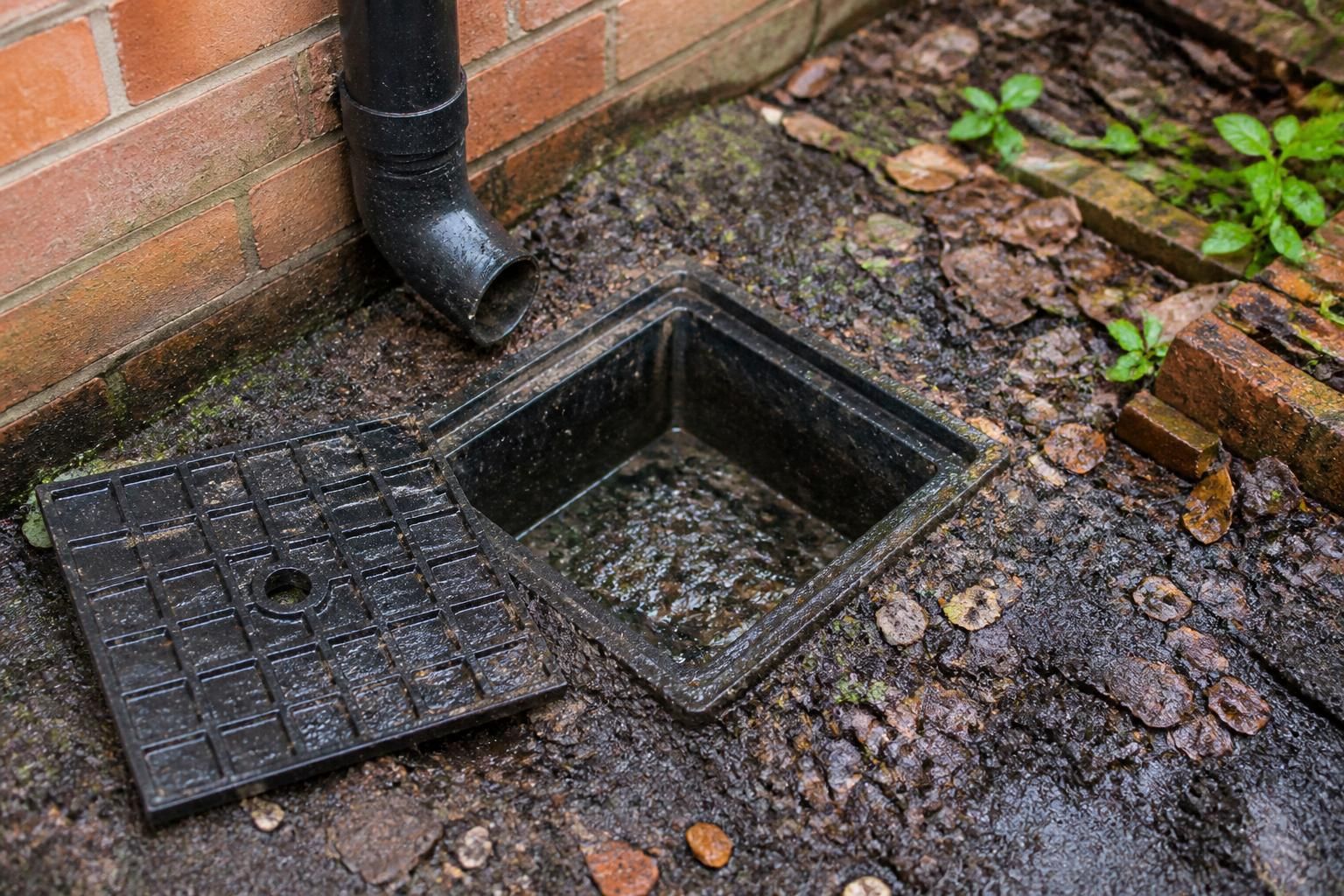
- Inspect the drain cover and gully: Lift or remove the cover only if it is safe to do so. Look for leaves, food waste, soil, grease or other material gathered around the opening. A clear cover does not rule out a blockage, as the obstruction may be below the visible section.
- Check the water level when the sink is not being used: If water remains in the gully or drains away unusually slowly without any new discharge, the restriction is likely to be in the outlet or the pipe beyond it rather than at the kitchen sink itself.
- Compare nearby drainage points: If a separate gully or drain serving another part of the property is working normally, the problem may be limited to the kitchen waste line. If several connected outlets are affected, the obstruction may be further along a shared drain.
- Observe how the drain responds to a small test: Once any obvious surface debris has been removed, a small amount of clean water can help show whether the outlet is accepting water. Do not carry out this test if the drain is already full, overflowing or close to electrical equipment.
The position of the water can also provide a useful clue. A blockage before the outside gully may cause water to collect inside the waste pipe or at the point where the kitchen pipe exits the property. A blockage beyond the gully is more likely to leave the gully full even though the visible inlet is clear. This distinction matters because clearing the grate or the first section of pipe may not resolve an obstruction deeper in the run.
Not every drainage problem is caused by a simple build-up of food or grease. Damaged or displaced pipework, tree-root ingress, silt, a collapsed section or a poorly aligned connection can restrict flow and cause a blockage to return after temporary clearing. If the same drain becomes obstructed repeatedly, if water escapes from a joint or if the blockage cannot be seen, the pipe may need a more detailed inspection rather than further probing.
Avoid pouring caustic drain chemicals into an outside kitchen drain, particularly if you may later need to remove a trap, open a joint or have the pipe professionally inspected. These products may fail to clear a substantial obstruction and can leave hazardous residue in standing water. Do not push rods or improvised tools into the pipe unless you know the layout, as they can damage fittings or compact the obstruction further.
A qualified plumber can establish whether the restriction is local to the gully, within the private drainage run or connected to a wider drainage problem. Depending on the findings, assessment may involve checking accessible pipework, testing the flow and using drainage equipment to locate or remove an obstruction. Professional help is appropriate where wastewater is contaminated, the drain is overflowing, more than one outlet is affected or basic surface cleaning has not restored normal flow.
Ideal Plumbing Services provides outside kitchen drain inspection and unblocking for homeowners, landlords and tenants in Birmingham and across the West Midlands, including cases where the cause is not visible from the drain opening.