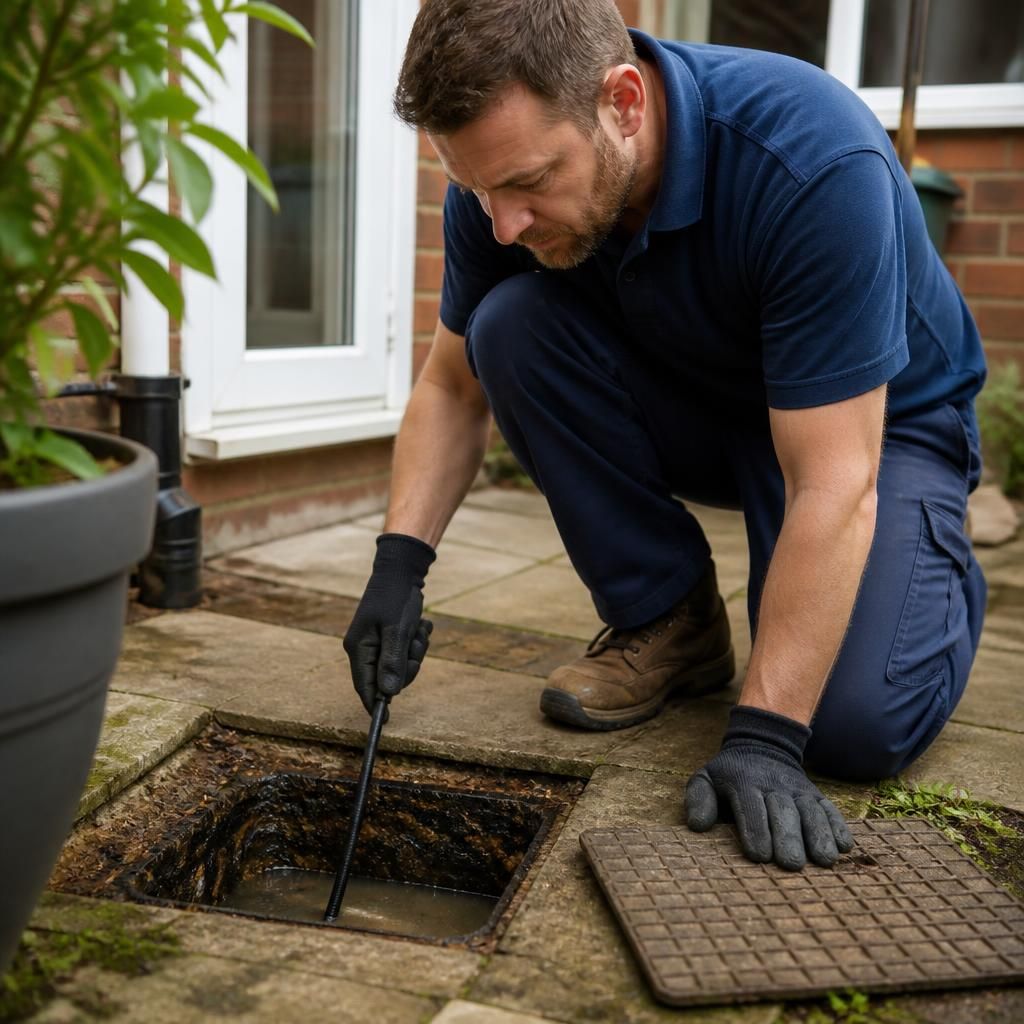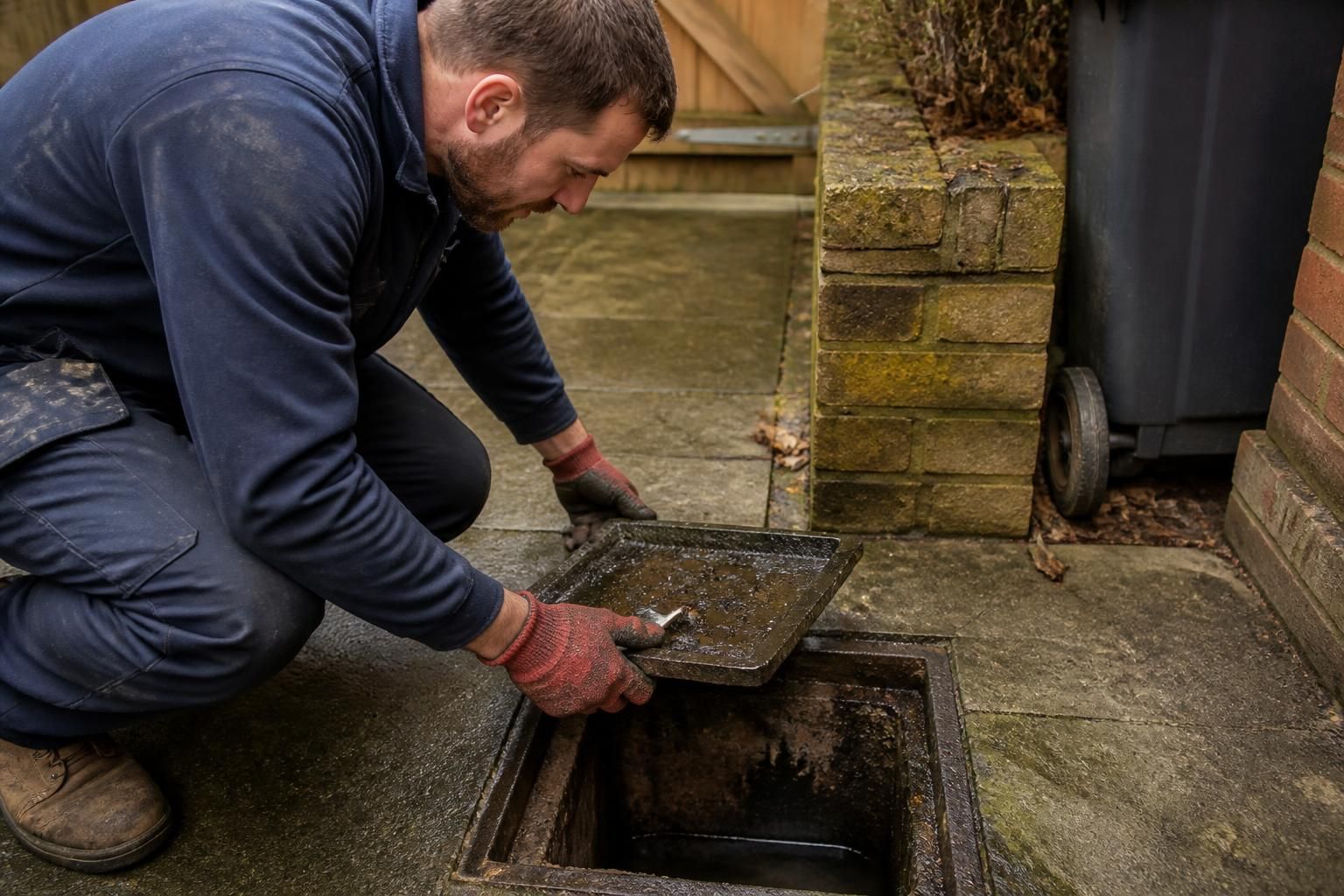
Prepare for an outside kitchen drain inspection by providing safe access, relevant property information and any evidence that may help the plumber trace the drainage route. The inspection may involve examining the drain opening, lifting an access cover or using a camera, so practical preparation can make it easier to identify the cause and decide whether cleaning, repair or further investigation is appropriate.
- Check where access points are located. Identify the outside drain, inspection chamber, manhole or rodding point believed to serve the kitchen. If you are unsure, tell the plumber which sink, dishwasher or waste pipe appears to connect to it rather than trying to remove a heavy or stuck cover yourself.
- Arrange access through the property if it may be needed. Some drainage layouts require the plumber to compare the external pipework with an internal waste connection. Make sure relevant rooms, side passages, gates and outbuildings can be reached, and secure permission from the landlord or property manager where you are a tenant.
- Provide useful property information. Explain whether the building has been extended, whether the kitchen has been altered, and whether any previous drainage work, repairs or building work took place nearby. Plans, photographs or records showing the pipe route can help distinguish the kitchen drain from surface-water or neighbouring drainage.
- Record what has already been tried. Tell the plumber about any plunging, drain-cleaning product, rodding or other work carried out before the inspection. Chemical cleaners can remain in standing water and may cause burns, so do not handle or add further products while waiting for the inspection.
- Keep people and animals away from the access point. Drain covers, open chambers and contaminated water can present slip, trip and hygiene risks. Children and pets should not approach the area, and anyone who must work near wastewater should avoid direct contact and wash thoroughly afterwards.
- Consider the inspection conditions. Outdoor drainage can be harder to examine in poor visibility or where access is obstructed by parked vehicles, fencing or stored materials. Ensure the route to the inspection point is usable and tell the plumber about hazards such as unstable paving, low branches or nearby electrical equipment.
- Ask what the inspection will establish. A visual check may identify obvious blockages or damage, while a drain camera can provide more detail about cracks, displaced joints, root intrusion or the position of a fault. Ask whether the inspection covers the full run or only the accessible section, and whether any additional access or testing may be needed.
If the drain is shared with another property or appears to continue beyond your boundary, mention this before work begins. Responsibility for the pipework may depend on its position, ownership and use, and a plumber may need to distinguish a private kitchen drain from a shared or public section. Do not assume that an outside drain serving the kitchen belongs entirely to the property.
After the inspection, ask for the findings to be explained in plain terms and request photographs or a recording if a camera survey was carried out. Clarify the location and type of defect, whether the drain is flowing, what repair options are available and whether the recommendation addresses the cause rather than only the immediate symptom. A written description can also help when discussing responsibility with a landlord, managing agent or insurer.