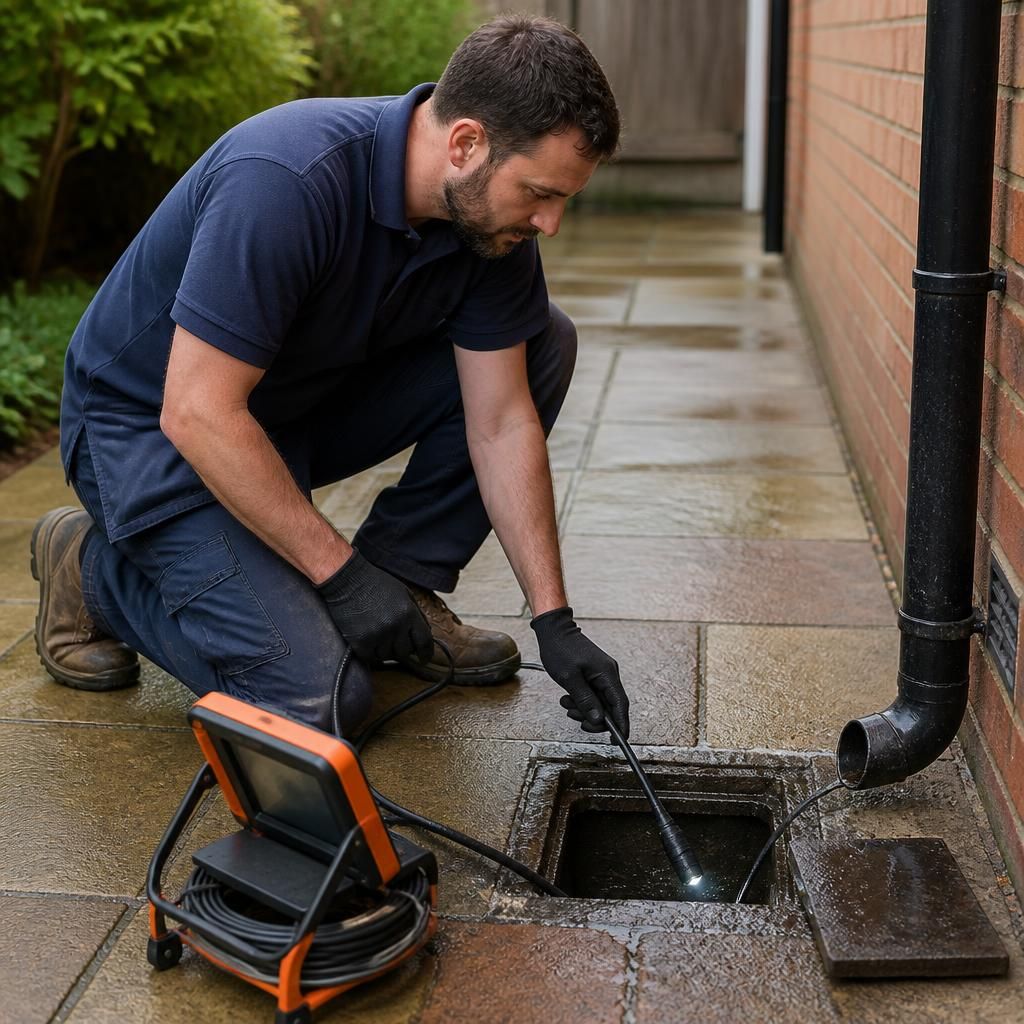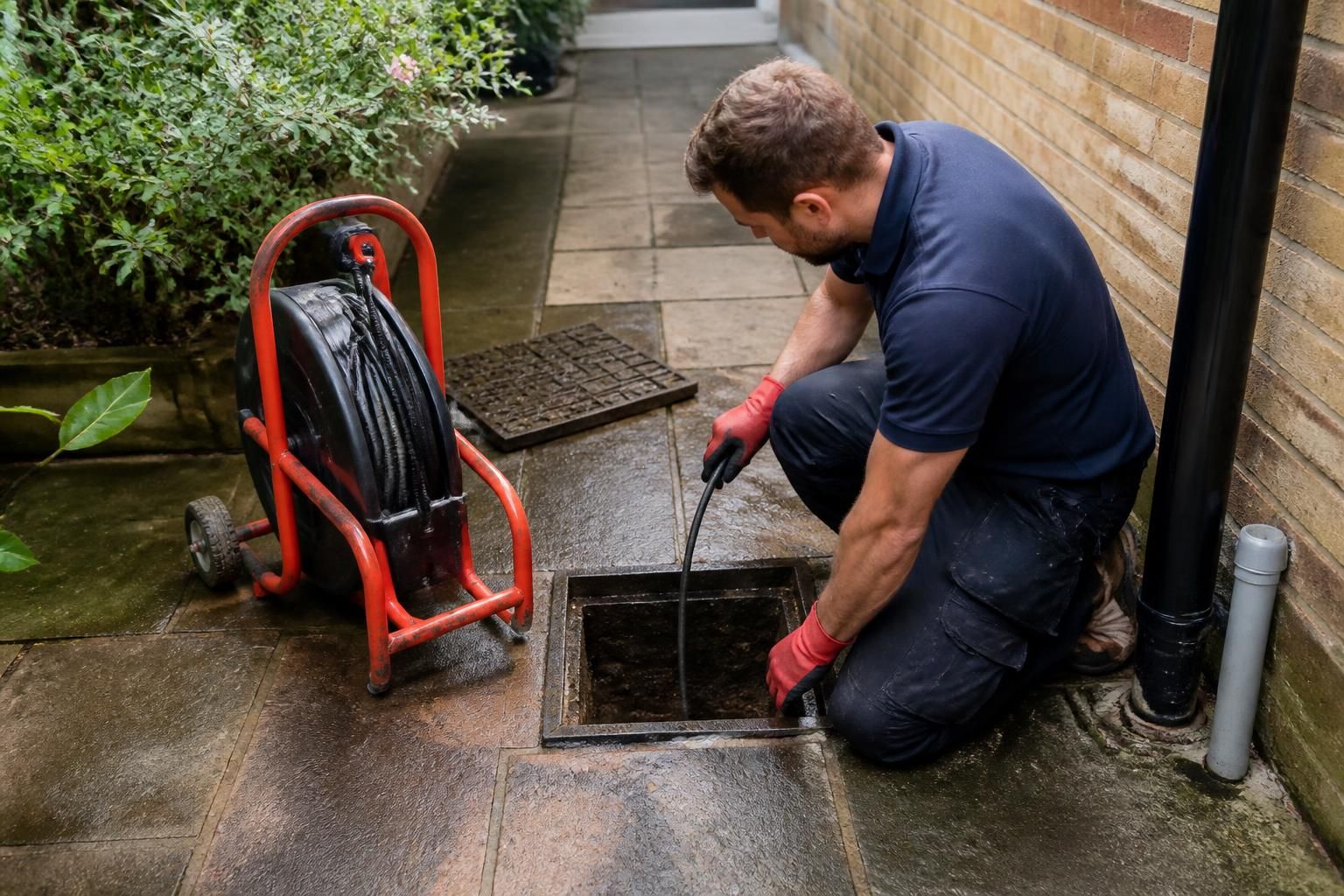
The main disruption from unblocking an outside kitchen drain is usually temporary restricted access to the drain area and, in some cases, reduced use of the connected sink or appliances while the obstruction is being cleared. The overall effect depends on the blockage’s location, the condition of the drain and the method needed to remove it.
Before work begins, the plumber will normally assess the drain and identify where the restriction is located. This may involve checking the flow, examining the drain opening and using appropriate cleaning or inspection equipment. Establishing the cause first helps avoid unnecessary disturbance and can show whether the problem is caused by accumulated grease, food waste, silt, roots or a structural defect.
- Access around the drain: outdoor furniture, bins, stored items or vehicles may need to be moved so equipment can be used safely.
- Temporary water restrictions: you may be advised not to use the kitchen sink, dishwasher or washing machine during parts of the work, particularly where additional water could worsen an overflowing drain.
- Noise and splashing: mechanical cleaning and water-jetting equipment can create noise and may leave some water or debris around the work area. The surrounding surface should be kept clear until it has been checked and cleaned.
- Access through the property: if the external drain cannot be reached directly, the plumber may need to discuss another route into the drainage system before proceeding.
For a simple obstruction, disruption is generally limited to the period needed to inspect, clear and test the drain. The exact duration cannot be confirmed until the condition of the pipe and the position of the blockage are known. A drain that is heavily contaminated, repeatedly blocked or affected by damaged pipework may require further investigation rather than repeated cleaning alone.
More involved work does not automatically mean that the property will be disturbed immediately. A responsible approach is to confirm the cause and explain the proposed method before any additional work is undertaken. If excavation, replacement or access through paving is considered necessary, the likely effect on surfaces, access and water use should be discussed beforehand.
After unblocking, the drainage should be tested to confirm that water is flowing away properly. The area should also be checked for remaining debris, displaced covers or signs of leakage. Keeping fats, oils, grease and food particles out of the kitchen sink can reduce the likelihood of another blockage, although recurring problems may indicate an underlying drainage fault.
At a rented property, the tenant should report the issue to the landlord or managing agent and agree access arrangements before work starts, unless immediate action is needed to prevent damage. Homeowners should also tell the plumber about any known leaks, previous blockages, recent building work or restrictions around the drain, as these details can affect the safest way to proceed.
Professional outside kitchen drain unblocking is intended to keep the work focused on the affected drainage area. Ideal Plumbing Services provides drain and plumbing support for homes across Birmingham and the wider West Midlands, including assessment of blockages and advice where further repair may be required.