A blocked shower drain is cleared most safely by identifying where the restriction sits, loosening it with mechanical methods and then testing the waste to confirm that water is passing freely. The appropriate method depends on whether the obstruction is close to the shower waste, inside the trap or further along the branch pipe.
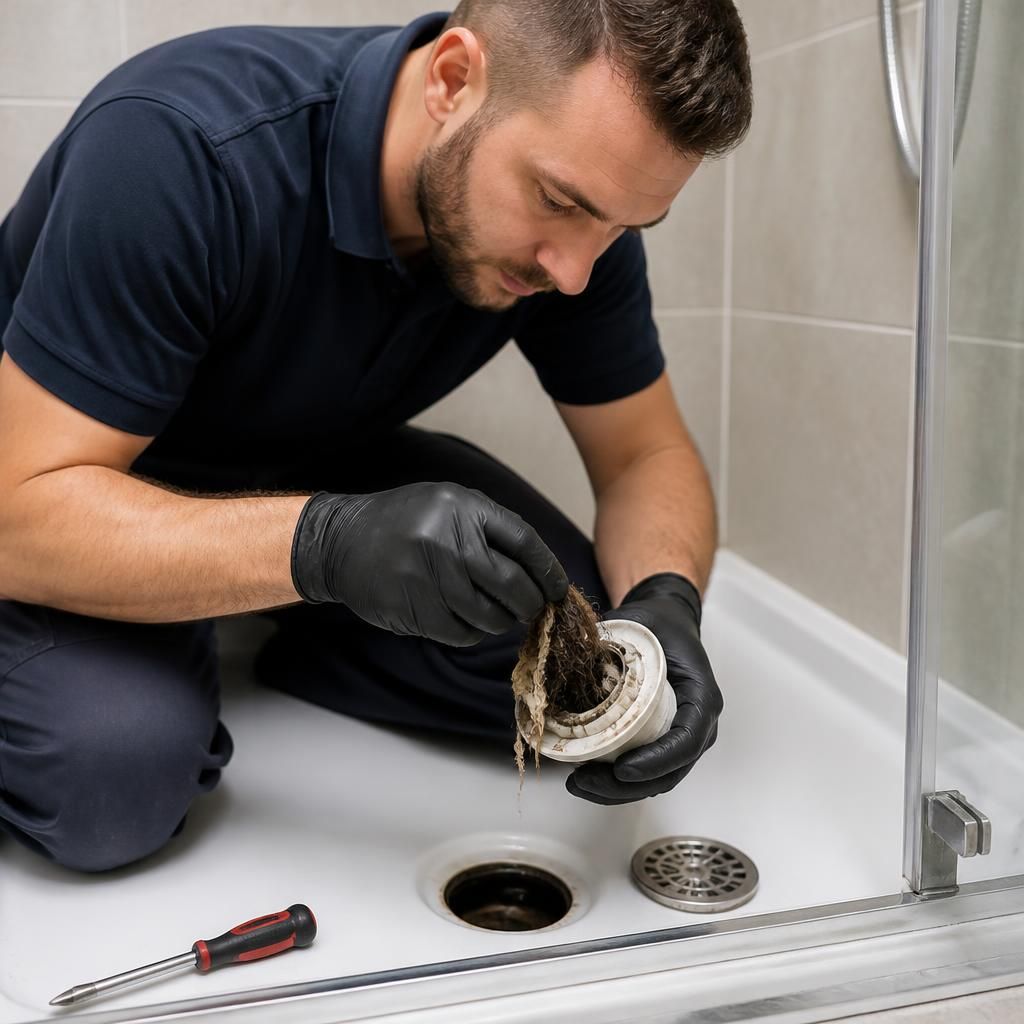
Before starting, protect the area. Stop using the shower, remove standing water if necessary and wear rubber gloves and eye protection. Place a cloth around the waste to prevent small screws or tools from falling into the opening. If the cover is secured with screws, use the correct screwdriver and avoid levering against the shower tray, as damaged edges can allow water into the surrounding floor.
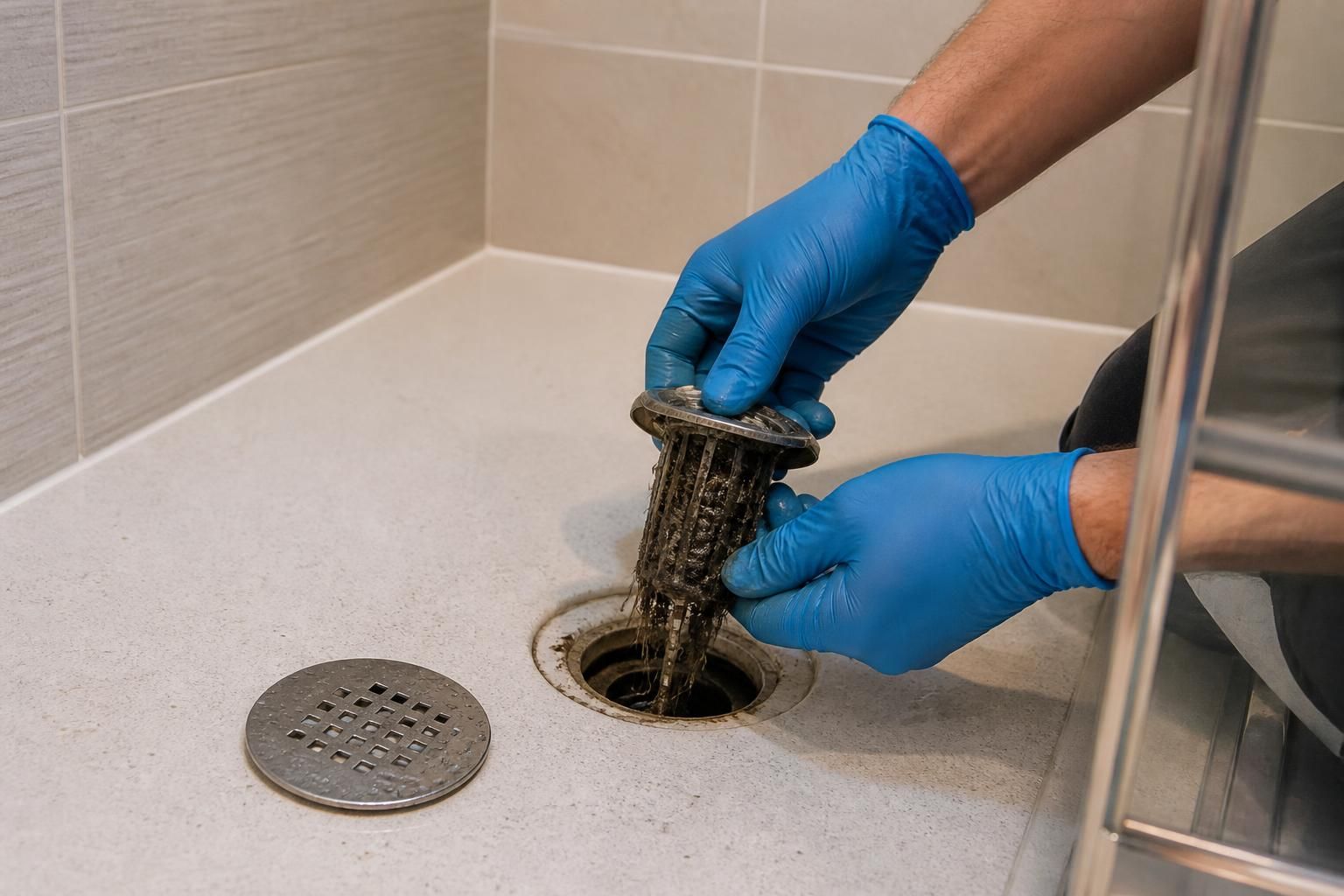
Use mechanical clearance first. A flexible retrieval tool can remove compacted material near the opening, while a suitable plunger may dislodge a softer restriction by creating pressure and suction. The plunger needs a reasonable seal over the waste; without one, the force is lost. If the blockage is beyond the trap, a hand-operated drain auger can be fed into the pipe gradually. It should be turned carefully rather than forced, particularly where the pipework is older or has joints that could be disturbed.
Clean and test the waste. Once the obstruction has been loosened, rinse the accessible parts and reassemble the cover securely. Run water through the shower in stages and check underneath the tray, around the waste connection and at nearby joints for leakage. A slow initial test makes it easier to stop if water starts escaping from a damaged seal or loose fitting.
Take care with chemical drain cleaners. Strong caustic products can damage some waste components, affect seals and leave hazardous liquid in the pipe when further work is attempted. Never mix different cleaners, and do not use a plunger or drain auger where chemical residue may still be present unless the product has been fully removed and the area is safe. Boiling water can also distort certain plastic components, so warm water is generally a safer choice for routine rinsing.
A professional drainage inspection is advisable when water backs up through more than one outlet, nearby fixtures begin gurgling, the shower waste leaks during testing, or the obstruction cannot be reached without dismantling pipework. These signs can indicate a restriction further along the shared drain, a displaced joint, damaged pipework or a problem with the pipe gradient rather than a simple surface blockage. Continuing to add chemicals or forcing a tool into the pipe can make the repair more difficult.
Ideal Plumbing Services provides residential plumbing and drainage support for homeowners, landlords and tenants in Birmingham and across the West Midlands. An inspection can establish the blockage’s position and determine whether the correct solution is local clearance, cleaning of the connected waste pipe or a repair to the drainage system.