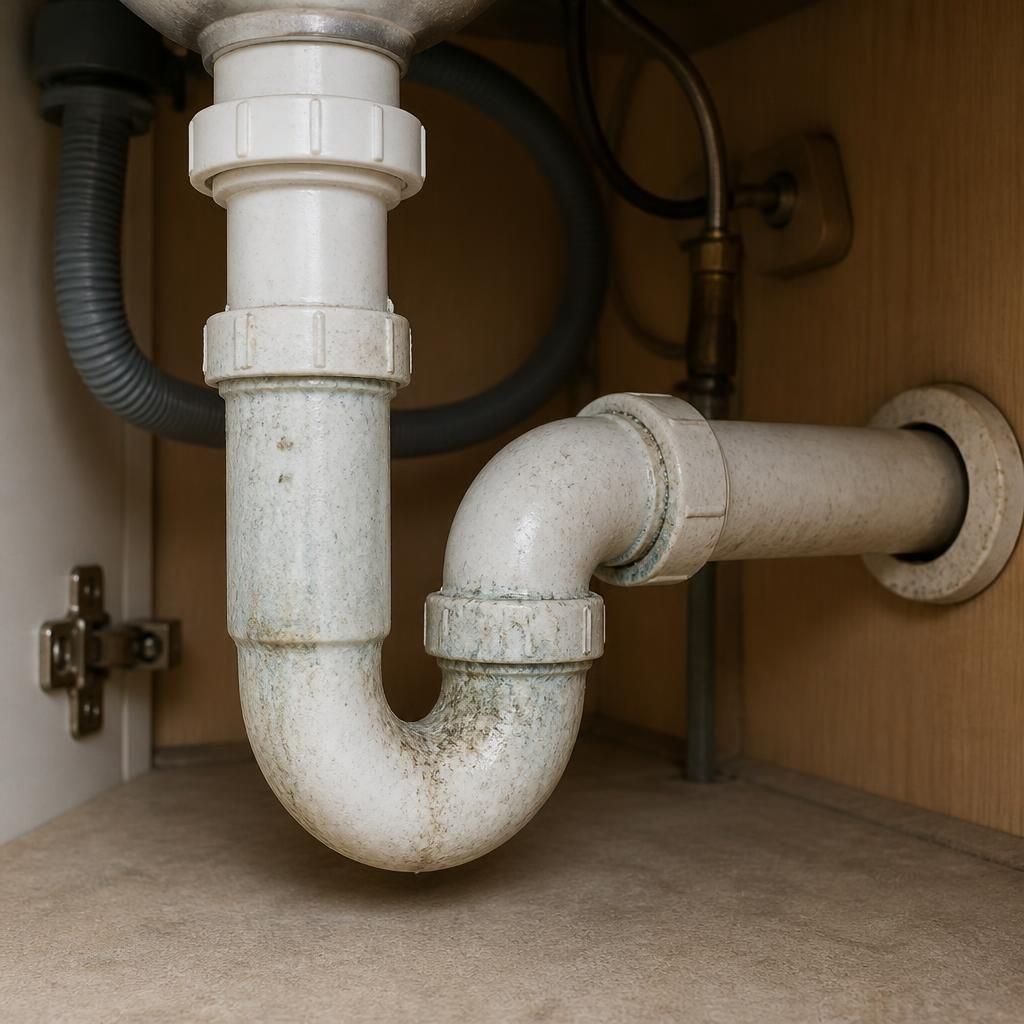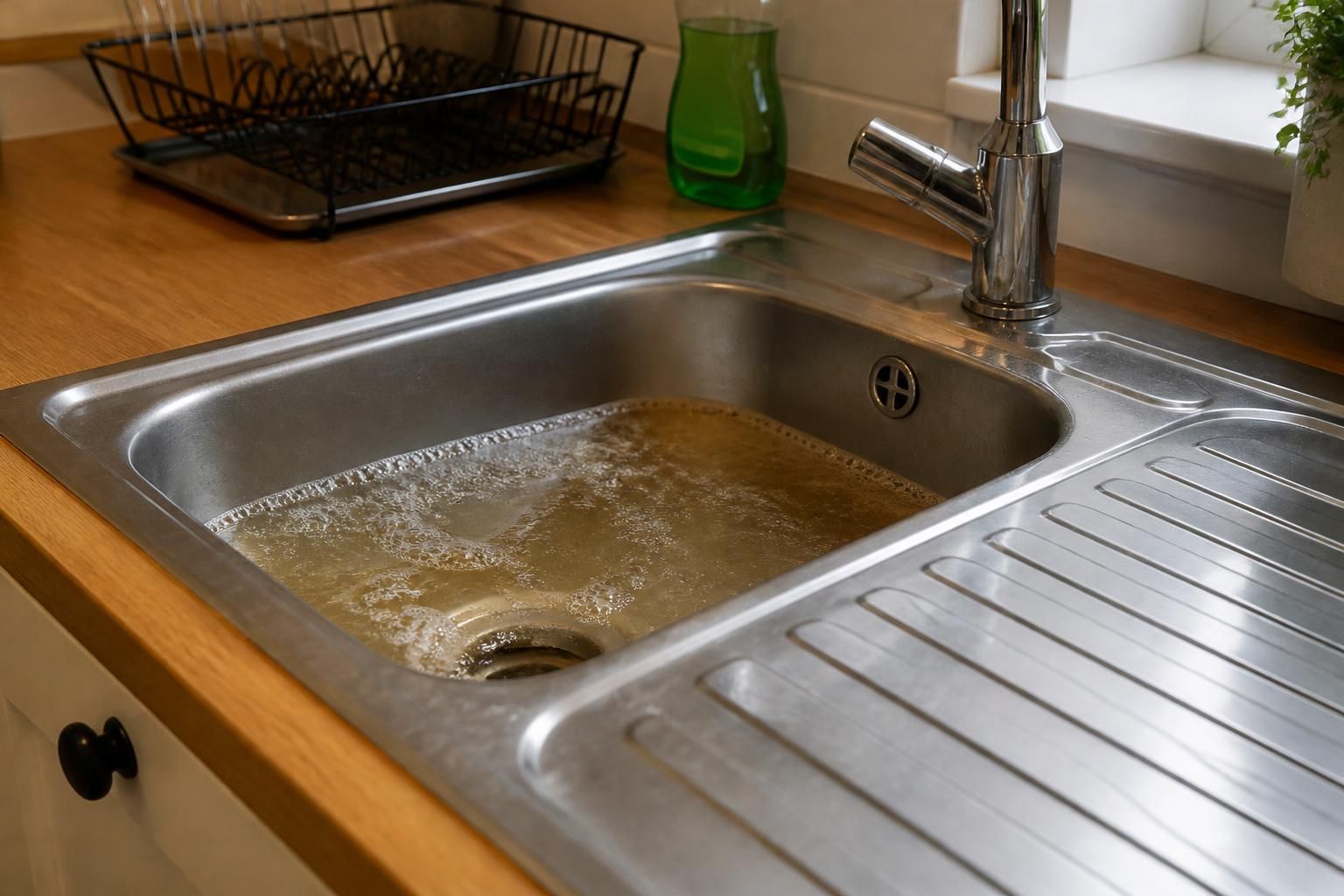
A kitchen sink that blocks repeatedly is usually affected by an ongoing flow problem rather than a one-off obstruction. Common causes include an incorrect pipe gradient, poor ventilation, unsuitable fittings, a badly configured appliance connection or a restriction further along the shared waste system.
Incorrect pipe gradient or pipe layout
Wastewater needs a suitable fall to move away from the sink. If a section of pipe is too level, rises before reaching the main waste pipe or contains an unnecessary bend, water can slow down and leave residue behind. This creates a recurring restriction even when the visible plughole and trap appear clear. Pipework that has been altered during a kitchen installation may also be incorrectly sized or arranged for the volume of water entering it.
Poor ventilation in the waste system
Drainage pipes need air to balance pressure as water flows through them. If a vent is obstructed or the system is not ventilated correctly, the sink may drain slowly, make gurgling sounds or empty unevenly. Pressure changes can prevent wastewater from flowing properly and may draw water from the trap, allowing unpleasant smells into the kitchen. Ventilation problems are not normally resolved by repeatedly cleaning the plughole.
Dishwasher or washing machine connections
Appliance waste pipes are often connected beneath the kitchen sink. A connection that is incorrectly positioned, poorly sealed or fitted without the necessary high loop can allow wastewater and residue to move in the wrong direction. A dishwasher may then discharge into a restricted section of pipe, causing the sink to fill or block again when the appliance runs. The connection and the downstream waste pipe both need to be checked.
Restrictions beyond the sink trap
A sink can appear to be the source of the problem when the actual restriction is farther along the branch drain. This is more likely when other nearby fixtures drain slowly, the blockage returns after the trap has been cleaned, or water rises in the sink when another appliance discharges. In properties with shared internal drainage, a restriction may affect more than one fixture.
Insufficient cleaning of the accessible parts
Cleaning only the plughole or removing the trap may restore flow temporarily without addressing residue on the internal pipe walls. A narrow passage can remain, allowing water through but making another blockage likely. Repeated use of chemical drain cleaners can also leave aggressive substances in the pipework and may damage some fittings or create a hazard during later dismantling. Never mix different drain-cleaning products.
How a recurring blockage is investigated
- Check when the sink blocks, including whether the problem follows use of a dishwasher or washing machine.
- Observe whether other sinks, appliances or nearby drains are affected.
- Inspect the plughole, waste fittings, trap and appliance connections for leaks, poor seals or unsuitable routing.
- Test the flow through the accessible waste pipe rather than relying only on surface cleaning.
- Inspect the downstream pipework if the restriction returns or affects several fixtures.
Where the cause is uncertain, a professional drainage inspection can distinguish between a local restriction, a layout fault and a problem farther along the system. Targeted cleaning may be sufficient for a residue build-up, while incorrectly installed fittings or defective pipework may need adjustment or repair. A camera inspection can be considered when the blockage continues despite suitable cleaning or when the pipe condition cannot be established by accessible checks.
Steps that may reduce recurrence
- Use a sink strainer to catch food particles and remove waste before rinsing plates.
- Wipe oily cookware with kitchen roll before washing it.
- Do not pour cooking fat, oil, coffee grounds or fibrous food waste into the sink.
- Clean the strainer and accessible waste fittings regularly.
- Check that the sink drains freely after an appliance discharges.
- Arrange an inspection if slow drainage, gurgling, odours or repeated standing water continue.
Ideal Plumbing Services can assess recurring kitchen sink blockages and identify whether the cause is within the waste fittings, appliance connection or connected drainage pipework. The appropriate repair depends on the location and nature of the restriction, rather than how quickly the sink appears to clear after a basic treatment.