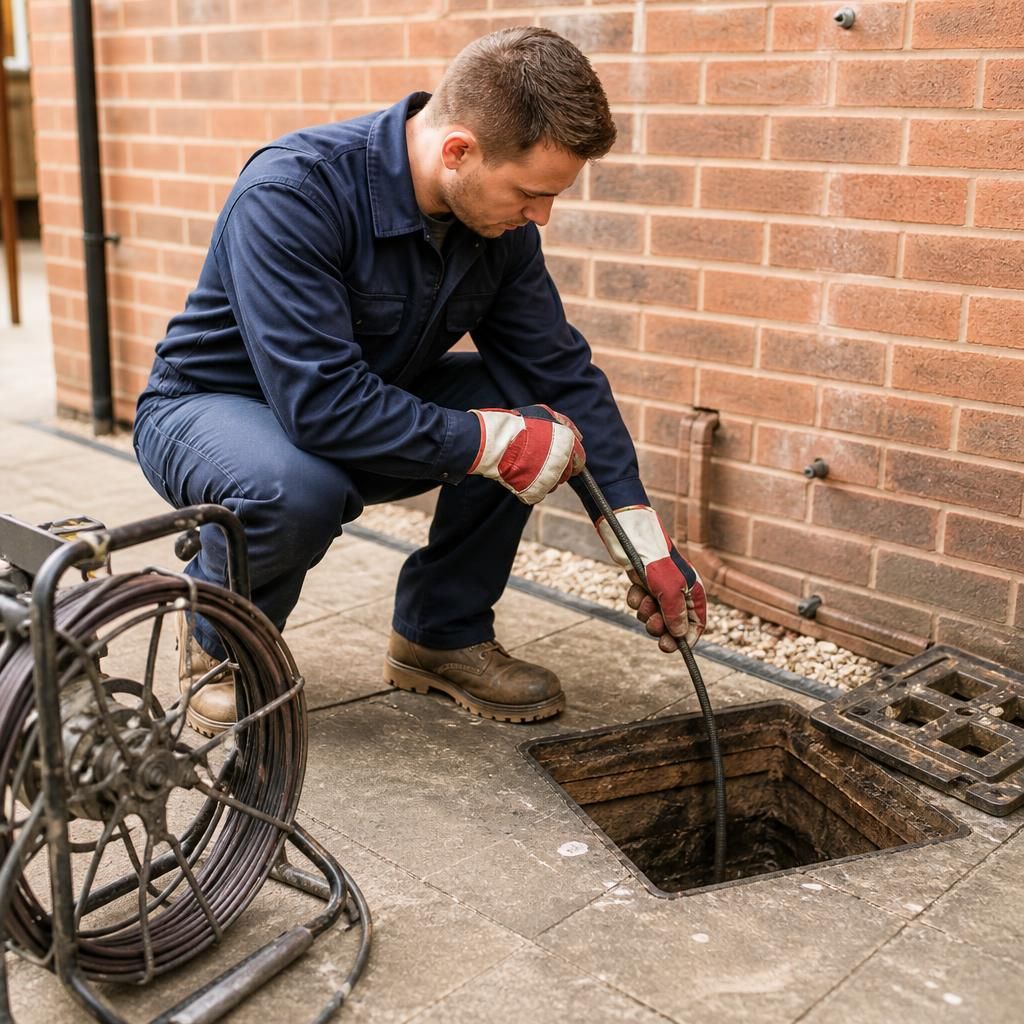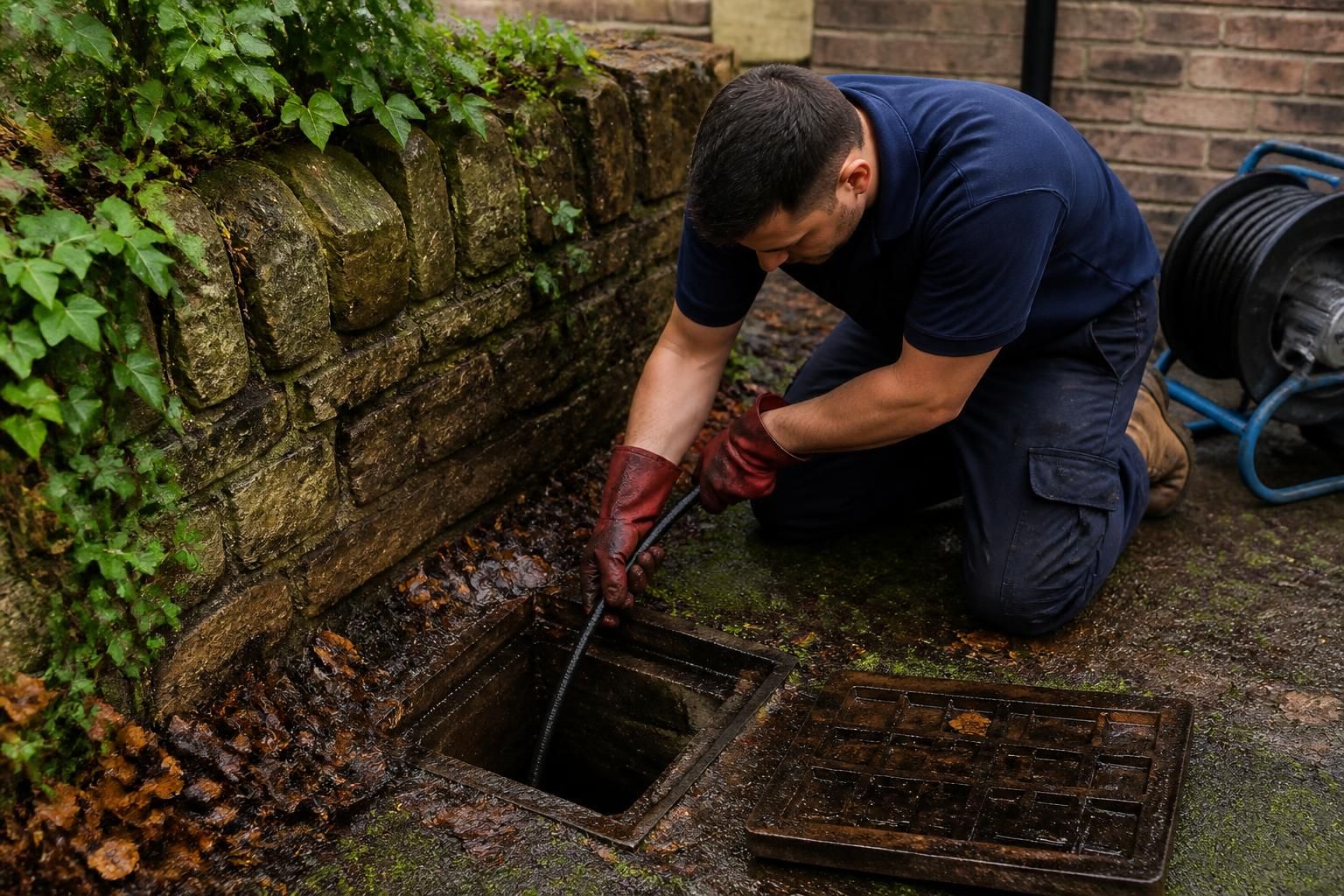
An external drain blockage is usually caused by a build-up of silt, grease, leaves, soil, roots or unsuitable materials within the gully, drain run or inspection chamber. The correct response depends on where the obstruction is located and whether wastewater is still able to leave the property safely.
Start by identifying the extent of the problem. Check whether the issue is limited to one outside gully or whether several connected drains, sinks, toilets or washing appliances are affected. If only one gully is slow, the obstruction may be close to that opening. If several outlets are backing up, the blockage could be further along the private drain run or near the connection to the public sewer.
Do not pour caustic drain cleaners, bleach or other strong chemicals into a standing external drain. They may fail to dissolve the obstruction, damage pipework and create a hazard for anyone who later opens the drain. Do not lift a heavy inspection-cover slab without suitable equipment, and keep children and pets away from contaminated water. Wastewater may contain harmful bacteria, so any accidental contact should be washed off thoroughly.
If the opening is safe to access and the obstruction is shallow, a suitable drain rod or plunger may sometimes dislodge it. Use equipment designed for drainage work and avoid forcing rods through bends, joints or damaged pipework. A failed attempt can compact the blockage, push it further into the system or leave part of the equipment behind. Stop if the water level rises, the cover will not lift safely, or resistance is unusually strong.
Professional attention is appropriate when:
- wastewater returns after a temporary improvement;
- the drain repeatedly blocks in the same location;
- multiple fixtures or gullies are affected;
- there is subsidence, cracked paving, persistent dampness or an unpleasant odour around the drain;
- tree roots, damaged pipes or a collapsed section are suspected; or
- the blockage cannot be reached safely with basic equipment.
A drainage professional can inspect the accessible sections, establish the likely position of the obstruction and select a suitable method. Mechanical rodding may be sufficient for a local blockage, while high-pressure water jetting can clean heavier deposits from suitable pipework. If the obstruction keeps returning, a drain camera survey can help identify root ingress, displaced joints, fractures or a fall in the pipe. Clearing the symptom without finding the underlying defect may only lead to another blockage.
Responsibility can depend on the drain's location and ownership. A homeowner should check whether the affected pipe serves only their property or connects several properties. Tenants should report the problem to their landlord or managing agent, particularly where shared drainage, structural damage or access to communal areas is involved. A blockage in a public sewer may fall to the relevant sewerage provider rather than the property owner, so the boundary should be confirmed before arranging extensive private repair work.
After the drain has been cleared, reduce the chance of recurrence by keeping wipes, nappies, sanitary products, cooking fat and other non-flushable materials out of the system. Maintain grates and gullies so that surface debris cannot enter, and arrange inspection where trees grow close to underground pipework. Ideal Plumbing Services provides drainage inspection, unblocking and repair support for residential customers in Birmingham and the wider West Midlands, including homeowners, landlords and tenants.