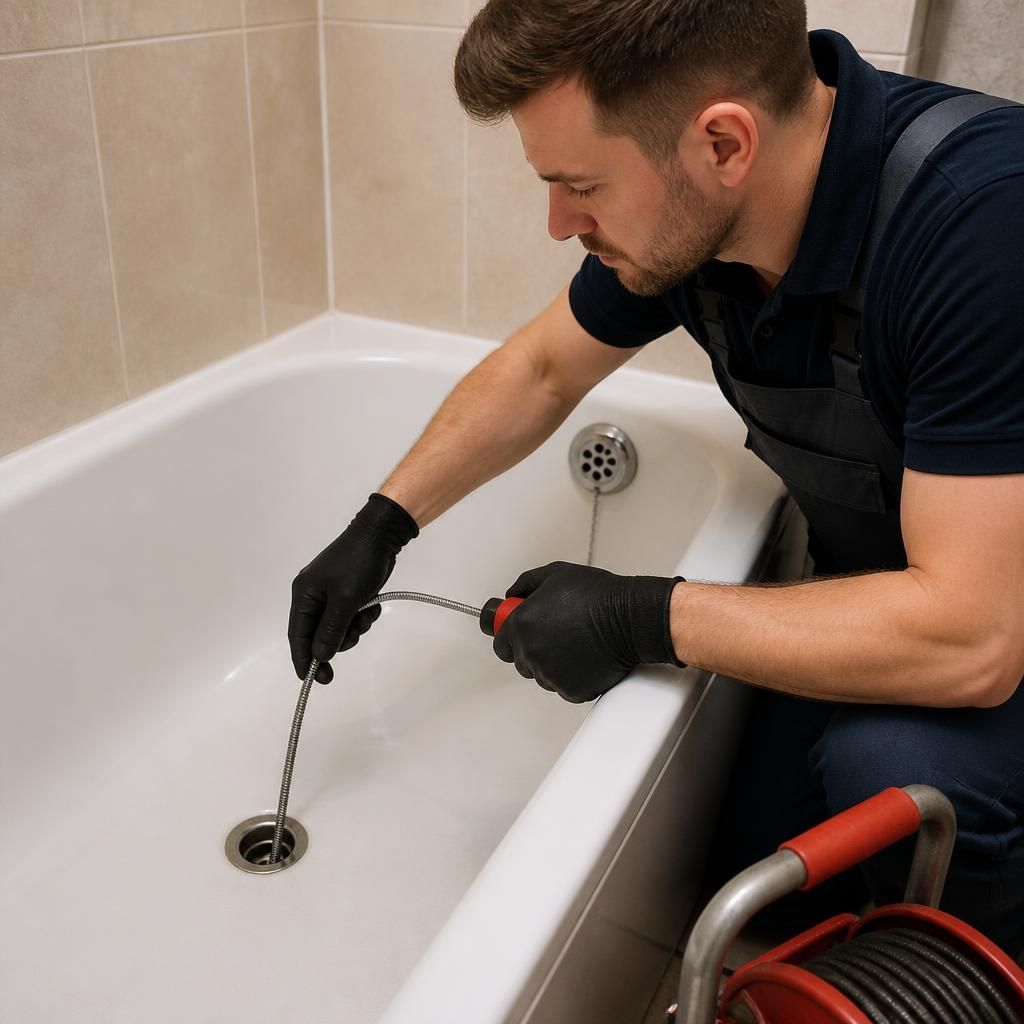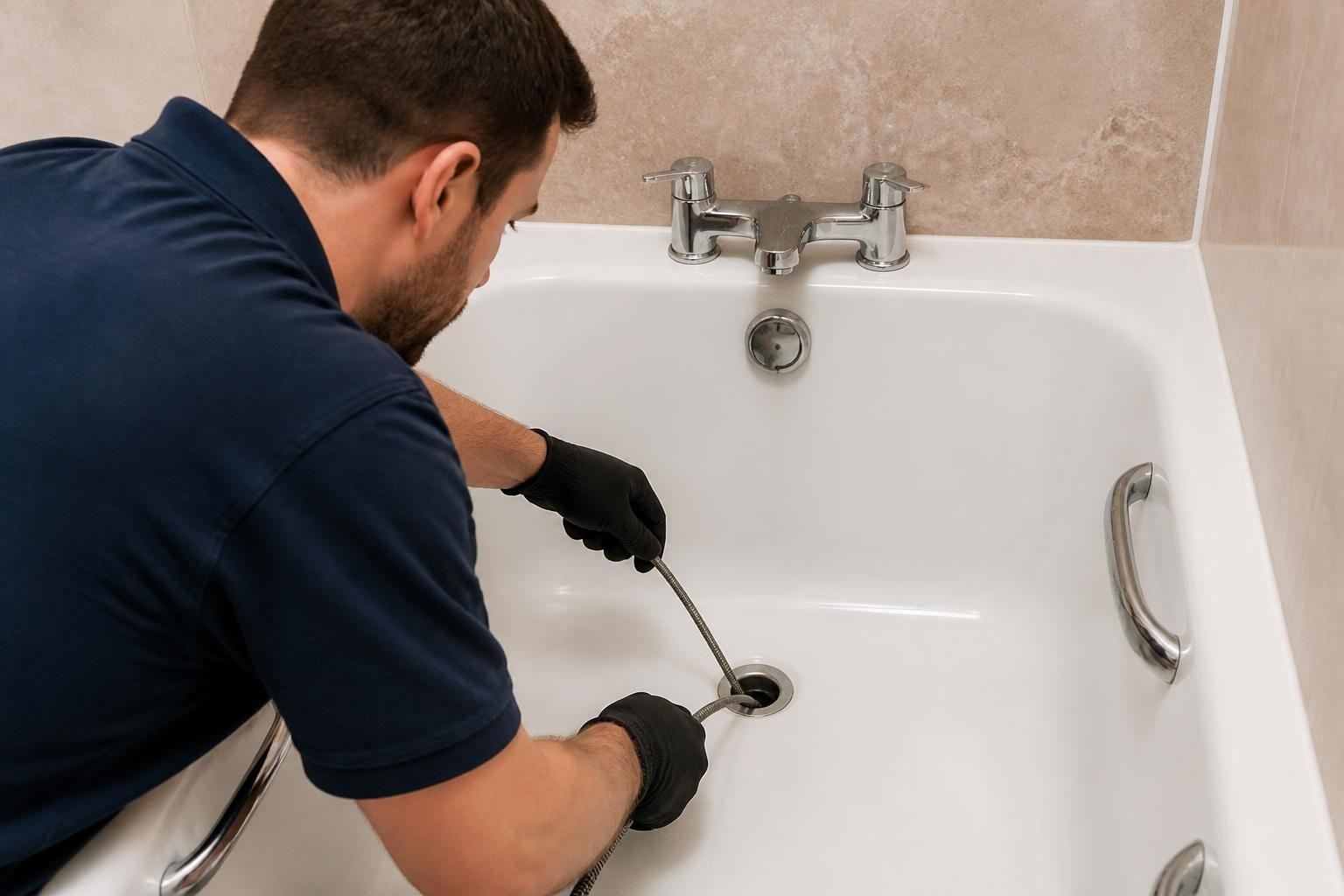
In most cases, a bath waste can be cleared with the bath left in place. The work is normally carried out from the waste opening or overflow, using an appropriate tool to reach the obstruction and restore the pipe’s flow. Removing the bath is generally considered only when the blockage cannot be reached safely, or when inspection shows that the waste, trap or connected pipework needs repair.
Where the blockage is usually found
Bath water passes through the plughole, waste fitting and trap before entering the branch drain. Hair, soap residue and bath products commonly collect around the plughole or inside the trap. A small object may also become lodged beneath the plug or stopper. If the water drains slowly but eventually clears, the restriction may be close to the waste. If the bath holds water completely, the obstruction could be further along the pipe.
How access is gained without removing the bath
- The plug, strainer or stopper can often be removed to expose the waste opening.
- The overflow plate may provide a second route into the waste pipe, particularly where the obstruction is beyond the plughole.
- A plunger can create pressure changes that loosen soft build-up, provided the overflow is sealed so that pressure is directed into the pipe.
- A flexible drain-cleaning tool can break through or retrieve hair and other material, although it must be used carefully to avoid damaging the waste fitting.
- Controlled water jetting may be suitable for more persistent deposits in accessible pipework, with the pressure selected for the condition and type of installation.
The most suitable method depends on the position and nature of the obstruction. Forcing a tool through the plughole without knowing how the waste is assembled can dislodge seals or damage fittings, creating a leak beneath the bath.
Why the overflow matters
A bath overflow is connected to the waste system and can sometimes allow better access than the plughole. It is also important when using a plunger: unless the overflow opening is covered, air may escape through it instead of transferring pressure to the blockage. The overflow cover should be removed only where the fitting can be safely refitted and its seal preserved.
When the bath may need to be accessed
Although full removal is not normally the first option, access beneath the bath may be necessary in several situations:
- The waste trap is blocked and cannot be reached through the plughole or overflow.
- The obstruction is a solid object that cannot be retrieved through the existing openings.
- The bath waste is cracked, leaking or separated from the pipework.
- The trap or waste fitting needs replacing rather than simply clearing.
- The pipe has collapsed, become badly misaligned or has a persistent restriction that cleaning cannot resolve.
- The bath has no usable access panel and the fittings cannot be inspected safely from above.
Access does not always mean removing the bath itself. Depending on the installation, a removable side panel, ceiling below, boxing or existing inspection opening may provide a route to the trap and connections. A plumber can assess the least disruptive access point before any fittings are disturbed.
What to avoid
Repeatedly pouring strong chemical drain cleaner into a standing bath is not a reliable substitute for mechanical clearance. It may fail to reach the obstruction, damage seals or finishes, and leave hazardous liquid in the pipe when the waste is opened. Different products should never be mixed. Boiling water can also damage some plastic components or bath surfaces, particularly if poured carelessly.
Do not keep using the bath if water is backing up through another fitting, or if moisture is appearing around the bath panel, floor or ceiling below. Those signs can indicate a leaking connection rather than a simple blockage. Continuing to run water may increase damage before the waste is inspected.
Checks after unblocking
Once the obstruction has been removed, the waste should be tested with several amounts of water rather than relying on a single flush. The flow should remain steady, the bath should empty without gurgling or backing up, and the waste and overflow connections should be checked for leaks. If the bath continues to drain slowly after cleaning, the restriction may be further along the branch pipe and require a more detailed inspection.
For homeowners, landlords and tenants, clearing the bath without removal can reduce disruption when the blockage is confined to the waste system. If access is restricted, the obstruction returns, or there are signs of a damaged fitting, Ideal Plumbing Services can assess the installation and carry out the appropriate repair across Birmingham and the West Midlands.