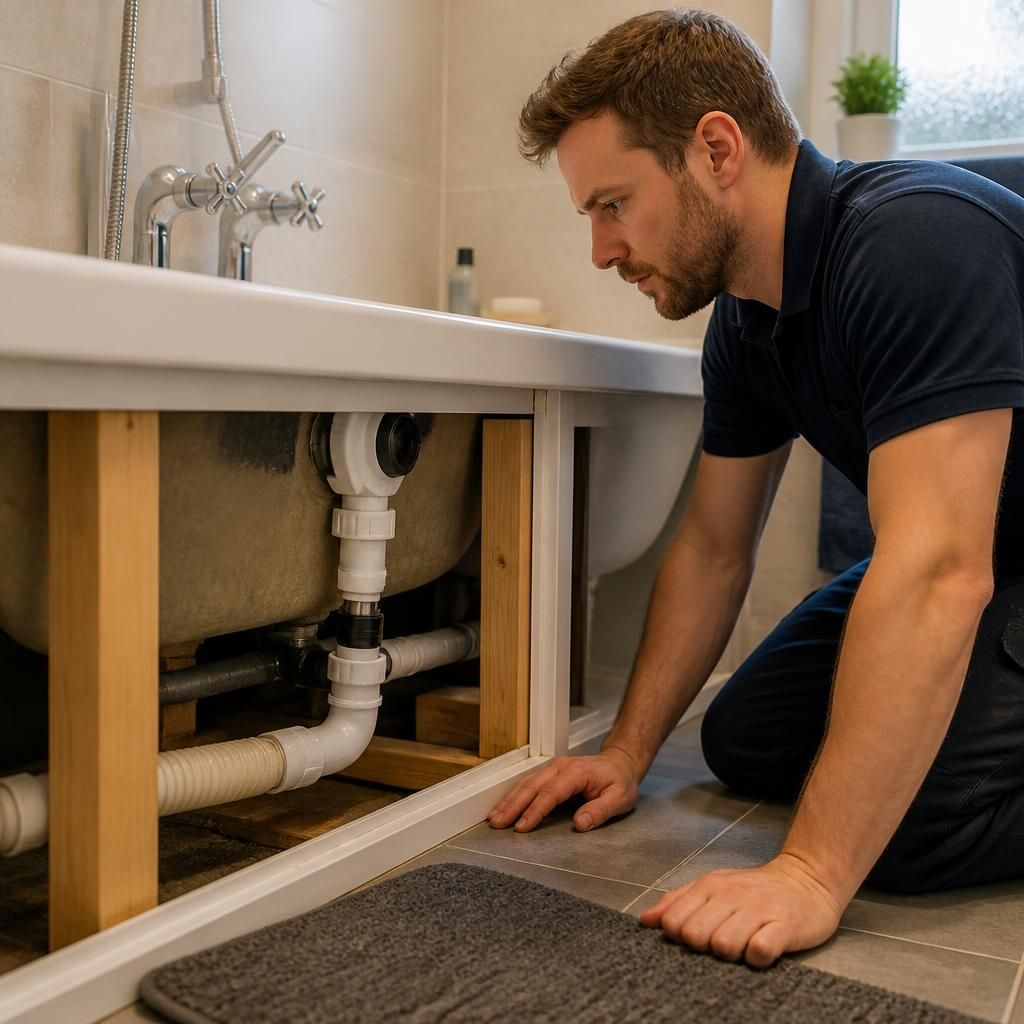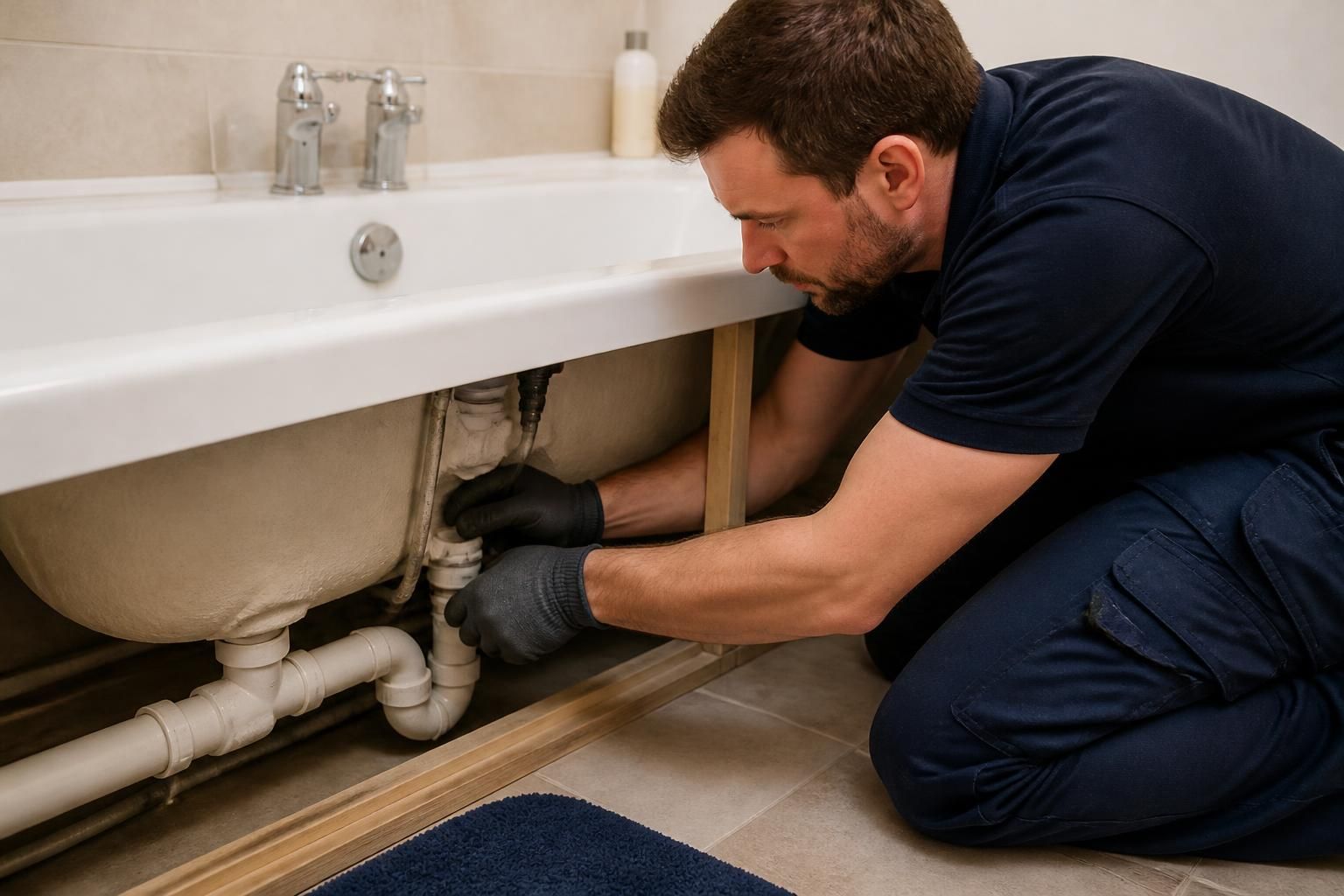
Preparing for bath drain unblocking means making the bath area safe and accessible, preventing further use of the blocked waste, and giving the plumber useful information about the problem. Good preparation can make the inspection more straightforward and helps avoid unnecessary disturbance to the bathroom.
Before the appointment:
- Ask household members not to run the bath, shower or nearby basin if their waste water appears to enter the same pipework. Further water may increase the standing water or cause an overflow.
- Keep children and pets away from any pooled water and from the work area. Blocked water can contain soap residue, hair and other contaminants.
- Move fragile items, electrical appliances and personal belongings away from the bath and the surrounding floor. Place towels or a suitable waterproof covering near the work area if splashing is possible.
- Make sure the plumber can enter the property and reach the bathroom without having to move large furniture or stored items. If access to another room, an airing cupboard or a service panel may be needed, leave those areas accessible as well.
- If you rent the property, check whether your landlord or managing agent needs to approve the work or arrange access. Keep any relevant maintenance instructions available.
Do not remove the bath panel, waste fitting or overflow cover unless you are confident that it can be refitted correctly. These components can be sealed or connected to pipework that is difficult to reach, and forcing them may cause leaks or damage. It is also best not to insert sharp objects, wire or unsuitable tools into the plughole, as these can push the obstruction further into the pipe or damage the waste assembly.
Have a few details ready for the assessment. Note when the water began draining slowly, whether the bath eventually empties, and whether gurgling, unpleasant smells or water backing up elsewhere has occurred. Explain whether the problem affects only the bath or several fixtures. These signs help distinguish a local bath waste blockage from a restriction further along the shared drainage pipework.
If the bath contains standing water, do not bail it into another fixture that may use the same drainage line. Remove only what is necessary to prevent an immediate spill, using gloves and a suitable container, and keep the water away from electrical sockets or appliances. Do not mix different cleaning products or add more chemical unblocker while waiting, because residues can remain in the pipe and create a hazard during dismantling or plunging.
The plumber will normally inspect the waste and overflow arrangement, assess how far the blockage may extend, and select a method suited to the fittings and pipework. This may involve mechanical clearing, suction or other specialist equipment. They may need to test the bath with clean water afterwards to check that it drains correctly and that accessible joints remain dry. Keeping the area prepared for this testing avoids having to refit stored items before the work is complete.
After the blockage has been cleared, ask what caused it and whether any maintenance is advisable. Hair, soap deposits and restricted-flow waste fittings are common contributors, but recurring blockages can indicate a poorly aligned or partially obstructed pipe. Using a drain cover that can be cleaned regularly and avoiding the disposal of unsuitable materials through the bath waste can help reduce repeat problems.