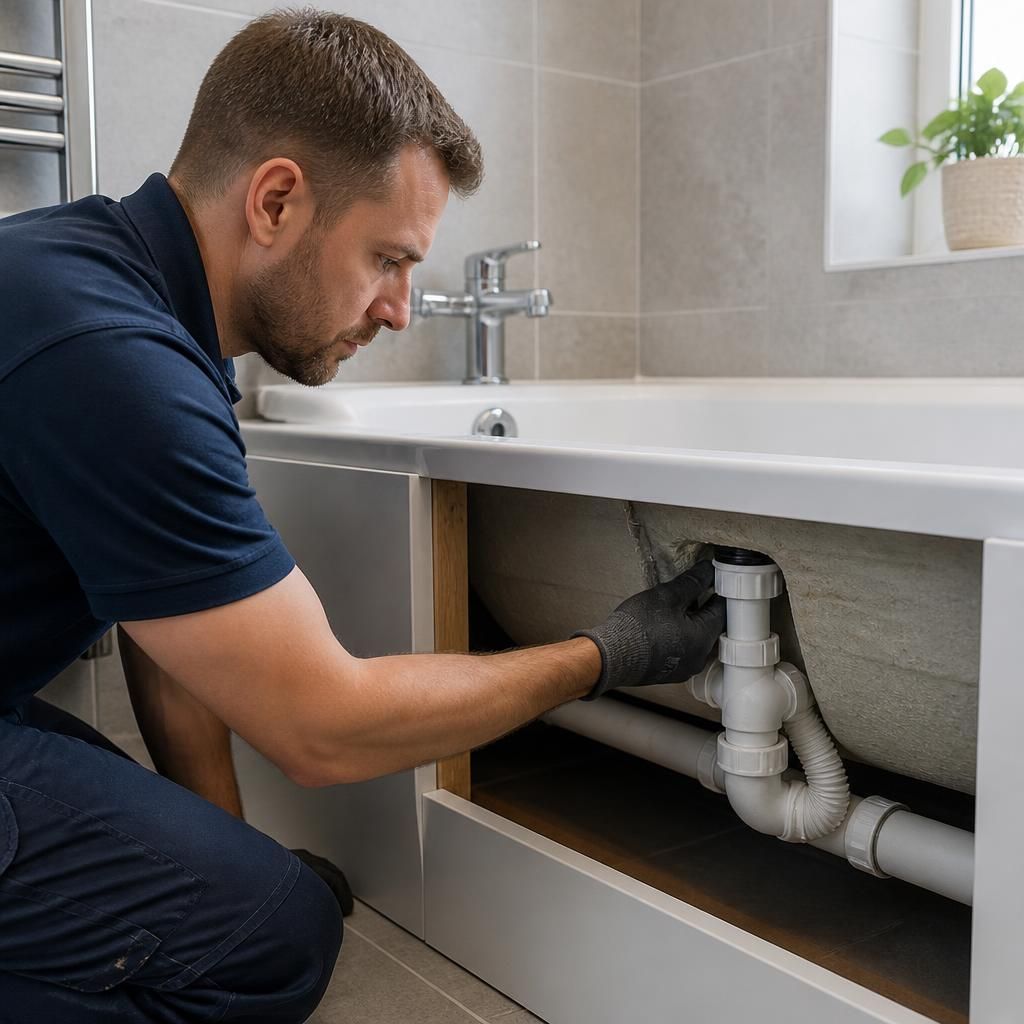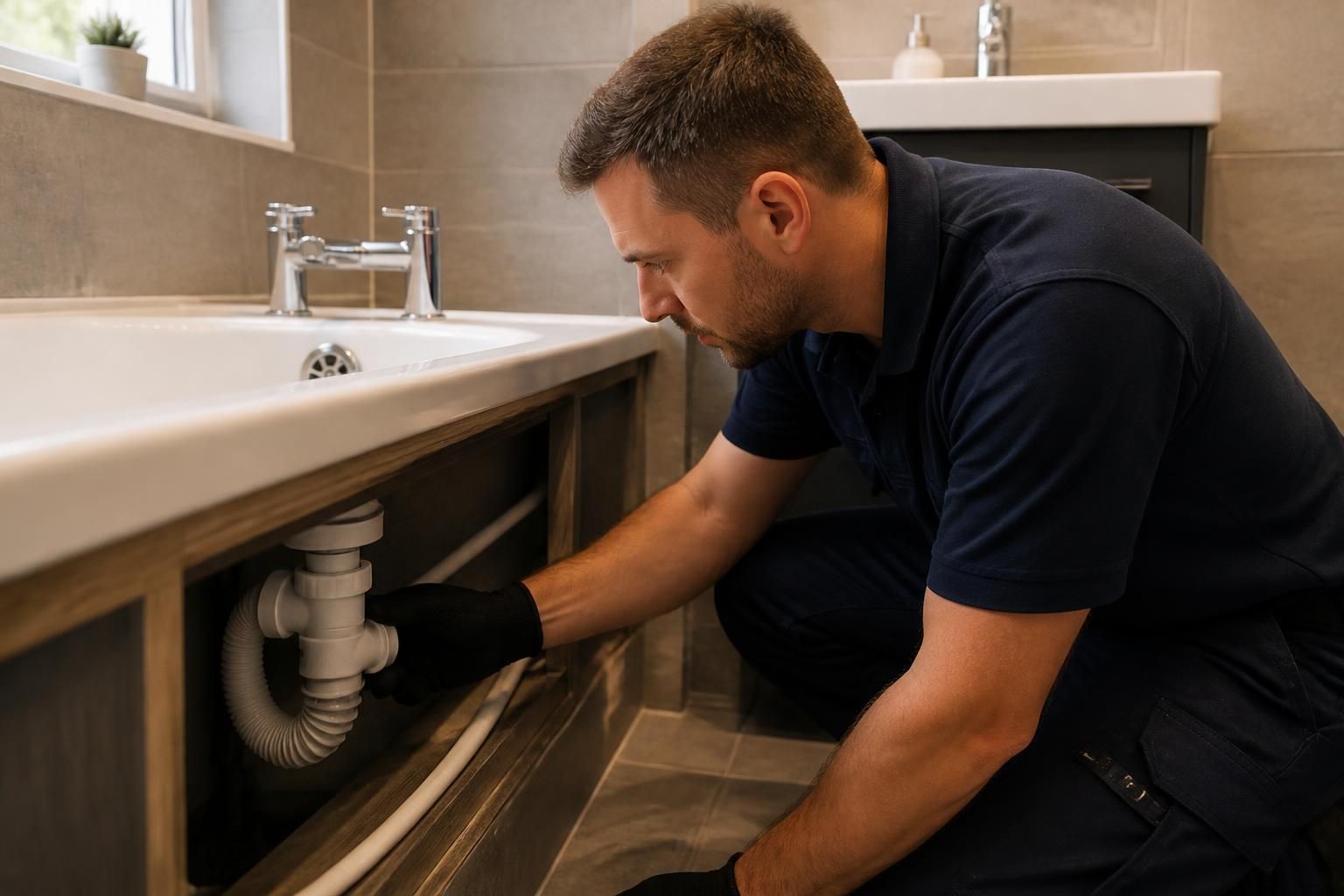
When bath drain unblocking is carried out carefully, the work should affect the blockage and waste pipe rather than the surrounding bathroom fittings. The main risks relate to the bath waste, overflow connection, seals, pipework and the bath surface, so the method should be selected after checking how the waste is constructed and where access is available.
What a careful unblocking process involves
A plumber will normally identify whether the restriction is close to the plughole, within the trap or further along the waste pipe. They may check how quickly the water drains, inspect the waste and overflow openings, and look for signs that the pipe is damaged or leaking. This helps distinguish a simple accumulation of hair and soap residue from a deeper obstruction or a collapsed, displaced or poorly connected pipe.
Depending on the findings, suitable approaches may include controlled plunging, cleaning the waste and trap, or using a flexible tool designed for confined pipework. Access covers, waste grilles and other removable components should be handled with the correct tool rather than forced. If a component needs to be removed, its washer or seal may need checking before it is refitted to prevent leaks beneath the bath.
Which fittings could be affected?
- The bath waste: Excessive force can loosen a waste fitting, damage its threads or disturb the seal between the fitting and the bath.
- The overflow: The overflow connection may be strained if equipment is pushed through the wrong opening or used at an unsuitable angle.
- Traps and joints: Older plastic or metal traps, compression joints and brittle pipework can be more vulnerable to movement than newer installations.
- The bath surface: Tools, debris or cleaning chemicals can mark acrylic, enamel or other finishes if they are not protected and cleaned away properly.
- Sealant and surrounding surfaces: Unnecessary removal of panels or sealant can create additional repair work and may allow water into areas that were previously protected.
Bath taps and other fittings are not normally part of the blockage-clearing work. However, restricted access can make it necessary to work close to them, particularly where the bath has a fitted panel or the waste is positioned against a wall. Protecting the bath and keeping tools clear of finished surfaces reduces the chance of accidental scratches or impact damage.
Why chemical drain cleaners can create problems
Strong chemical cleaners may not remove a solid obstruction and can remain in standing water. They can damage some seals, finishes or pipe materials, and they create a safety risk if a plumber later has to open the trap or waste connection. Tell the plumber if any drain cleaner has been used, including what type it was if known. Do not mix different products or add another chemical in an attempt to improve the result.
Signs that the blockage or unblocking work has caused a fitting problem
- Water appears beneath the bath, around the trap or near a removable access panel.
- The waste or overflow fitting moves when the plug or cover is touched.
- Water drains away but a joint continues to drip afterwards.
- The bath surface has been scratched, marked or exposed to a harsh product.
- The blockage returns quickly, or the bath empties very slowly despite apparent clearance.
If any of these signs appear, stop using the bath until the source has been checked. A leak may be hidden below the bath and can affect flooring, boxing-in or the ceiling below if it continues. Re-tightening a waste fitting without checking its seal can make the problem worse.
For a straightforward blockage, the surrounding fittings should remain intact when the work is performed with appropriate equipment and controlled pressure. Extra care is needed with older bathrooms, concealed pipework, damaged seals, inaccessible traps and baths that have already been leaking. Ideal Plumbing Services can assess the waste arrangement and explain the proposed method before carrying out bath drain unblocking in Birmingham and the wider West Midlands.