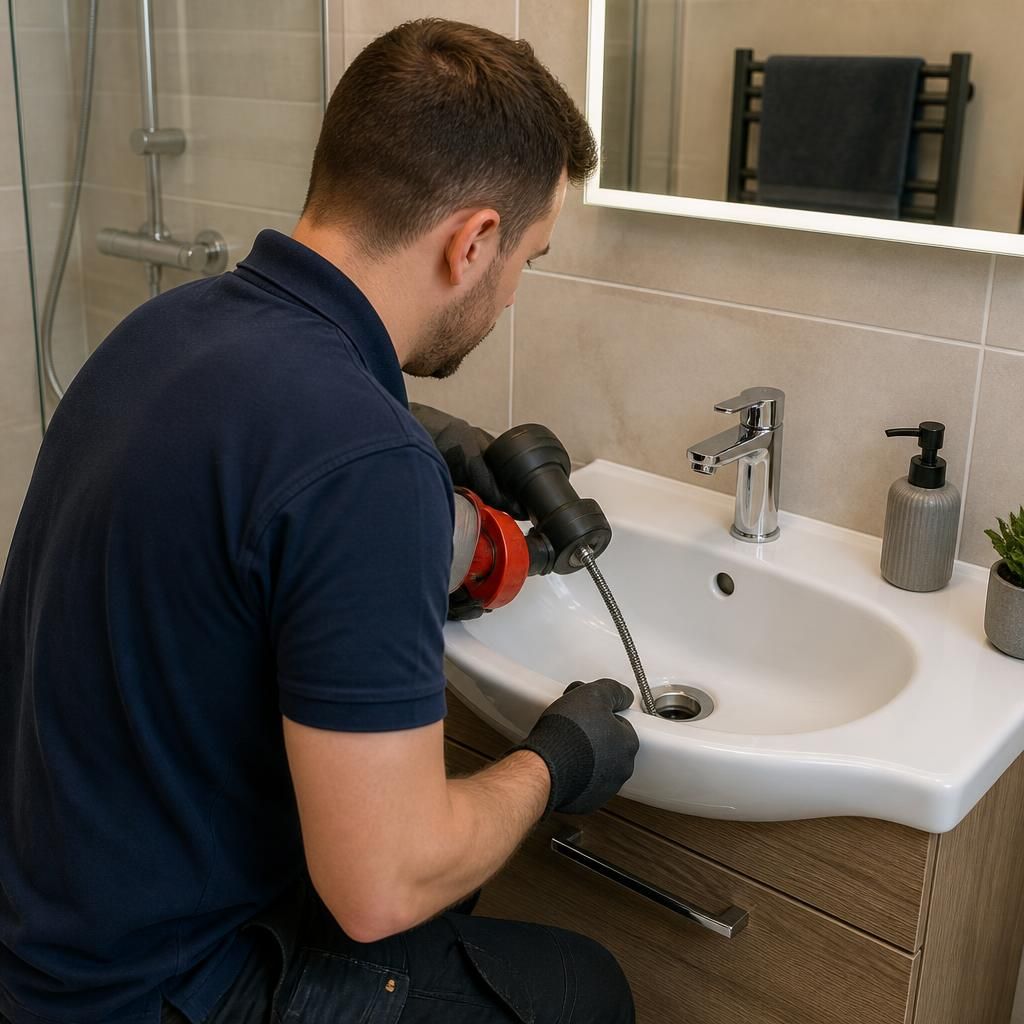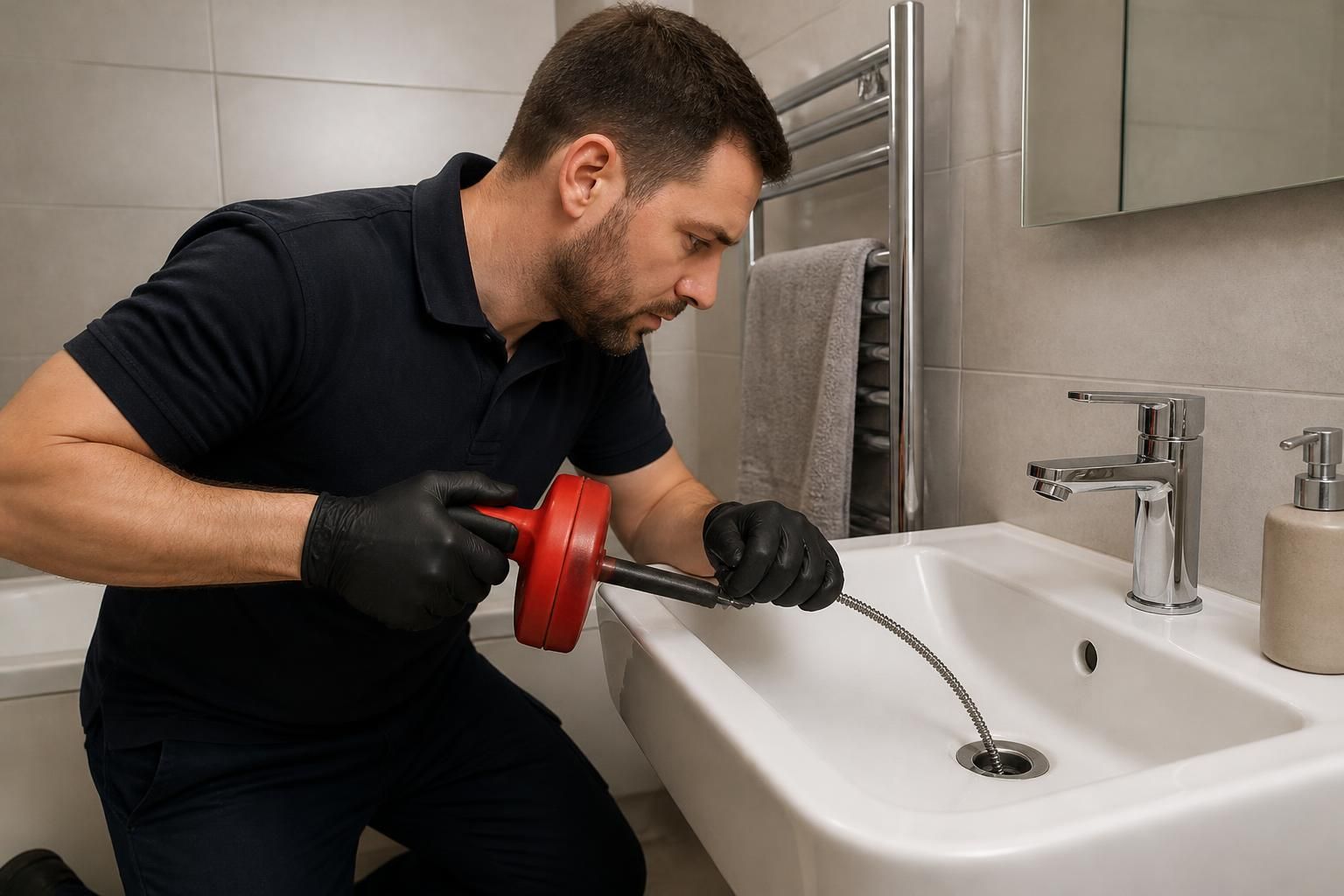
Bathroom drain unblocking without dismantling fittings is usually carried out by diagnosing the obstruction and clearing it through the accessible waste pipework. This approach helps preserve the basin, bath or shower installation while allowing the plumber to address the cause rather than simply forcing water through the drain.
A professional assessment normally considers the affected fixture, the speed at which water is draining, the type of waste fitting and whether other bathroom outlets are affected. A slow basin and a shower that fills with water may have separate local obstructions, whereas several connected fixtures draining poorly can indicate a restriction further along the branch pipe.
Depending on the findings, suitable methods may include:
- Plunging: controlled pressure can shift hair, soap residue and other soft build-up close to the waste opening.
- Drain-cleaning tools: a hand-operated or powered cable can break through or draw back material lodged within the pipe.
- Water-based cleaning: where appropriate, controlled flushing can remove loosened residue from the pipe walls.
- Inspection: if the blockage does not respond as expected, further investigation can help identify a collapsed section, displaced joint, scale or an object that cannot be safely moved through the available access.
The condition of the plumbing affects which method is suitable. Older or damaged waste pipes may require a gentler approach, while excessive force can dislodge joints or push an obstruction further into the system. A professional should also avoid relying on repeated applications of corrosive chemical unblockers, particularly where the substance may remain in the pipe and create a safety risk during later work.
Removing fittings is more likely to be considered when the obstruction is physically trapped, when the available opening is too restricted for the required equipment, or when a component itself is faulty. In those circumstances, dismantling should be limited to the part needed for safe access, with seals and connections checked before the fixture is put back into use.
After clearing the drain, the flow should be tested with clean water and checked for leaks around accessible joints. The plumber may also advise on preventing a repeat blockage, such as removing hair from shower waste covers, keeping unsuitable items out of bathroom drains and dealing with persistent odours or slow drainage before the pipe becomes fully blocked.
If the same bathroom drain repeatedly blocks after it has been cleared, unblocking alone may not resolve the underlying problem. Recurring symptoms can point to a partial restriction, poor pipe gradient, damaged pipework or a problem in the connected drainage system. Ideal Plumbing Services can assess the blockage and explain whether cleaning through the existing access is appropriate or whether further investigation is needed.