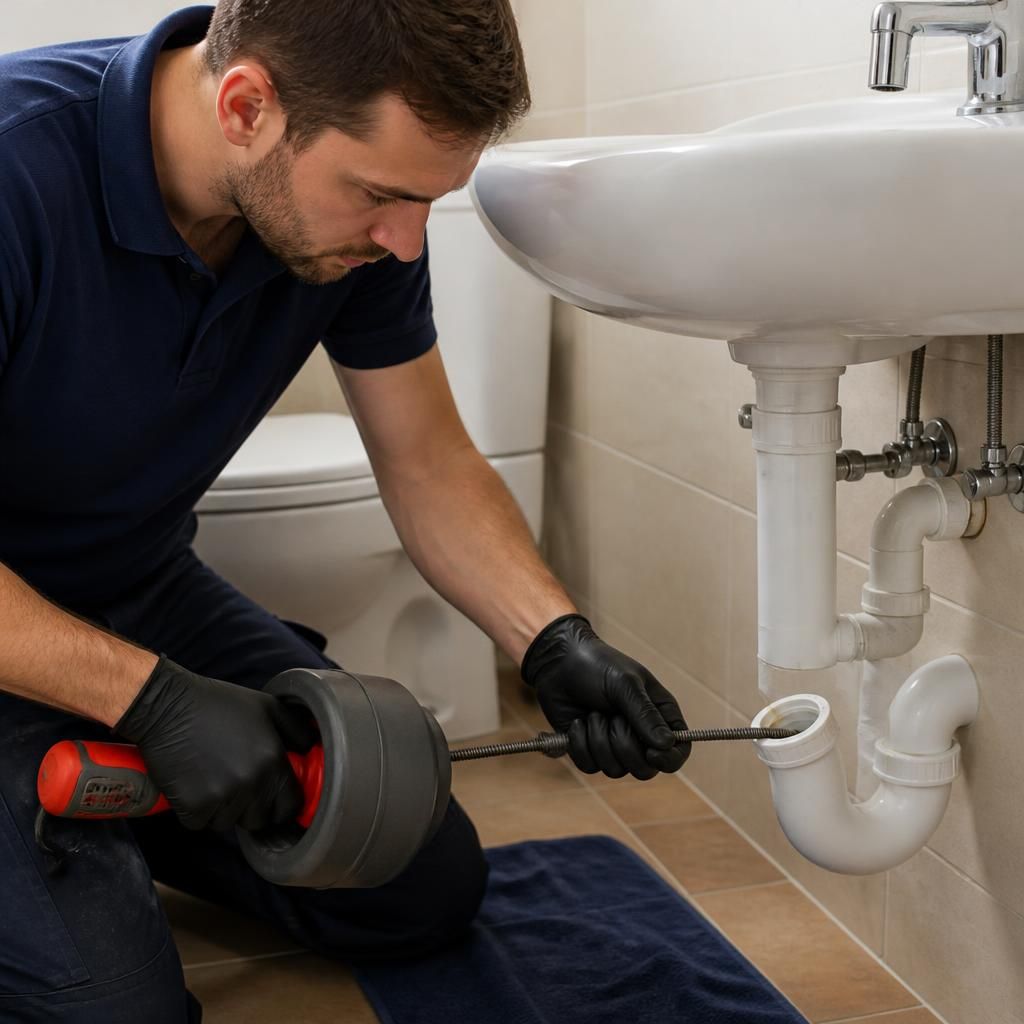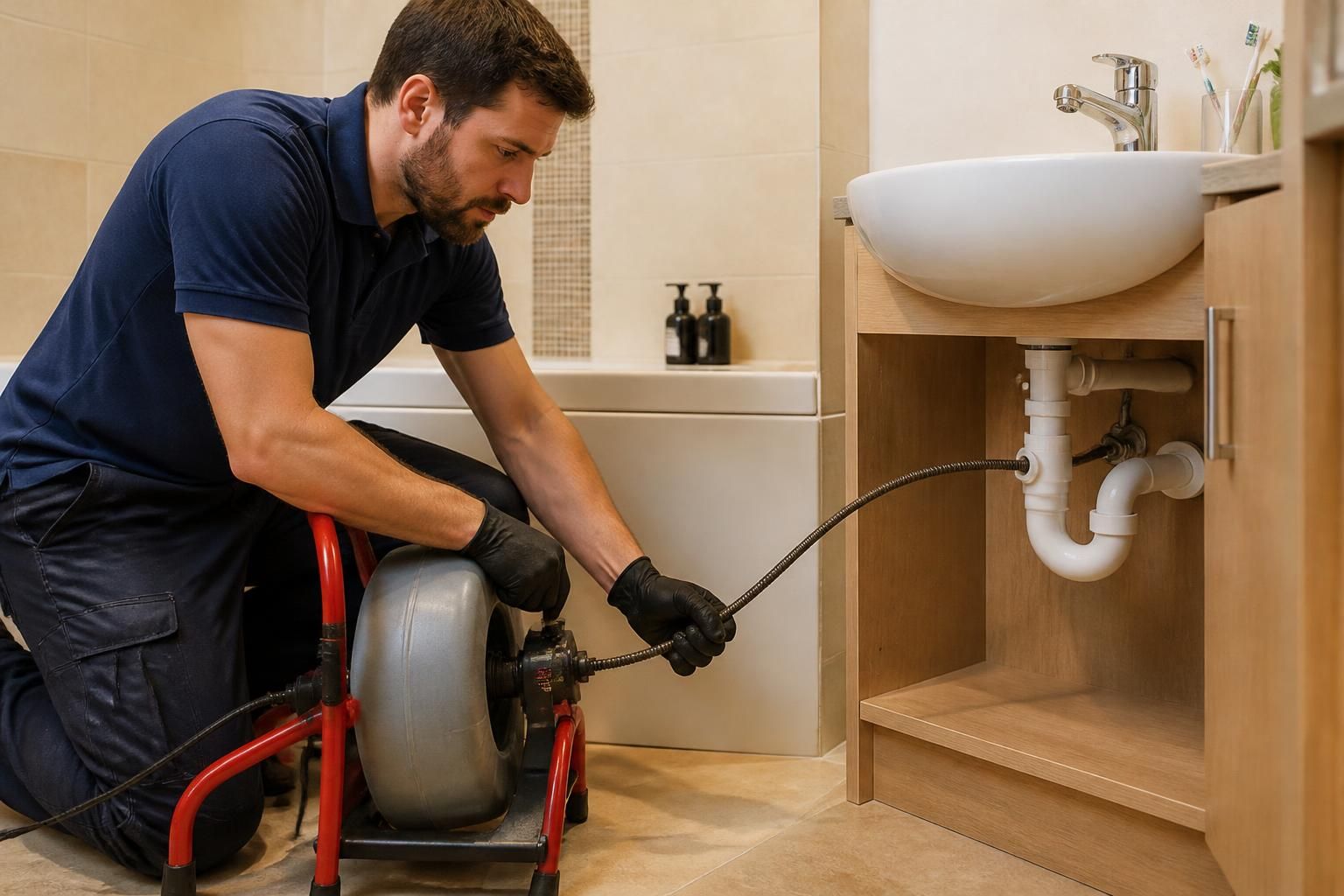
Drain cleaning can resolve a recurring bathroom blockage, but repeated symptoms usually mean the obstruction needs to be identified rather than simply cleared from the surface. A plunger or chemical cleaner may restore flow temporarily while leaving compacted deposits, a partial obstruction or a pipe defect in place.
Common reasons for a bathroom blockage to return include:
- Hair and soap residue: these materials can combine into a sticky mass that catches further debris inside the trap or waste pipe.
- Limescale and mineral deposits: a roughened internal pipe surface gives waste more places to collect, particularly where the water supply is hard.
- A deeper obstruction: material may have moved beyond the plughole, basin trap or bath trap, so clearing the visible opening does not remove the full restriction.
- A foreign object: items accidentally washed into the waste can obstruct flow and may need to be removed rather than broken up.
- Pipe damage or poor fall: a cracked, displaced or badly aligned pipe can allow water and debris to collect repeatedly.
- A shared or external drainage issue: if several fixtures drain slowly, the restriction may be farther along the branch pipe or outside the bathroom.
A professional assessment normally begins by comparing the symptoms. A blockage affecting only a shower or bath points towards that fixture’s trap or waste pipe, whereas slow drainage from the basin, bath and toilet may indicate a wider restriction. Gurgling, unpleasant smells, rising water or a blockage that returns soon after clearing are useful signs that the problem extends beyond the plughole.
The cleaning method depends on the location and nature of the obstruction. The trap may be removed and cleaned where it is accessible, while a suitable drain-cleaning tool can clear material farther into the pipe. More persistent restrictions may require mechanical cleaning or inspection equipment so that the technician can establish whether deposits have been removed fully. The aim is to clean the affected section without relying on repeated use of harsh chemical products, which can damage some components and create a hazard during later repairs.
Cleaning is more likely to provide a lasting solution when the blockage is caused by removable build-up and the pipe itself is sound. It is less likely to be sufficient where the same section repeatedly blocks despite thorough cleaning. In that situation, the next step may be a closer inspection for a damaged joint, collapsed section, inadequate gradient or an obstruction that cannot be safely cleared. Repair or replacement may then be more appropriate than carrying out the same cleaning procedure again.
Before arranging work, note which fixtures are affected, whether water drains slowly or stops completely, how soon the problem returns and whether there are smells or unusual noises. Avoid repeatedly pouring chemical unblocker into the system, particularly if a tradesperson may need to dismantle the trap, and do not use a fixture that is overflowing. These details help distinguish a local bathroom waste problem from a wider drainage fault.
Once the pipe has been cleared, recurrence can often be reduced by using a suitable plughole strainer, removing hair before it enters the waste and avoiding the disposal of wipes, cotton buds, sanitary products or other solid items through bathroom fittings. Regular cleaning of removable traps can also help, provided the fitting can be accessed safely.
Ideal Plumbing Services provides plumbing and drainage support for homeowners, landlords and tenants in Birmingham and across the West Midlands. Where a bathroom blockage keeps returning, a proper diagnosis can establish whether drain cleaning is sufficient or whether the pipe requires a different remedy.