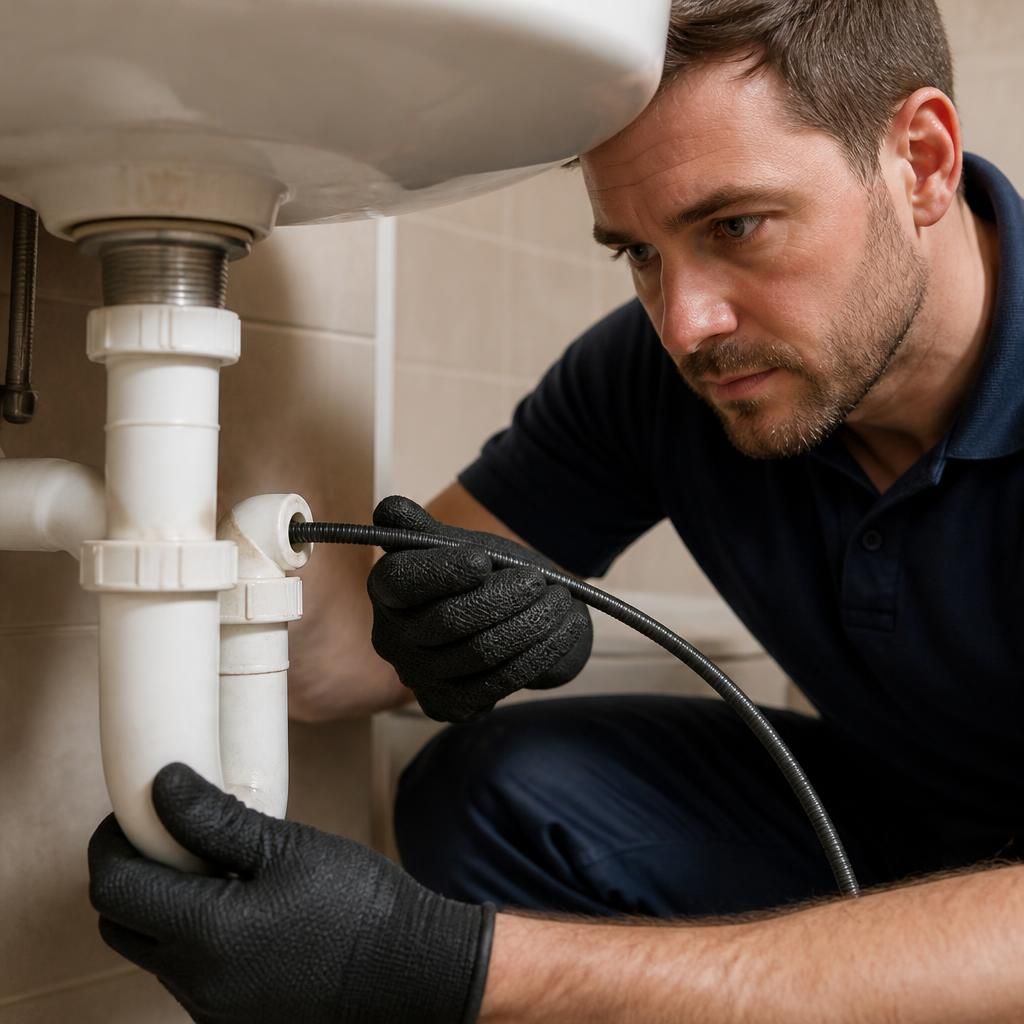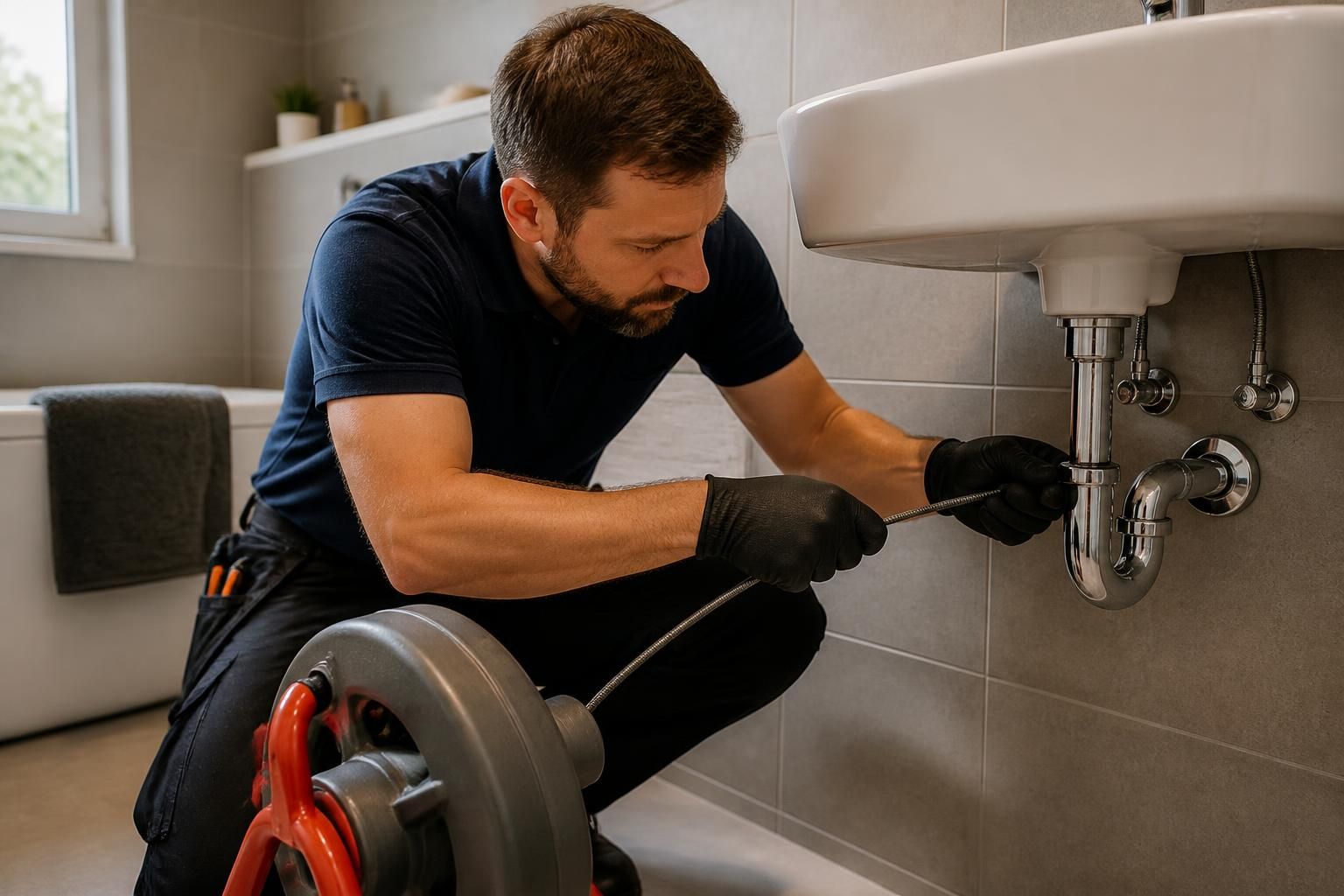
Professional bathroom drain cleaning should not damage properly installed pipework when the blockage is diagnosed and the cleaning method is suitable for the drain’s material, condition and layout. The main purpose is to remove the obstruction while preserving the pipe, joints, traps and surrounding fittings.
Before cleaning, a plumber will usually establish where the restriction is and what may be causing it. Hair, soap residue, limescale and trapped debris require a different approach from a solid object, collapsed section or roots entering an external drain. The location of the blockage also matters: a restriction in the trap beneath a basin is treated differently from one deeper in the branch drain.
Bathroom drainage commonly includes plastic waste pipe, older metal pipe or a combination of materials. Each has different limitations. Plastic pipe can be affected by excessive heat, force or movement at its joints, while older metalwork may be weakened by corrosion. A careful plumber takes the pipe’s age, access points, visible condition and previous repair history into account rather than assuming every drain can be treated in the same way.
Depending on the circumstances, cleaning may involve removing accessible debris, using a suitable hand-operated tool or passing equipment through an appropriate access point. The equipment should be used progressively, with enough control to break up or retrieve the blockage without stressing the pipework. High-pressure water cleaning can be effective in suitable drainage systems, but it is not automatically appropriate for a fragile, damaged or poorly connected bathroom drain.
There is also a difference between clearing a blockage and identifying a defect. If water continues to drain slowly after cleaning, the obstruction may be further along the system, or the pipe may have poor falls, damage or a structural restriction. Repeated blockages, foul smells, damp around a trap or waste pipe, staining on ceilings, and unexplained movement at a joint justify further investigation rather than repeated attempts to force the drain clear.
Signs that cleaning may have caused or exposed a problem include a new leak, a loose fitting, water appearing below the bathroom, or a sudden change in the sound of discharge. Stop using the affected fixture if this happens and have the pipework checked. A leak may come from a disturbed seal or pre-existing deterioration, so the source needs to be identified before any joint is tightened or replaced.
Using household drain chemicals before a professional visit can complicate the work. The product may remain in the trap or pipe and create a handling hazard, while repeated chemical use can damage some components or conceal the underlying cause of the blockage. Tell the plumber what has been used and avoid mixing different products.
A suitable service should finish with checks that the waste runs freely and that accessible connections remain dry. Where the blockage has been removed but the pipe is visibly damaged, cleaning will not restore its structural integrity. In that situation, the appropriate solution may be a local repair or replacement of the affected section, based on the condition of the existing system rather than an assumption that the whole bathroom drainage system needs renewing.
To reduce the risk of future obstruction, keep hair and solid debris out of waste openings, avoid washing large amounts of oils or unsuitable materials into bathroom drains, and deal with slow drainage before it becomes a complete blockage. Preventive habits cannot correct damaged pipework, but they can reduce the build-up of common bathroom waste.