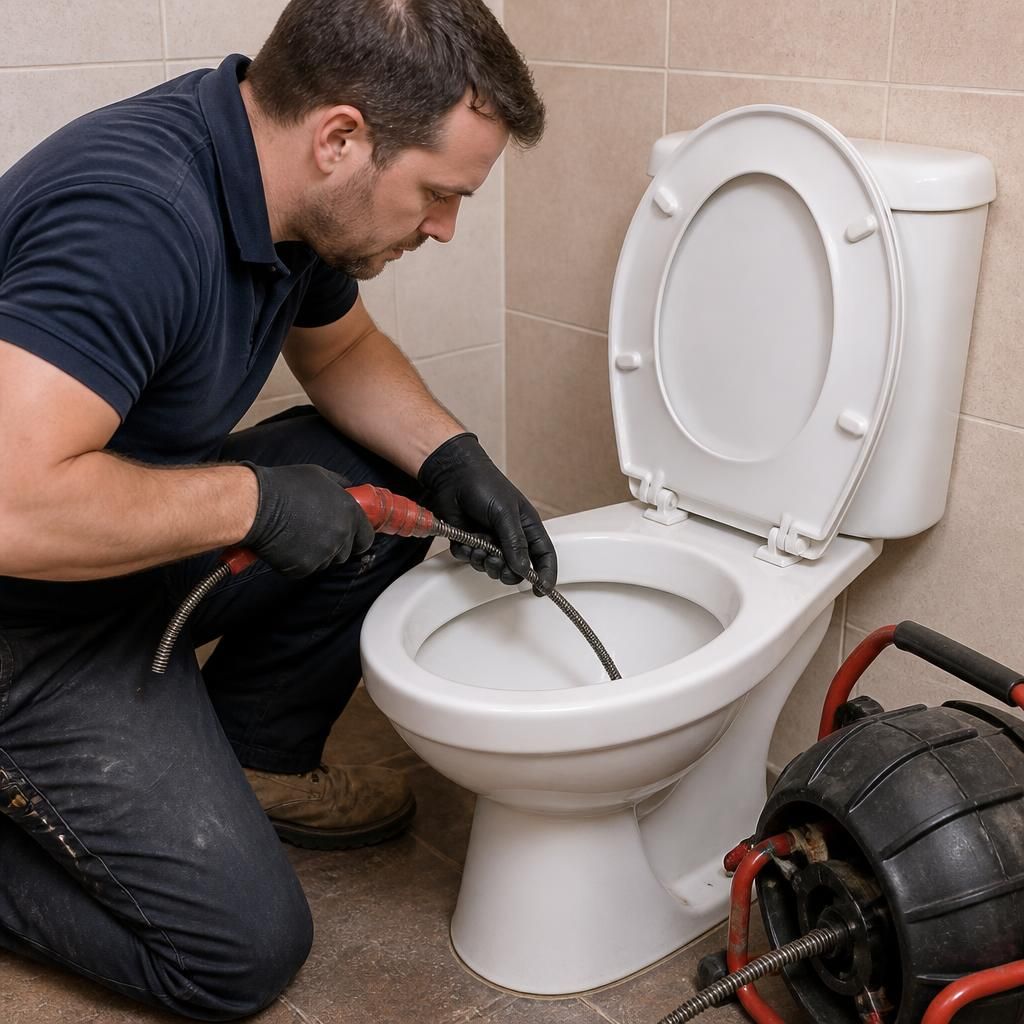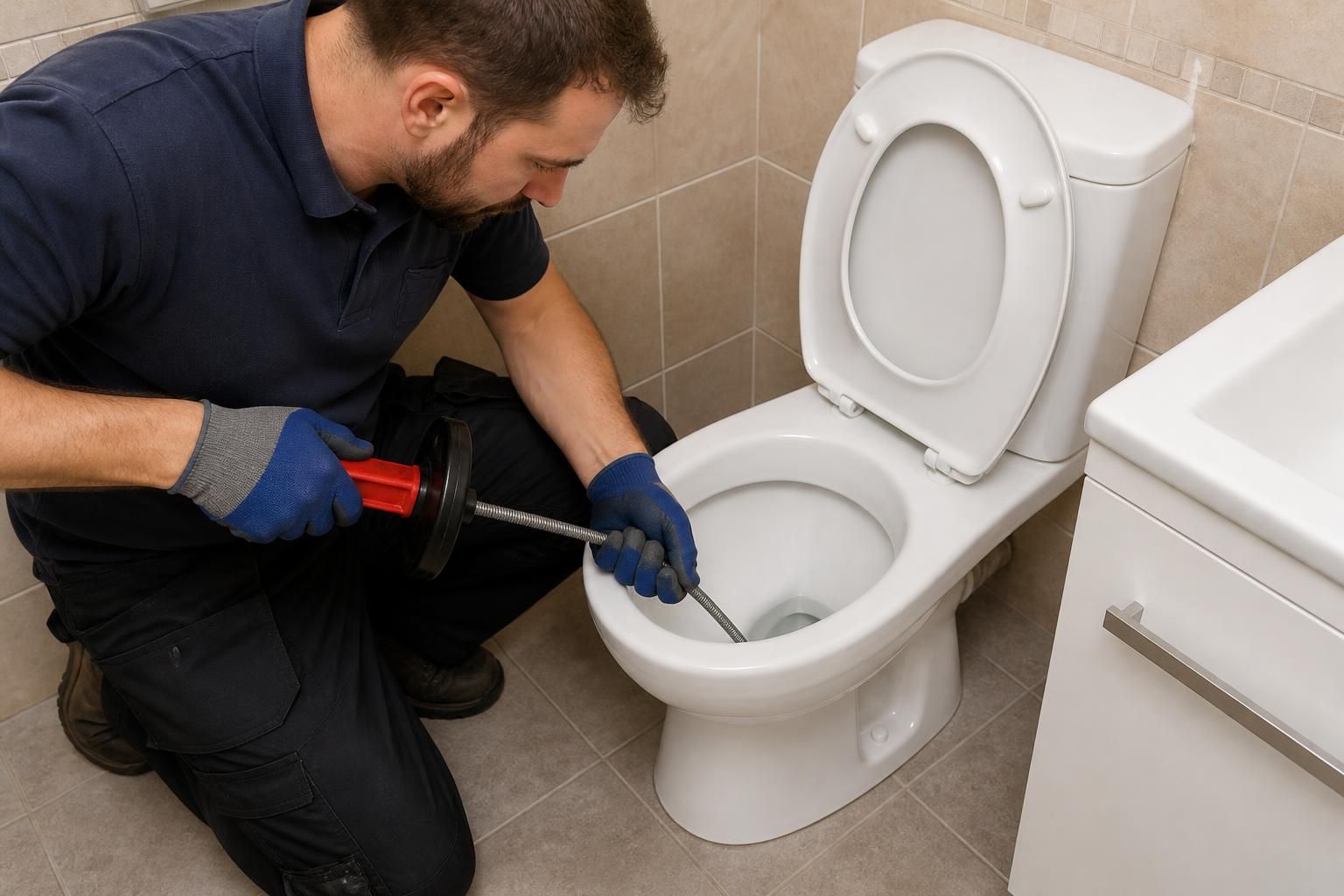
Unblocking a toilet without removing it means clearing the obstruction through the bowl, trap or connected waste pipe while the toilet remains fixed in place. The correct method depends on the location and nature of the blockage, rather than on the fact that the toilet is fitted to the floor.
How a plumber assesses the blockage
A plumber will first establish whether the restriction is inside the toilet trap or further along the waste pipe. A bowl that fills and drains slowly may have a local obstruction, while several affected fixtures, gurgling sounds or wastewater returning to the toilet can indicate a shared drainage problem. This distinction matters because forcing tools into a toilet when the obstruction is elsewhere may not clear the underlying issue.
The condition of the toilet and the likely cause are also considered. Excess paper and ordinary waste can often be broken up or displaced. A solid object, such as a child’s toy, air freshener or cleaning product container, may need to be retrieved rather than pushed further into the pipe. A professional will also take care not to damage the ceramic pan, trap or pan connector during the work.
Tools used without removing the toilet
- A toilet plunger with a suitable flange can create controlled pressure over the outlet and help shift softer obstructions.
- A toilet auger, sometimes called a closet auger, is designed to pass through the pan and trap while reducing the risk of scratching the ceramic.
- Manual retrieval tools may be used where a visible object is lodged near the opening and can be removed safely.
- Drain-cleaning equipment may be appropriate where the restriction is in the connected waste pipe, provided the access and pipework allow it.
The tool should be selected for the blockage, not simply pushed harder. Excessive force can dislodge a pan connector, damage the trap or drive an object into a less accessible section of pipe. It can also cause contaminated water to spill over the bathroom floor.
When removing the toilet may be necessary
Taking the toilet out is usually considered only when the obstruction cannot be reached effectively from the bowl or an accessible drain point. Examples include a rigid object wedged in the trap, a blockage positioned behind the pan connector, a failed or displaced connector, or a recurring restriction that requires inspection of the pipework. Removal may also be sensible where the toilet has been installed in a way that prevents safe access with normal unblocking equipment.
Removing a toilet is more involved than clearing it in place. The water supply may need to be isolated, the pan disconnected, and the seal or connector replaced before the toilet is refitted. The fitting must then be checked for movement, leaks and correct discharge. A plumber will generally avoid this work if the obstruction can be dealt with safely through the pan.
What to do before professional help arrives
- Do not repeatedly flush the toilet, particularly if the water level is rising.
- If the cistern is filling, close the toilet’s isolation valve or stop the water supply using the appropriate shut-off point.
- Remove items from around the toilet and protect nearby flooring from splashes.
- Tell the plumber whether the problem followed the use of excess paper, a dropped object, cleaning products or recent plumbing work.
- Avoid mixing chemical drain cleaners. They may remain in the bowl, create a splash hazard and complicate subsequent work.
How the plumber confirms the work is complete
After clearing the restriction, the toilet should be tested with controlled amounts of water rather than immediately flushed repeatedly. The plumber will check that the level settles normally, the discharge is unrestricted and water is not escaping around the base or connector. If the blockage returns, further investigation may be needed because the original symptom could be caused by a partially restricted drain, inadequate pipe fall, tree-root intrusion or another issue beyond the toilet itself.
A professional blocked toilet service therefore does not automatically involve dismantling the fitting. The aim is to identify the obstruction, use equipment suited to the pan and pipework, and remove the toilet only where access, safety or the condition of the installation makes that the more appropriate option.