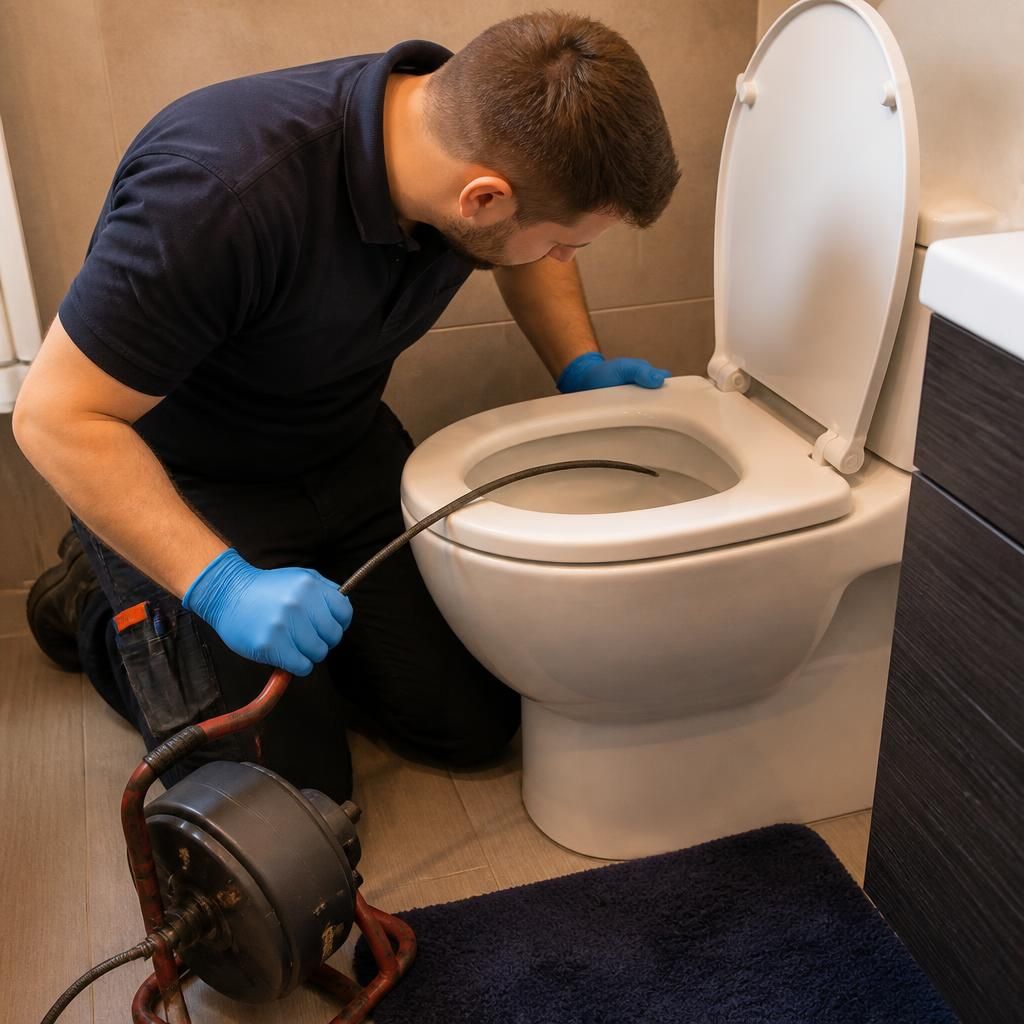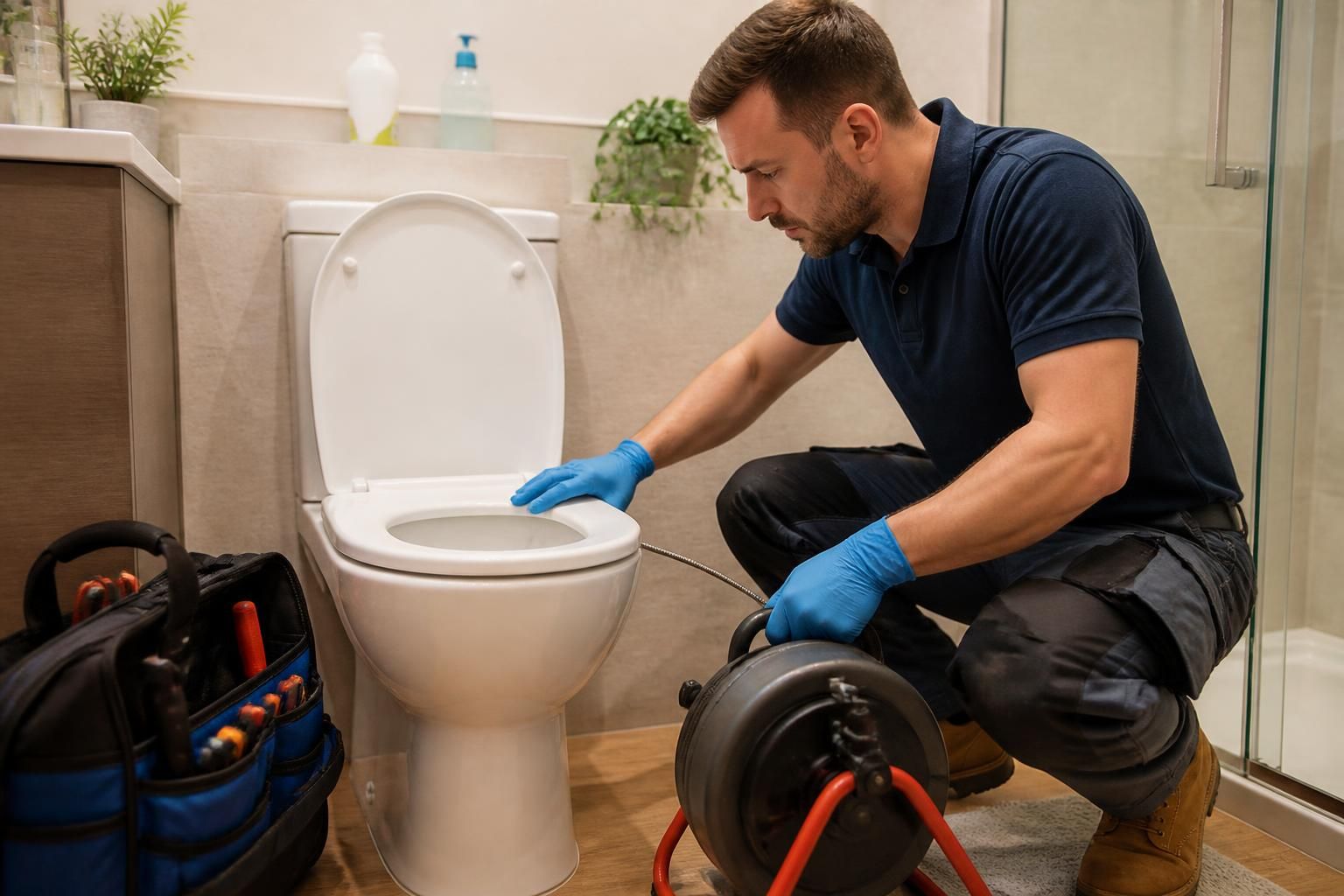
Before a plumber arrives, prioritise safety, preserve useful information and avoid DIY actions that could worsen the blockage. Keep people and pets away from the affected bathroom, avoid contact with contaminated water and make sure the plumber can reach the toilet and any relevant drainage points.
Do not use chemical drain cleaners. Caustic products can remain in the pan or pipework and may cause burns if the plumber needs to use a plunger, drain rod or other equipment. They can also damage certain components. Do not mix cleaning products, insert wire or household objects into the toilet, or dismantle the pan or cistern. If any chemical has already been used, tell the plumber before they begin and identify the product if possible.
- Keep children and pets out of the bathroom until the blockage has been assessed.
- Wear disposable gloves if you need to handle the toilet seat, flush handle or nearby surfaces, and wash your hands thoroughly afterwards.
- Do not touch sewage-contaminated water with bare skin. Contaminated cloths and disposable items should be sealed and disposed of safely.
- Keep the bathroom ventilated if this can be done safely, but avoid using fans that could spread contaminated droplets.
Make a short note of any symptoms that may help distinguish a toilet blockage from a wider drainage problem. For example, mention whether nearby sinks, baths or showers are draining slowly, whether other toilets are affected, or whether you have noticed gurgling sounds or unpleasant smells. If the problem appeared after plumbing or building work, include that detail too. This helps the plumber decide whether to inspect the toilet trap, the connecting pipework or a larger section of the drainage system.
Prepare practical access before the appointment. Unlock gates or doors that the plumber will need to pass through, secure pets elsewhere and move fragile belongings from the route. If the property has an inspection chamber, rodding point or another drainage access point, identify its location without lifting the cover yourself. Do not enter chambers or handle foul drainage; these areas may contain harmful gases and contaminated water.
If you rent the property, check your tenancy or maintenance procedure and notify the landlord or managing agent where required. Keep any reference number or previous repair details available. Tenants should normally avoid authorising chargeable work without the appropriate permission unless the tenancy arrangements specifically allow it.
It is also useful to have basic property information ready, such as whether the toilet is connected to a macerator, whether the bathroom has had previous blockages and whether any recent repairs have affected the plumbing. Do not guess if you are unsure; simply explain what you have observed. A clear description is more useful than attempting to diagnose the fault yourself.
Once the plumber arrives, explain the symptoms before they start work and mention any drain cleaner, disinfectant or other product used in the toilet. Ask what caused the blockage, whether the problem appears limited to the toilet or affects the wider drainage system, and whether any follow-up repair or maintenance is advisable. This gives you a clearer understanding of the work rather than treating the immediate obstruction without addressing a recurring fault.