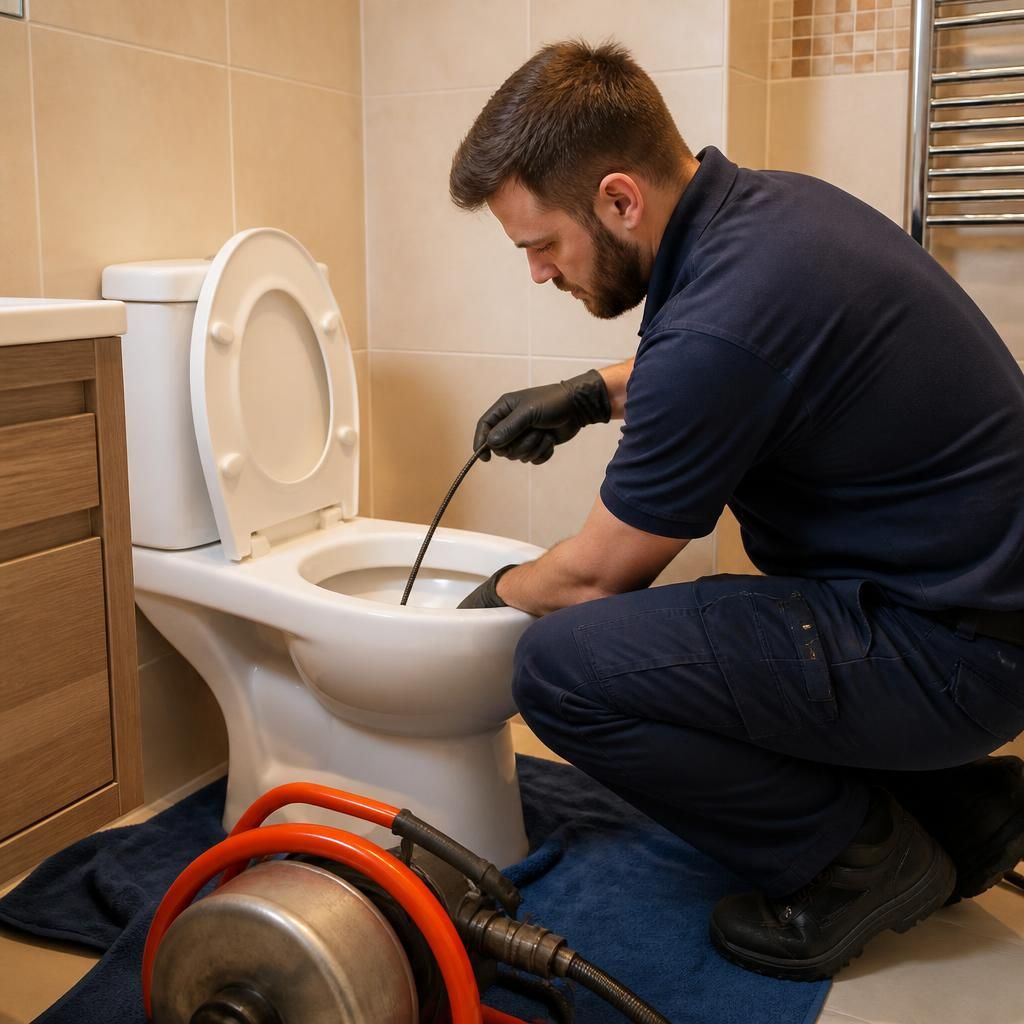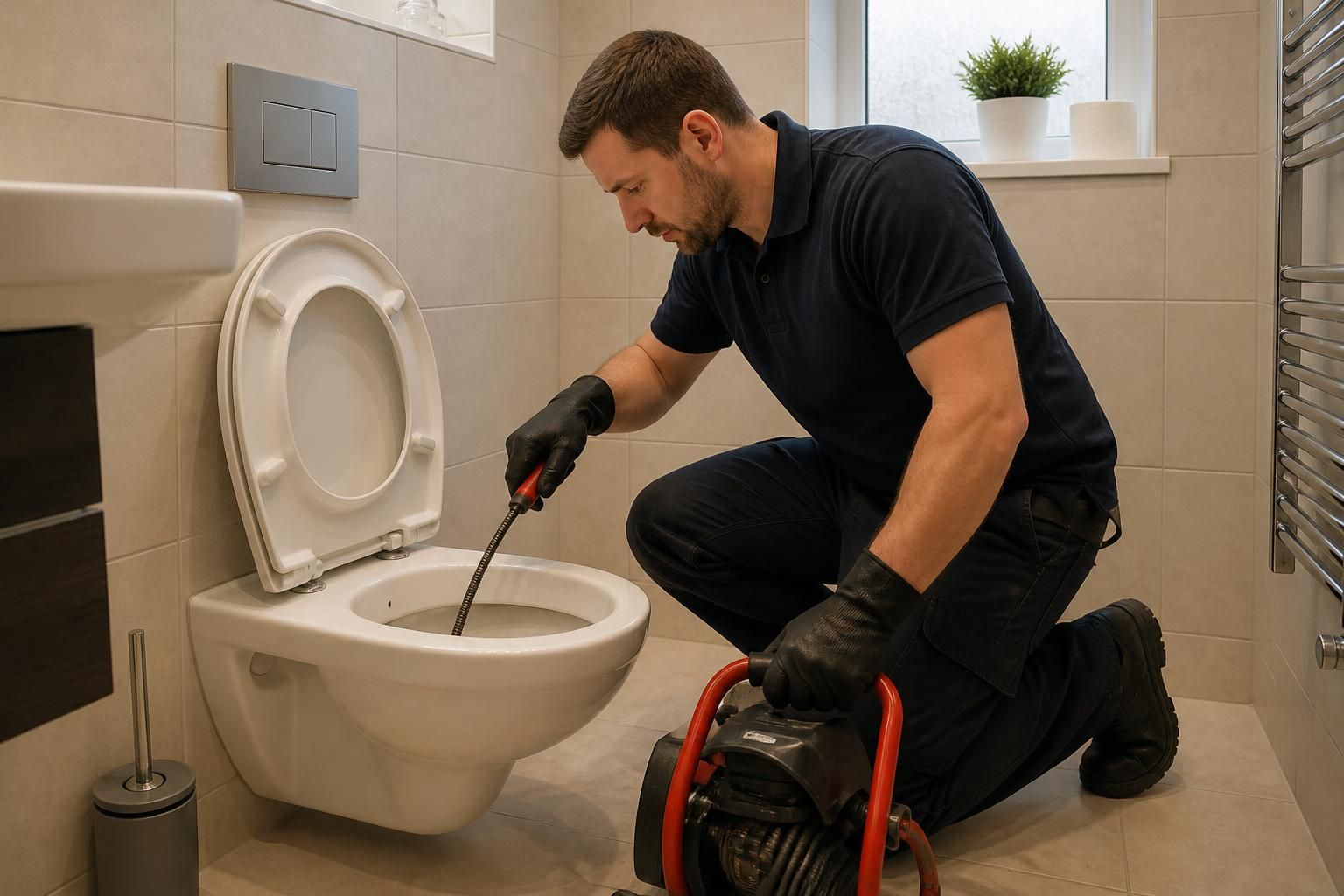
Professional blocked toilet unblocking is generally a low-disruption repair, but the extent of work depends on where the obstruction is located and whether it affects only the toilet or the connected waste pipe. A blockage in the pan may be dealt with using a plunger, auger or other manual tool, while an obstruction further along the pipework may require more investigation and specialist equipment.
The plumber will normally begin by checking the toilet, visible pipework and nearby drainage points. This helps distinguish between a local blockage and a wider drainage problem. They may ask what was flushed, whether the water level has changed and whether other fixtures are draining slowly. These details can prevent unnecessary dismantling and help determine the safest method of clearance.
For a straightforward blockage, the work usually involves positioning equipment around the pan and applying controlled pressure or mechanical action. The toilet does not normally need to be removed simply because it is blocked. Removal becomes more likely if an object is firmly lodged, the pan or trap is damaged, or the obstruction cannot be reached effectively through the normal access points.
More noticeable disruption can occur when the blockage is in the soil pipe or underground drainage rather than in the toilet itself. In that situation, the plumber may need to inspect access points, trace the affected section or use drainage equipment. If excavation or repairs to concealed pipework are necessary, that is a separate stage from ordinary unblocking and should be explained before more invasive work begins.
- Access: Clear the area around the toilet so the plumber can work safely without moving personal items or bathroom furniture unnecessarily.
- Water and hygiene: Avoid flushing repeatedly, as this can cause an overflow. Keep children and pets away from contaminated water and do not mix chemical drain cleaners with other products.
- Use of the bathroom: The affected toilet should remain out of use while it is being assessed and tested. If the blockage is linked to a shared drain, other toilets, sinks or baths may also need to be used cautiously until the cause is known.
- Privacy: The work is usually confined to the affected bathroom or the relevant drainage access point. A plumber may need to inspect adjacent fixtures only when symptoms suggest a wider pipework issue.
After clearing the obstruction, the plumber should check that the toilet flushes and refills correctly and that water drains without backing up. They may also look for signs of a recurring cause, such as unsuitable items in the pipe, a damaged trap or restricted drainage. Testing is important because a toilet that appears to drain once may still have a partial obstruction.
Cleaning requirements depend on what has overflowed and where the blockage occurred. If wastewater has escaped, hard surfaces should be cleaned and disinfected, while porous materials may need separate attention. The plumber can identify whether the issue is limited to unblocking or whether further plumbing or drainage repairs are advisable.
For homeowners, landlords and tenants, it is useful to record any recurring symptoms and tell the plumber about previous unblocking attempts. This information can reveal whether the problem is isolated or part of a longer-term drainage fault. Ideal Plumbing Services provides residential plumbing and drainage support across Birmingham and the wider West Midlands, including blocked toilet assessment and repair where further work is needed.