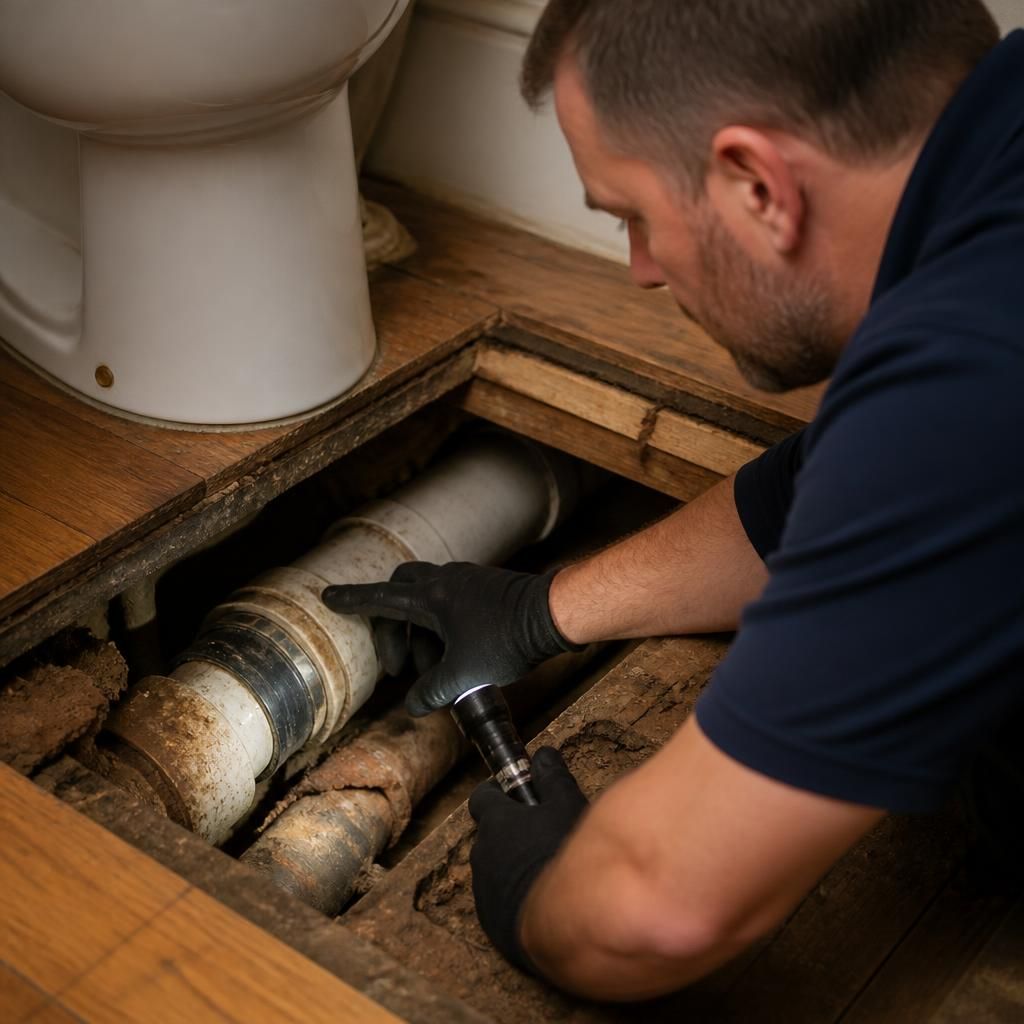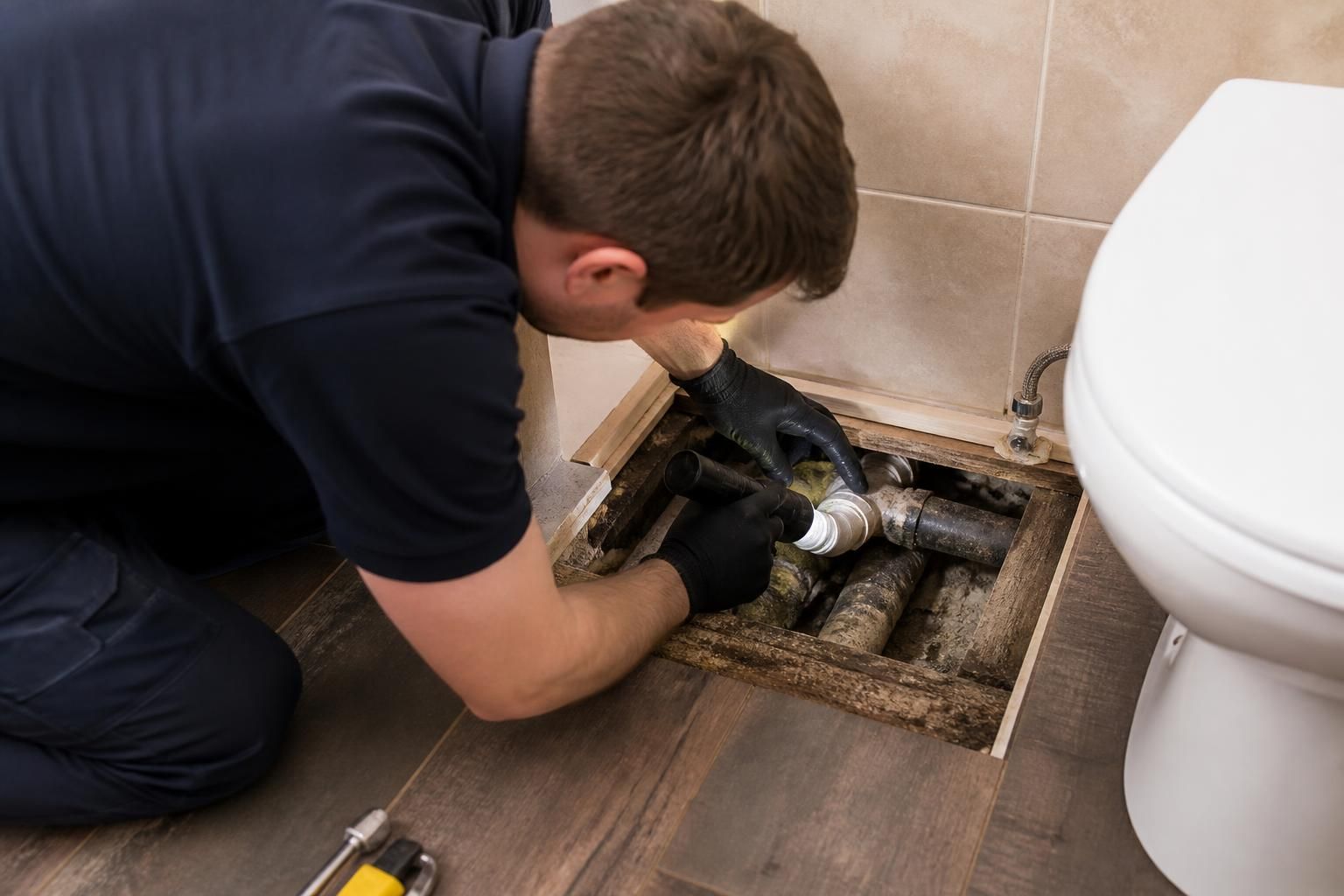
Older pipework is not automatically unsafe to unblock, but its material, condition and jointing system determine how much intervention it can tolerate. A modern toilet auger used with controlled pressure may be appropriate, whereas aggressive mechanical action or high-pressure equipment can dislodge fragile joints, crack brittle sections or disturb a deteriorated connection.
The main risks vary according to the type of drainage installed:
- Cast-iron pipes: these can remain serviceable for many years, but corrosion may have reduced the wall thickness internally. A tool that passes through a narrowed section can catch on rough corrosion or put strain on a weakened joint.
- Clay or earthenware pipes: older glazed sections are rigid and can crack if they have already been affected by ground movement, impact or previous repairs. Their joints may also be less tolerant of movement than modern flexible connections.
- Lead or early metal connections: these may deform more easily than newer fittings, particularly around the pan connector or branch connection.
- Older plastic systems: the pipe itself may be sound, while seals, solvent-welded joints or a brittle connector have deteriorated with age.
Previous alterations are often as important as the original pipe material. A bathroom may contain a mixture of old drainage, newer plastic connectors and replacement fittings. This means the weakest point may be a joint behind the toilet or beneath the floor rather than the visible pipe. Access can be limited, so forcing a tool through a blockage without understanding the layout can transfer pressure to that vulnerable point.
There is also a difference between clearing a restriction and repairing the underlying drainage. A toilet auger is generally intended to work through the pan and trap with measured movement. More intensive equipment may be considered when the obstruction is farther along the branch pipe, but the operator should first establish where the blockage is and whether the pipe can withstand that method. Removing the toilet may provide a straighter route and better visibility, although it introduces the need to check the pan connector, fixings and seal when refitting.
Signs that unblocking may have affected older pipework include:
- water appearing around the base of the toilet rather than only inside the bowl;
- a persistent damp patch, musty smell or staining near a boxed-in pipe or flooring;
- the toilet becoming loose after work has been carried out;
- gurgling or slow drainage continuing after the toilet initially appears clear;
- wastewater backing up into another fitting; or
- a new crack in the pan, cistern connection or exposed pipework.
These symptoms do not always prove that the unblocking caused the problem. A hidden leak or failing joint may have existed already and become noticeable when the obstruction was removed or the toilet was moved. Continuing to flush can spread contaminated water and make the source harder to identify, so the supply to the cistern should be isolated and the area kept dry until it has been assessed.
A safer assessment starts with the blockage history. Information about repeated stoppages, previous repairs, unusual noises and whether other appliances are affected helps distinguish a local toilet obstruction from a restriction in the shared branch or main drain. The plumber can then inspect accessible connections, check for movement or leakage and select a method that matches the pipework rather than applying the same procedure to every installation.
If older drainage is already cracked, badly corroded or displaced, unblocking alone may provide only a temporary result. The appropriate remedy could involve replacing a connector, repairing a local joint or carrying out a more extensive drainage repair. In a well-maintained system, however, age by itself does not mean that the toilet must be replaced or the whole pipe run excavated.
For older homes in Birmingham and the West Midlands, a plumbing professional can assess the accessible pipework before using more intrusive equipment. This is particularly advisable when the blockage keeps returning, the toilet is unstable, several fittings drain slowly or there are signs of leakage around the floor or boxed-in services.