The safest way to deal with a toilet blockage is to control the water level, use equipment designed for toilets and apply pressure gradually rather than forcing the obstruction further into the pipe. The aim is to restore flow without damaging the pan, trap, seals or connected waste pipework.
Before attempting any further work, put on waterproof gloves and protect the floor around the toilet. Check whether the blockage affects only the toilet or whether nearby sinks, baths and other fittings are also draining slowly. A problem affecting several fixtures may be further along the drainage system, where repeated attempts at the toilet itself are unlikely to help.
A toilet plunger should have a projecting flange that fits into the toilet outlet. Flat sink plungers generally do not create a reliable seal in a toilet pan. Position the flange directly over the outlet, ensuring there is enough water to cover the rubber section. If there is too little water, add a small amount carefully; if the pan is already full, do not add more.
Keep the plunger upright and press down slowly at first to remove trapped air. Once a seal has formed, use measured push-and-pull movements while keeping the flange in place. The pressure should come from the movement of the plunger, not from striking or jolting the toilet. After several strokes, lift the plunger gradually and observe whether the water level falls. Do not immediately test the toilet with a full flush; first add a small quantity of water and check that it drains normally.
For a soft blockage caused by excess toilet paper, warm water may help loosen the material. It should be warm rather than boiling, as very hot water can damage some toilet components or place thermal stress on ceramic. Add it slowly and allow time for it to work before trying the plunger again. This is not an appropriate method for a solid object, a toy, sanitary product or other item that has been dropped into the pan.
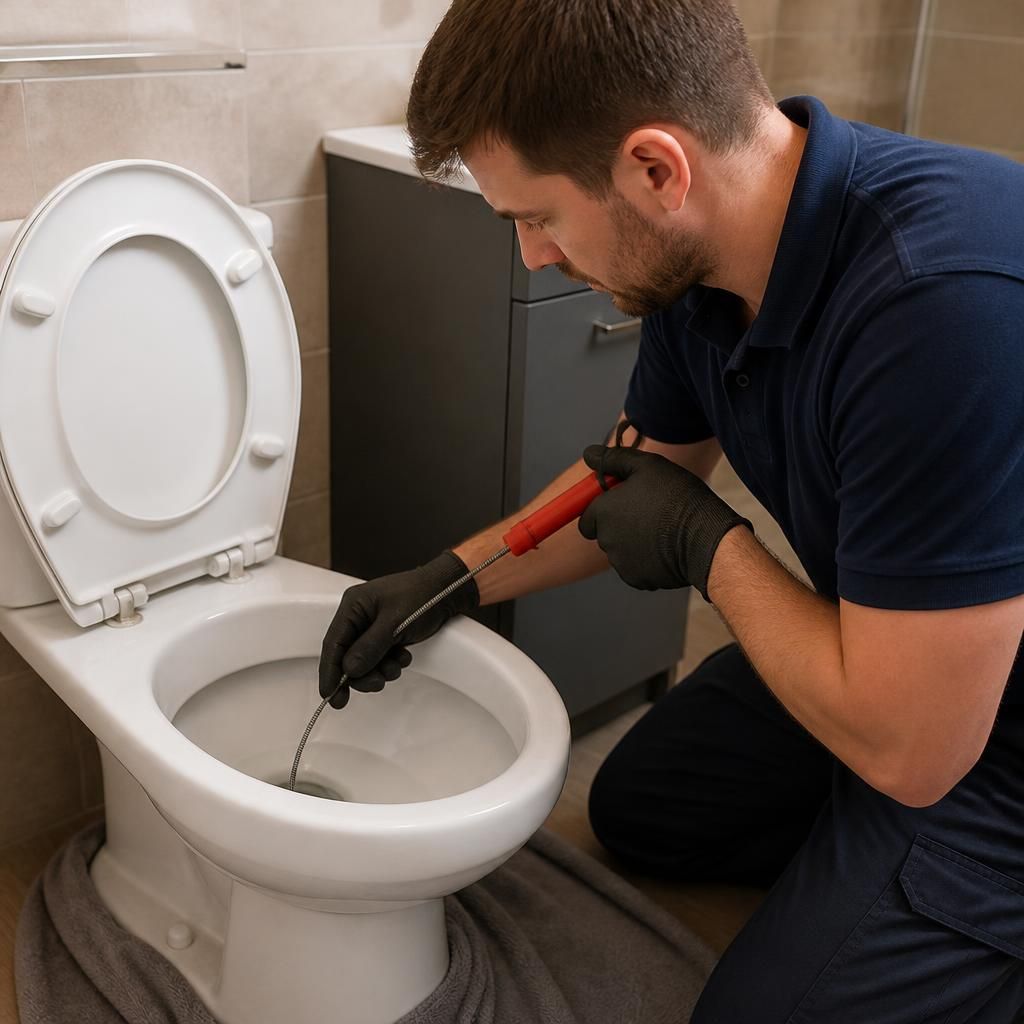
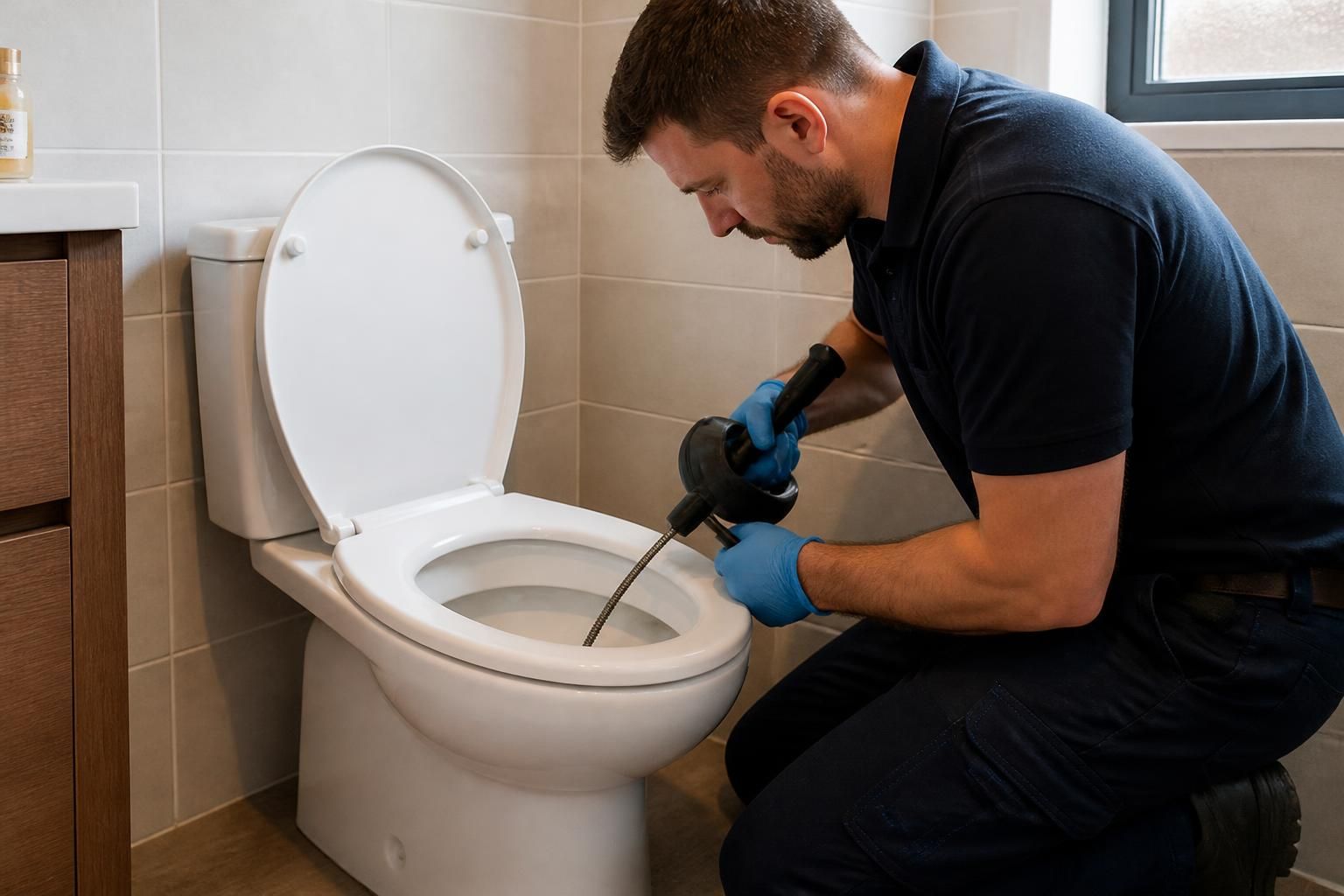
If plunging does not work, a toilet auger, sometimes called a closet auger, is the appropriate specialist tool for reaching through the trap without using a rigid household object. It must be inserted and operated carefully to avoid scratching the ceramic or pushing an obstruction deeper into the pipe. Do not use wire, coat hangers, rods or other unsuitable implements, even if the blockage appears close to the outlet.
Drain-cleaning chemicals are a poor choice for toilet blockages. They may fail to dissolve the obstruction, damage seals or pipework, and leave caustic liquid in the pan. They also create a safety hazard for anyone who later needs to use a plunger or dismantle the toilet. Never mix different cleaning products, and tell a plumber if any chemical has already been added.
Stop attempting DIY unblocking if water rises repeatedly, the toilet leaks from its base, the pan is cracked, the blockage returns after temporary drainage, or other fixtures begin backing up. Gurgling sounds, unpleasant drainage odours and water appearing in an unexpected fitting can indicate a restriction beyond the toilet trap. In these circumstances, the fault may require inspection of the soil pipe or underground drainage rather than more pressure at the pan.
A professional assessment is also sensible when the blockage may involve a foreign object, when the toilet is connected to older or vulnerable pipework, or when the pan needs to be removed to inspect the trap. A plumber can identify the likely location of the obstruction, use suitable mechanical equipment and check for leaks or damage after the flow has been restored.
Once the toilet is operating normally, clean and disinfect the surrounding surfaces, wash reusable equipment thoroughly and dispose of gloves safely. Avoid treating repeated blockages as a normal maintenance issue: they can indicate inadequate drainage, a damaged trap, scale or a problem within the connected pipework.