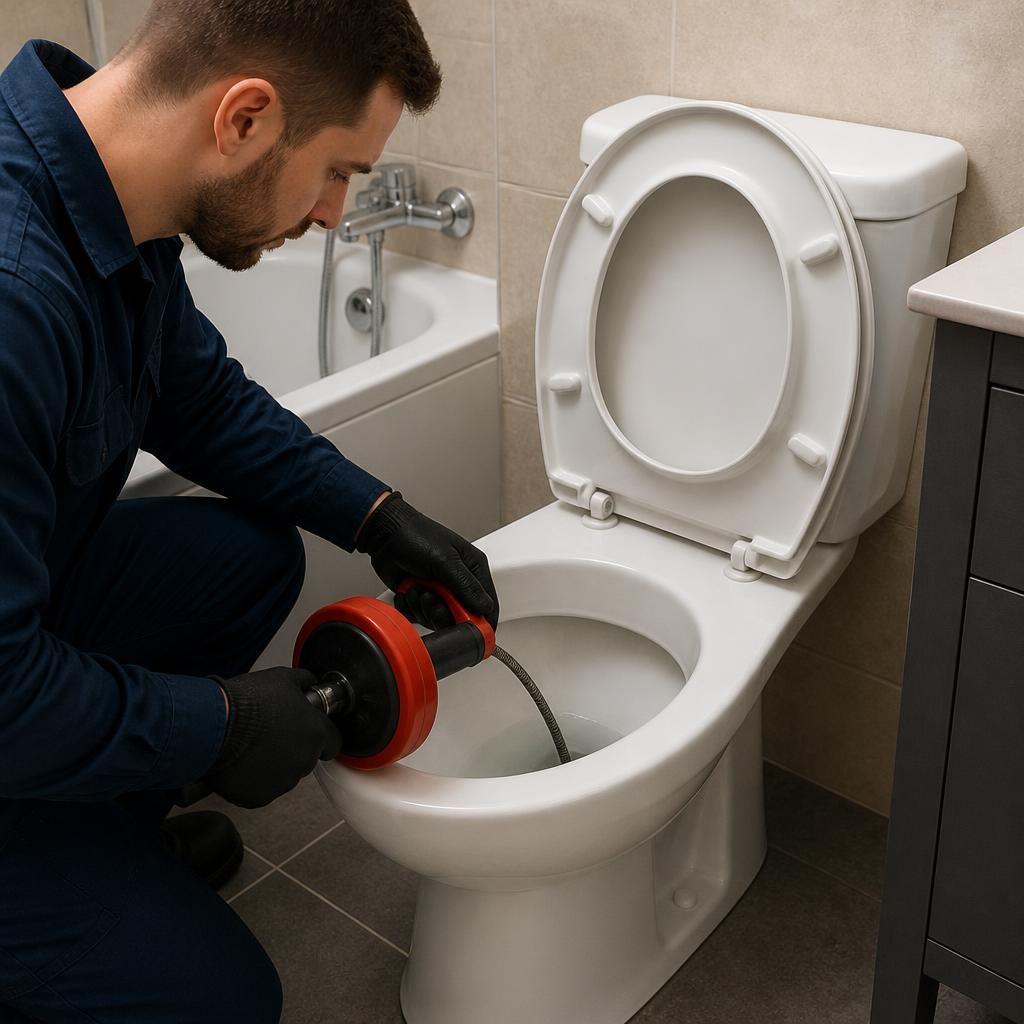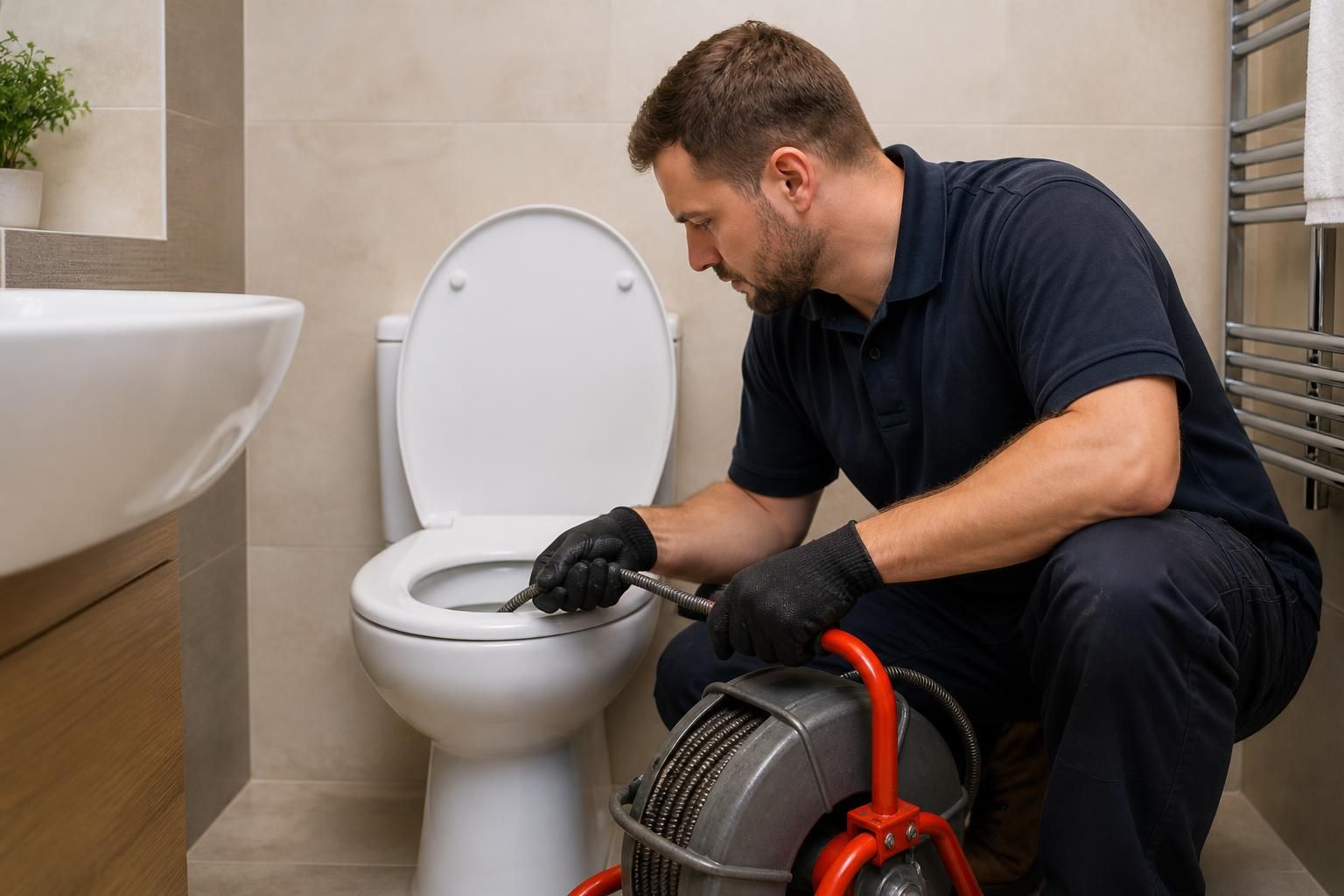
Professional toilet unblocking is needed when the obstruction cannot be safely identified and removed with a suitable, non-invasive method, or when attempting to clear it could cause flooding, contamination or damage. A plumber can determine whether the blockage is in the toilet trap, the connecting branch pipe or a deeper drain, rather than treating only the visible symptom.
Situations that require professional attention
- The cause is unknown. A toilet may appear blocked because of excess paper, wipes, a sanitary product, a child’s toy or another solid object. If the cause cannot be seen or identified, probing with unsuitable tools can push it further into the pipe.
- An object may be lodged in the trap. Toilet traps are shaped to retain water and can catch items that have been flushed accidentally. An auger designed for toilets may remove some obstructions, but a rigid implement can scratch the ceramic surface or damage internal components.
- Chemical drain cleaner has already been used. Drain chemicals can remain in the bowl and create a splash risk during plunging or dismantling. They may also affect rubber seals and certain pipe materials. Tell the plumber what product was used before any further work is attempted, and never mix different chemicals.
- The toilet is connected to older or vulnerable pipework. Excessive force can disturb joints, seals or ageing fittings. Professional equipment and controlled pressure reduce the risk of turning a straightforward obstruction into a leak.
- The blockage is likely to be deeper in the system. If the toilet itself appears clear but wastewater is not passing through the branch pipe, clearing the bowl will not resolve the underlying restriction. The plumber may need to inspect accessible drainage points and select equipment suited to the location and material of the pipe.
- The property has experienced a sewage back-up. Contaminated water should be kept away from skin, pets and household surfaces. Avoid repeated flushing, close the toilet lid if practical and keep people away from the affected area while the cause is assessed.
Why repeated DIY attempts can make the problem worse
A plunger works by creating pressure and suction, but it needs to be the correct type and used with enough water to form a seal. Forceful or repeated plunging can dislodge a toilet seal, cause water to escape around the base or drive an obstruction into a narrower section of pipe. Improvised tools, such as wire, coat hangers or rods, can damage the pan and fail to retrieve the blockage.
Do not continue flushing to test whether the toilet has cleared. A partial obstruction may allow one small discharge through and then restrict the next one, increasing the risk of an overflow. If the bowl is already full, turn off the toilet's isolation valve where one is accessible and remove nearby items that could be damaged by water.
What a professional unblocking visit involves
- The plumber will establish what has happened, ask what was flushed and check whether the restriction is local to the toilet or connected to the drainage system.
- They will protect the surrounding area and use an appropriate method, such as a toilet plunger or toilet auger, without applying unnecessary force.
- If the obstruction cannot be reached safely, further inspection may be needed to locate it before removal. This helps avoid damaging hidden pipework or pushing the blockage further along.
- After clearing the restriction, the toilet should be tested with controlled flushes. The plumber can also check for leaks around the pan, inlet connection and visible waste joint.
When a landlord or tenant should get involved
Tenants should report the issue to the landlord or managing agent promptly, particularly where the cause may involve shared drainage or a defect in the property. A landlord should arrange suitable plumbing advice rather than relying on repeated chemical treatments. Keeping a note of what happened, what was flushed and whether any product was used can help the plumber diagnose the problem accurately.
Ideal Plumbing Services provides professional toilet unblocking and related plumbing support for homes across Birmingham and the wider West Midlands. The appropriate point to call is before force, chemicals or dismantling are likely to create additional damage.