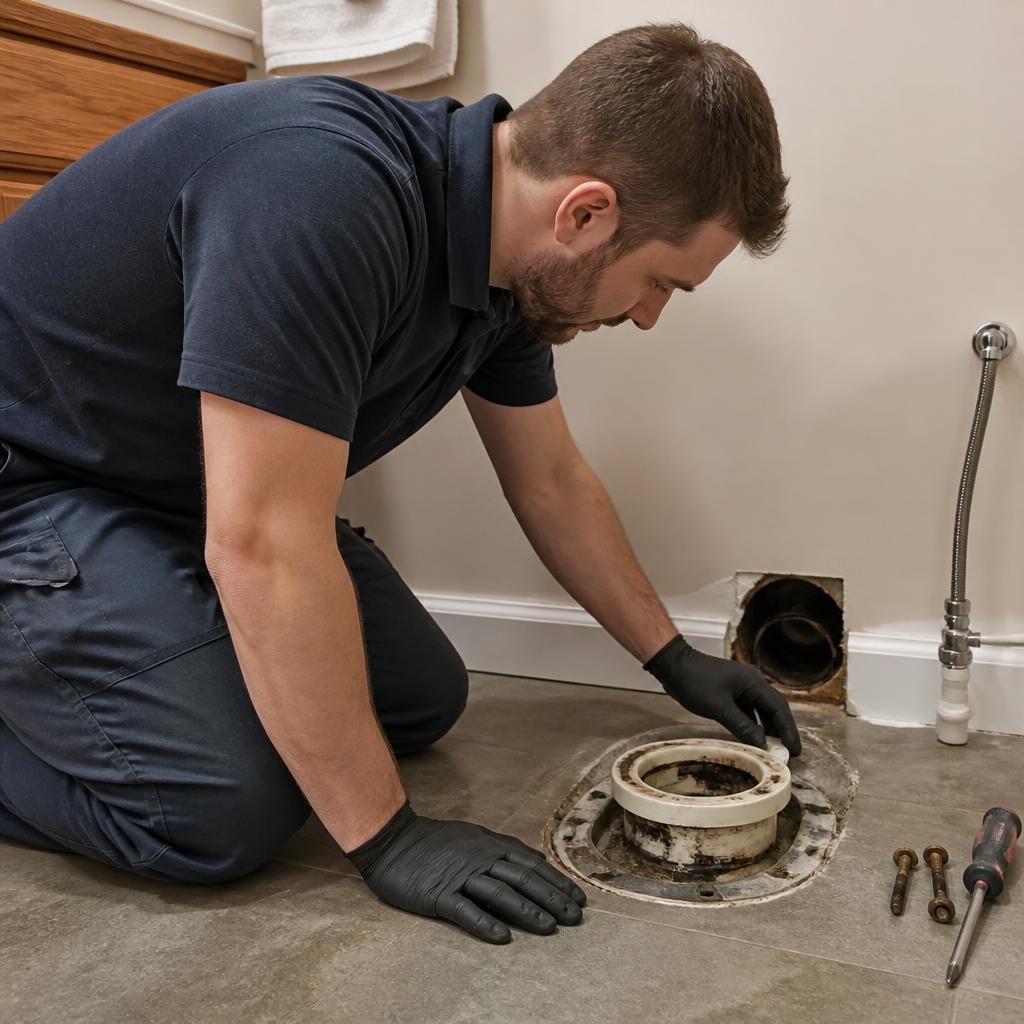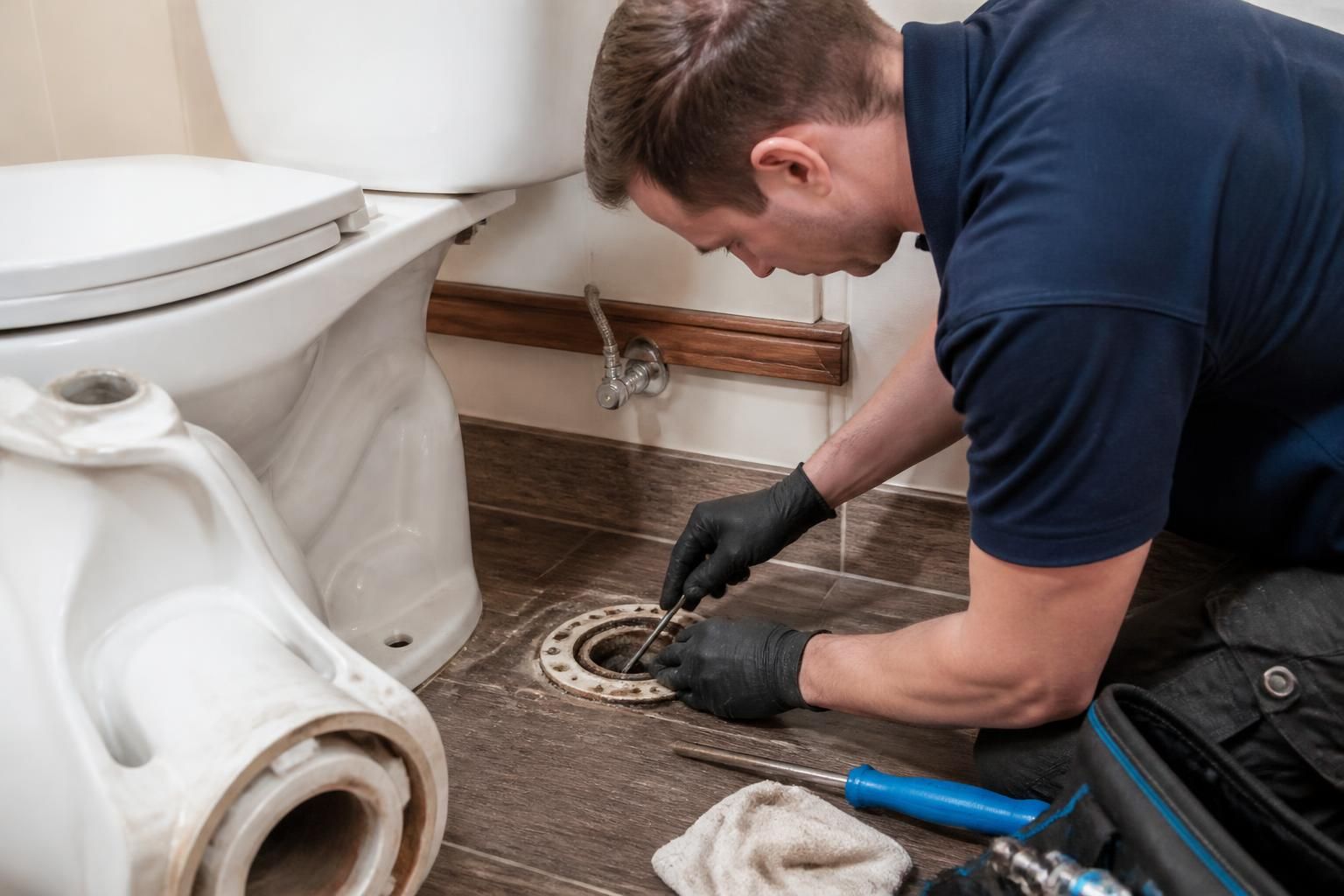
Toilet removal is generally a later-stage measure, used when the obstruction cannot be reached effectively through the pan, trap or an available drain access point. A plumber will normally assess the blockage first and choose the least disruptive method that is suitable for the toilet and pipework.
When removal may be necessary
- A solid object, such as a toiletry item or household object, is lodged in the trap.
- The blockage is positioned beyond the reach of suitable manual tools.
- Repeated attempts to clear the toilet have failed or could force the obstruction further into the pipe.
- The pan, trap or connecting waste pipe is damaged and needs inspection or repair.
- The toilet has been fitted in a way that prevents safe access from another point.
Paper and organic waste blockages can often be dealt with using a plunger, toilet auger or appropriate drain-cleaning equipment. Where the obstruction is farther along the branch pipe, access may be possible through an external drain or rodding point instead of taking out the pan. The correct approach depends on the toilet design, the position of the blockage and whether other appliances are also draining slowly.
What happens if the toilet does need to come out
- The water supply to the cistern is isolated.
- The cistern and pan are emptied as far as possible to reduce spillage.
- The water connection and waste connection are carefully disconnected.
- Fixings are removed and the pan is lifted away from the floor and waste outlet.
- The trap, outlet and accessible pipework are inspected, and the obstruction is removed using an appropriate method.
- The toilet is refitted with a suitable seal, the connections are checked and the flush and drainage are tested.
Removing a toilet is not simply a matter of undoing a few screws. Older fixings may be seized, pipe connections can become brittle, and the seal between the pan and waste pipe normally needs attention when the toilet is refitted. Poor alignment or an unsuitable replacement seal can result in leaks, odours or an unstable pan.
There is also a risk of damage to flooring, wall finishes or the ceramic pan if the toilet is forced from its connections. For this reason, a toilet should not be rocked aggressively or pulled away while it is still connected to the waste pipe. Chemical drain cleaners are also a poor choice where removal may later be required, as residues can create a handling hazard and may damage some components.
Before deciding on removal, a plumber should establish whether the obstruction is in the pan, the toilet trap, the short waste connection or the larger branch drain. If several toilets, sinks or baths are affected, the problem may be in shared drainage rather than in the individual toilet. In that situation, taking out one toilet may not resolve the underlying blockage.
If the bowl is filling unusually high, stop flushing and keep children and pets away from contaminated water. Where a toilet has overflowed, the affected area should be cleaned appropriately after the blockage has been dealt with. Ideal Plumbing Services can assess blocked toilets and explain whether access through the toilet is sufficient or whether removal and refitting are justified for the particular installation.